
Charlotte Dune's Lagoon
By Charlotte Dune
Through currents and trends, a novelist swims. With psychedelics and sci-fi-loving fiction author Charlotte Dune.
This is a public episode. If you would like to discuss this with other subscribers or get access to bonus episodes, visit charlottedune.substack.com
In this episode, I sit down with artist and executive coach Rochonda Ferrelli , creator of the mesmerizing Magnetic Geodes , to unravel the trap of future tripping : the exhausting swirl of overanalyzing, comparing, and projecting ourselves into “what’s next.” *If you caught us live, you can skip this replay, or send this to a friend who might appreciate it. We also explore: * Why chasing the future can rob us of joy right now * Rochonda’s journey from nine years of Kundalini meditation to a more grounded presence * The underrated power of a gratitude practice (and how it helps with depression) * Religious trauma, evolving definitions of God , and crafting a spiritual path that hums with truth * AI as a ghost, script machine, and tool, plus the importance of preserving your personal creative process * A behind‑the‑scenes look at Rochonda’s magnetic geode art , including her upcoming exhibits and mentorships ✨ You don’t need to wait for the “next level” to feel joy. You can embrace what is, right now, and still hold a vision for the future. Links & Spotlights * Rochonda Ferrelli – Magnetic Geodes & Creative Work Explore her mentorship and creative leadership consulting program. Learn more about Rochonda’s art work: Magnetic Geodes By Rochonda and browse original art and commission options. * Charlotte Dune: Read Charlotte Dune’s novels. Dive into her exploration of psychedelia, creativity, and culture on Substack: Charlotte Dune’s Lagoon (Substack) This is a public episode. If you would like to discuss this with other subscribers or get access to bonus episodes, visit charlottedune.substack.com
This is a public episode. If you would like to discuss this with other subscribers or get access to bonus episodes, visit charlottedune.substack.com
This is a public episode. If you would like to discuss this with other subscribers or get access to bonus episodes, visit charlottedune.substack.com
This is a public episode. If you would like to discuss this with other subscribers or get access to bonus episodes, visit charlottedune.substack.com
Join me for my next live video in the app This is a public episode. If you would like to discuss this with other subscribers or get access to bonus episodes, visit charlottedune.substack.com
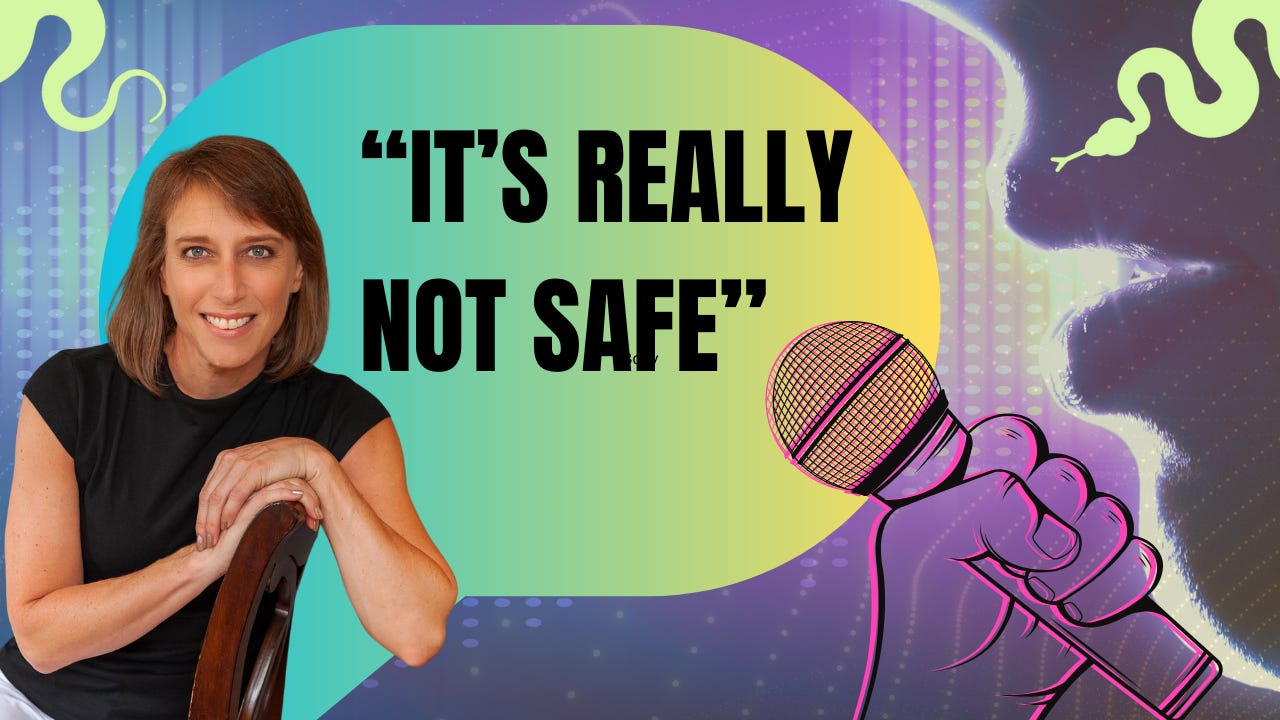
In this episode, authors Caitlin Avery and Charlotte Dune discuss how Avery outed and publicly shamed her rapist. She explains why and how she did it, what happened, the public's reaction, social media activism, and her novel Life of Cyn , inspired by the experience. She also reads from her latest book, The Last Con . Finally, we discuss the aftermath of the #metoo movement. Connect with Caitlin Avery: https://www.caitlinavery.com/ Connect with Charlotte Dune: https://linktr.ee/charlottedune This is a public episode. If you would like to discuss this with other subscribers or get access to bonus episodes, visit charlottedune.substack.com

In today's episode of Charlotte Dune’s Lagoon, we're winding into the world of "ticking clocks" in literature and how they're not just gripping plot devices, but also mirrors to our real-life motivations. Counting down to my own book launch, I share thoughts on these suspense-building tools. I also reveal and tease about the literary devices and hidden clocks in my own books: Cactus Friends , Mushroom Honeymoon , and Acid Christmas . But it's not just in books; we all have personal ticking clocks that nudge us to chase our goals. I talk about turning off the clock when life gets too overwhelming, offering a unique perspective on how we can use these literary insights in our daily lives. So, if you've ever felt the urgency of a ticking clock, whether in fiction or reality, this episode will have you nodding along and maybe even reconsidering the ticking clocks in your own life. To read more, visit Charlotte Dune’s Lagoon’s What is a Ticking Clock on Substack. This is a public episode. If you would like to discuss this with other subscribers or get access to bonus episodes, visit charlottedune.substack.com

In this episode, I speak with Lauren Richardson, Recovery Yoga Expert, Artist’s Way Creative Cluster Host , and founder of Source Recovery Yoga about her practices and philosophy. Recovery in this context means recovery from addiction, though Lauren is also a survivor of child sexual abuse. Charlotte Dune's Lagoon is a reader-supported publication with text, audio, and video. To receive new episodes, please consider becoming a subscriber. I explore mind-expansion, big ideas, healing, storytelling, and love. Clarifications: We mention Russell Brand several times in this episode, which was recorded well before the sexual abuse accusations came out against Brand. He inspired both of us in our recovery from addiction to alcohol. The recovery group where we met was Recovery Elevator . Watch the Video Version with Captions: Want More? To get in touch with Lauren for recovery yoga, to join one of her creative clusters, or to join the Healing Hive, please email her at (Writing it out so she doesn’t get spam bombed, but no spaces in the email.) Now You Do you have any questions? What did this episode bring up for you? If you’d like to share your thoughts, and you’re listening to this episode on your preferred podcast platform, please jump over to Charlottte Dune’s Lagoon on Substack and drop a comment, or share a comment on the Youtube video. Thanks for listening! This is a public episode. If you would like to discuss this with other subscribers or get access to bonus episodes, visit charlottedune.substack.com
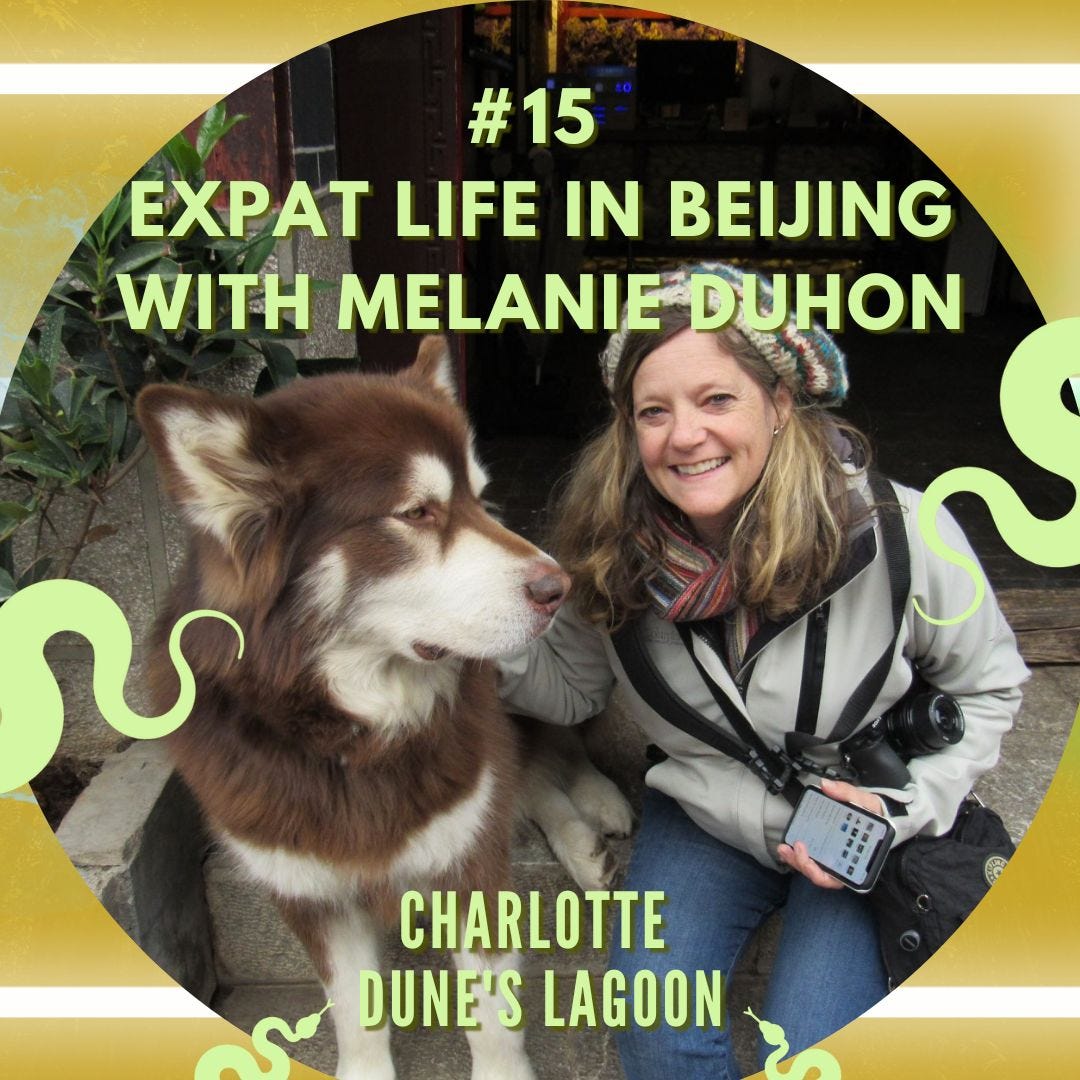
In this episode of Charlotte Dune’s Lagoon , I speak with American expat and trailing spouse, Melanie Duhon about her years living in Beijing, including her time during the Covid-19 pandemic and her experience of WeChat, and “The Brickening,” plus, a lot of amazing food, travel, and culture. Listen here, on your favorite podcast platform, or watch the video version on Youtube, which offers captions for anyone hearing-impaired. Prefer the written, edited version of this interview? Read Part 1 or look for it in your inbox if you’re already a subscriber. These episodes always release first on Youtube, and you can take advantage of that by subscribing to my Youtube channel if you’re active on that platform. A note from me: This interview may contain something you find upsetting or controversial. I’m here to listen and learn from my guests. Take what you need and leave the rest —is my attitude. China itself is a fraught topic in the US and the more we can listen and learn, the better. I’m grateful I could speak with Melanie because many Americans currently in China aren’t allowed to talk about their experience or don’t feel safe doing so. The first person I wanted to interview wasn’t actually able to speak with me, as their employer forbid it. I would love to visit Beijing myself, but I worry that my status as a former U.S. Diplomat would complicate my trip. However, I find the country and topic fascinating and I hope you do too. If there are experts on China-related topics that you’d like me to interview in the future, let me know in the comments or shoot me an email. I obviously don’t support any form of genocide. Enjoy! Charlotte Dune's Lagoon is a listener-supported publication and podcast. I interview interesting people who refuse to niche. To receive new episodes and support my work, consider becoming a free or paid subscriber. This is a public episode. If you would like to discuss this with other subscribers or get access to bonus episodes, visit charlottedune.substack.com
Happy Bicycle Day folks! Today is the day we celebrate the discovery of LSD, and I’ve got a brief message for you about the secret Black history of LSD and MK-Ultra, the torture of Black men by the CIA, and the value of civil disobedience. For more on this topic, check out this article by journalist Kali Holloway: The Secret Black History of LSD. Charlotte Dune's Lagoon is a psy-fi publication and podcast designed to explore, understand, and expand reality. To receive new posts and support my work, consider becoming a free or paid subscriber. This is a public episode. If you would like to discuss this with other subscribers or get access to bonus episodes, visit charlottedune.substack.com
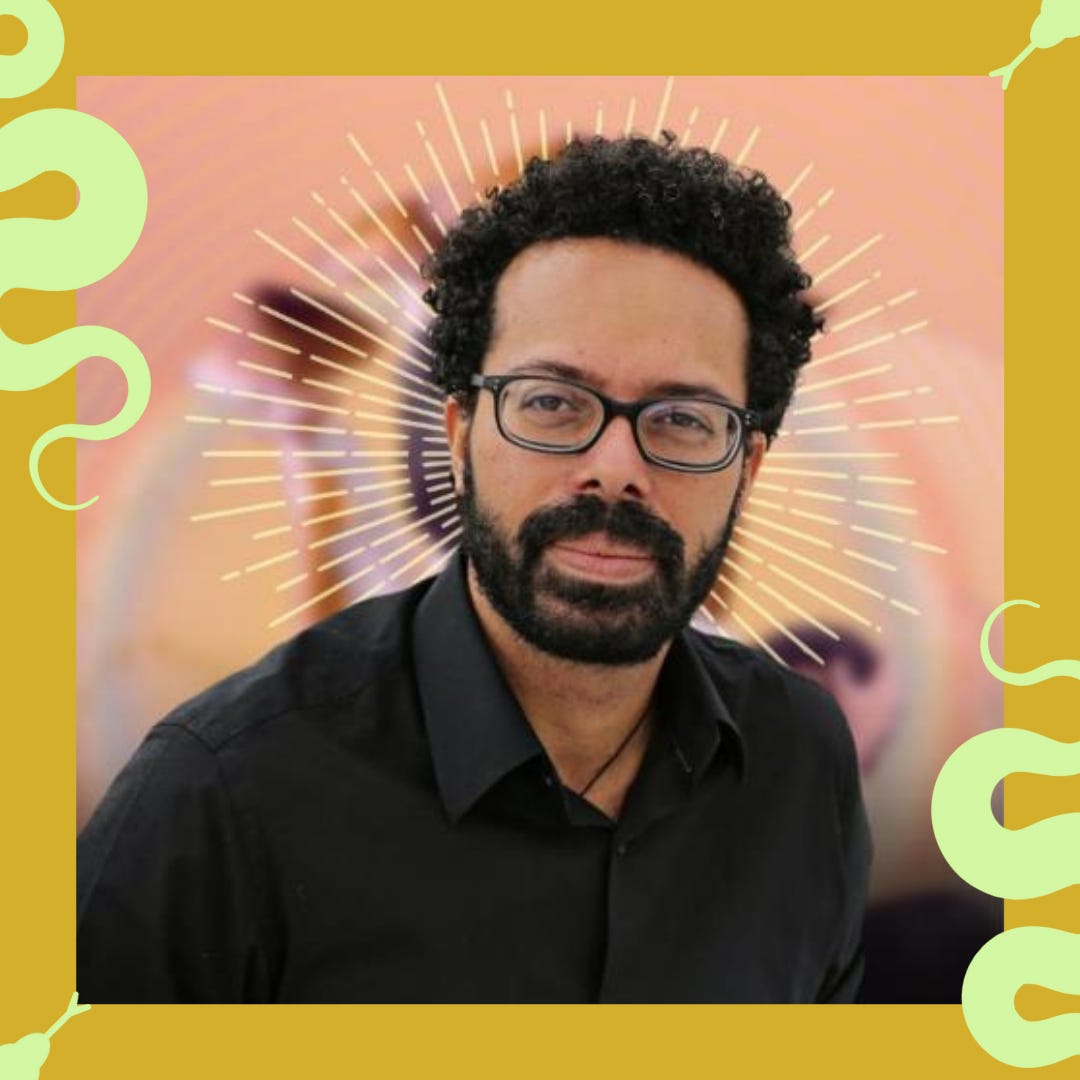
Nicholas Powers, author, teacher, and psychedelic activist, discusses the future of psychedelic therapy, his release from PTSD, and his vampire political novel, Thirst : The Rich are Vampires. Read the interview below, or if you prefer to watch the interviews, please subscribe to my new YouTube channel! Thanks for splashing in Charlotte Dune's Lagoon! Subscribe for free to receive new posts about mind expansion, hot topics, psychedelics, ethical quandaries, and self-experiments, or share this episode with a friend. The following transcription is auto-generated and lightly edited. Interview Transcription: Charlotte: Welcome to Charlotte Dunes Lagoon, where we talk about whatever we want. Nick: I love swimming in the lagoon. I feel like the creature from the Lagoon, so thank you yay! Charlotte: I'm going to let you introduce yourself because I'm sure you can describe your bio better than I can, but I'll just say that you're the author of Thirst , Nicholas Powers. This is an amazing book with incredible writing, a crazy story, and stunning illustrations. I was very impressed. Professional Daydreamer Nick: Thank you! My name is Nick Powers. I'm a professional Daydreamer , and that's my side gig. The way I keep the lights on and food on the table and to make sure child protective services don't take my kid away for starving is I'm a professor of literature at a State University, Old Westbury, which is in Long Island. I live in Brooklyn, and I take the train out to Long Island and teach. The teaching is going very well. I've been doing it for about 16-17 years, and so I think I've got it down to a well-oiled machine, but the students always change, and so the way that you teach changes. This semester, we're doing Caribbean literature. We just finished Daniel Defoe's Journal of the Plague in London during 1665. Now, we're doing Albert Camus Le Pest , which in English is The Plague . In my other class, they’re getting ready to write their senior thesis, which is a 25-page critical essay. So, that's my professor gig. On the side, I advocate for psychedelic therapy. I give a lot of talks, and some of them are paid, and some of them are not. It's more of a passion project, and the goal with that is hopefully to get the Department of Mental Health in New York City and hopefully the surrounding Tri-State areas to follow like a domino effect offering mental health psychedelic therapy as an advanced mental health technique to working-class people and poor people who really need it. Because oftentimes, they face intergenerational trauma, life in the streets, and I think they could benefit from this new high-tech medical technology. Lastly, I'm a father, and I would say probably the most powerful psychedelic I've ever taken is my son. I love him; he brings me incredible amounts of joy and grief all at the same time, sometimes within the space of one minute. Charlotte: How old is your son? Nick: He's four. Charlotte: Oh, wow, that is a joy and terror all at the same time. I have a 15-year-old, so I'm a little ahead of you. My daughter has Asperger, well what they used to call Asperger's or high-functioning autism, so it's a very different experience, I think, for me. But it's a beautiful time. All the times are beautiful, but I like that she and I can have intellectual conversations. We watched Romeo and Juliet, the Baz Luhrmann version, the other night, and her takes on it were so hilarious because they're reading Romeo and Juliet in school, and she was like, "This is giving call the police; this is giving underage date rape; this is like…and on and on” And I’m like, I did not know these words when I was your age, and I'm so glad that this generation exists. I have a lot of hope in Gen Z. People will knock on them, but I'm like, these guys are smart. Yes they're addicted to their phones, but aren't we all at this point? You must have a really interesting perspective teaching young people and seeing firsthand how technology is changing everything, and especially reading about the plague. That must feel really timely. Nick: I taught the literature of the plague in 2021, and you know, that was kind of like at the climax and we were starting to kind of see the light at the end of the tunnel with the vaccines starting to roll out. It became a form of book therapy because the plot reflects or parallels their real life, and so the emotions that the characters feel are emotions that the reader has felt. By expressing what the character is feeling, the reader can then ride along and some of their anxieties can get expressed out through the characters. Some of the depths that they've had to witness and endure - the near-life fatalities, the paranoia about the quarantine, the insecurity about the future that kind of just went up in smoke - all of these emotions are reflected in the text. So, the book, in a sense, allows them to express themselves through reading the book. They actually massage stuck emotions out through their consciousness via the book, and so it becomes a kind of an odd form of psychodynamic therapy where emotions that are stuck start flowing again. I found that it is not surprising because I've seen it before in other courses, but for the students, they're surprised because they remember what literature and art can do as a form of kind of therapeutic expression. Generational Distraction Overall, I've seen the students become dramatically less homophobic, less sexist, and less racist. I started in 2006, or seven, that their attention span decreased. They're more knowledgeable, but they have a hard time judging the quality of the knowledge they acquire. They're more knowledgeable, but they have a hard time judging the quality of the knowledge they acquire. The internet is a great relativizer; you can see anything there, and it all becomes a soup. Without a kind of hierarchical sense of pedigree or quality, or at least gatekeeping, everything can just collide together. The students sometimes have a hard time knowing what's a good argument and what's not a good argument. Finally, I realize that they're such visual thinkers that there's a difference when you think primarily in visuals. It can be very kind of mushy-headed, but when you're reading, reading tightens up the brain. The last thing I've noticed is that as a generation, they're a lot more anxious. I think it's because they're exposed to the judgment of their peers through social media in a dramatic way that those of us who are Gen X and older just weren't. For GenX, we're addicted now, but our deep brain settings were without media. So, if I don't have my phone, I actually feel fine. I feel great. But when they don't have their phone they feel anxious. For us and for people who are older, there's like a federal quality to us. We like being out in the moment, like wild animals and just figuring it out. And if we bite someone or get bitten, that's kind of part of the price of being a feral wolf. For them, they're not feral at all. They're very domesticated. They like to stay inside. Charlotte: They’re house cats. Nick: They hear these 40-year-old parents screaming outside the window and they're like, 'what are you guys doing?' Charlotte: I know. My daughter doesn't want to get her learner's permit to drive because she's like, ‘where would I go? Everything I have is right here inside the computer.' And I'm like, 'oh honey.' You can try to fight it as a parent, but it's very challenging. Both you and I have spent time in countries that were less developed. She grew up in the beginning of her childhood in Cameroon, and I'm glad that she at least had that little bubble of nature and that little bubble of experiencing the world without all of this before she got thrown back into, well, first we moved to Canada and then America, but before she got thrown back into the mix, that she has at least a little perspective still. I want to take her back because I think it's important to see the world, especially when you're a teenager. But I resonate with every single thing that you're saying. I just read Stolen Focus by Johann Hari. I don't know if you've read it, but I thought I had exhausted that topic and there were things that I had not exhausted in that topic of the Stolen Focus /distraction. I imagine with Chat GPT, it becomes even harder for you as a teacher? Nick: I'm lucky that I'm in a sweet spot because my students know that they need sharpening of their skills, their writing skills, and so I tell them upfront that if you use AI to write your essay, you're robbing yourself because at some point you're gonna get caught. There's no way that you're going to go through this life not knowing how to write or read critically and then not get busted at some point. Someone's going to look at something that you need to write ASAP and know, and you're gonna look empty-handed. And so they generally want to learn how to read better and write better because they know that they're not going to be able to AI their way through life, but then I think once they actually start doing it, writing creatively, thinking, reading critically, we actually enjoy it because then the world opens up. They're like, 'oh, I didn't know.' Oh, there's all these signs, and it's like that scene in The Matrix. Everything's like green letters coming down." Psychedelics vs Traumatic Dust Charlotte: I love what you said about how narrative can unlock trauma and release trauma, unlock memories, and release memories. One of the reasons that I wanted to speak with you was because I heard you speak to the Naropa Institute about how you had witnessed a lot of things that no human being should ever witness, like 9/11 aftermath, Hurricane Katrina, Darfur, Haiti after the earthquake, and how psychedelics helped you unlock that trauma. That is what psychedelics, books, and writing also did for me. Nick: My first use of psychedelics was in a college dorm room. It was more hedonistic and artsy. There were theater majors doing body and scatological versions of Broadway tunes, and film majors taking lights from the storage room and casting blue and reds and stuff. So my first experience of psychedelics was the classic 1960s narrative or role play, which is mind expansion and aesthetic play. But when I moved back to New York as an adult, my family had been here, and I'd always traveled here. So, New York was always inside of me. When I came back in September/August 2001, I was like everyone else, in this naive state. I was going out, getting my books ready, and getting my classes ready, and then September 11 happens. That whole year, all of us were smelling the ash of people and looking at the rubble. When I went to Burning Man in 2002, I actually did not like Burning Man at all, the first time. I was about to leave, and then this New Yorker, this guy named Tony, who wasn't even in my camp, just a couple of tents down, said, "Hey, how are you doing?" and I could hear New York in his voice. He gave me ecstasy and acid. When I took it, that was the first time I had a therapeutic experience. It wasn't a classical Freudian psychodynamic. It wasn't cognitive therapy. There was no proper Freud floating in the desert, although on LSD, I wouldn't have been surprised. It was literally me just walking away from the city, getting out of Burning Man, walking to the Deep Playa, out into the desert, and crying and screaming and just letting it all out. When I came back, there was this bonfire and people were half-naked and running around the fire. It looked like Walt Disney's Night at Bald Mountain. Everyone was just circling around, and it felt very purifying to be screaming it out, dancing it out, sweating it out. When I came back to New York I still had dust on me a little bit. My body felt buoyant. I felt loose, and I could look at everyone else, and they felt very tight. That was the first experience of psychedelic therapy that psychedelics warped speed like hyper speed. It shot me through my trauma or shot trauma out of me, and I was able to get to a place of equilibrium within a couple of hours that other people would have taken years to get to. It shot me through my trauma or shot trauma out of me, and I was able to get to a place of equilibrium within a couple of hours that other people would have taken years to get to. I don't think New Yorkers, in general, had the peace in their body, the easiness in their body, for about five or six years after 9/11 that I had, literally because of a couple of hours. I knew that, and then eventually getting into psychedelic culture and learning about the history of it as medicine and the history of it with this therapy. It totally made sense because it helps lower your ego. Your ego and the trauma that the ego causes can be compared to a plug in a socket. Once the ego is removed, a lot of the trauma that was suppressed can come out. I found it incredibly helpful for myself, and I believe many others could benefit from it as well. People dealing with opioid addiction, sexual, physical, and mental abuse, PTSD from war, and many more could use it to get their lives back quicker. Your ego and the trauma that the ego causes can be compared to a plug in a socket. Once the ego is removed, a lot of the trauma that was suppressed can come out. Charlotte: You've got a dust theme in your book, and love the metaphor of dust as I think about trauma being like dust in your brain that needs to be vacuumed up. Psychedelics can help clean up that dust so that your brain can function properly. Some people call it spiritual bypassing, but I'm like why not bypass? I wish more people could have access to this kind of therapy, and if it works, why suffer? For me, MDMA was my first therapeutic experience, and it helped me a lot. Different compounds have different magic, and many of them address trauma. More studies are coming out to back up the anecdotal evidence we have. I don't know what to call it - sometimes I say sacrament, sometimes medicine, sometimes spiritual compound, or psychedelic, but I wonder if you have any special relationship with a particular psychedelic now and how you envision advocacy around making this experience available to people who need it? Nick: I am the primary caretaker for my four-year-old in a co-parenting situation. He is with me almost all the time, Monday through Friday, and the first weekend of the month. Although I love spending time with him and we have a great relationship, there isn't much space for a long psychedelic trip. I need to stay sharp while caring for him because he's already in a constant kind of psychedelic state. Being a toddler, the world is still very fresh and raw to him, and it doesn't quite fit into words yet, so I have to be his guide. However, about a year ago, my mom passed away, and I was invited by a private company called Field Trip to do a ketamine trip. They administer doses in a therapeutic setting, with nice music, a little glowing crystal in the center of the room, soft Persian mats, and African mud prints on the wall. I was injected with 35 milligrams of ketamine, and it helped dissolve my sense of grief. It was euphoric but more disassociative, and I felt like I was floating and my body was a sandcastle that got washed away by a wave. Before the trip, we had a circle where we talked about our goals and setting. During the trip, I was injected with 35 milligrams of ketamine, and it helped dissolve my sense of grief. It was euphoric but more disassociative, and I felt like I was floating and my body was a sandcastle that got washed away by a wave. As I floated like a cloud, I could experience the raw grief that had still been locked up inside of me. Eventually, it too began to warm up and loosen, and then trickle away. When the trip was on its way down, and I felt solid in myself again, I could feel that my body had been washed out, cleaned out, and some of the grief that had been stuck inside, like old mothballs, had been finally flushed out. It helped speed me through the stages of grief without skipping over necessary emotions or getting stuck in them. This is important for those of us living in modern America because we work so much. We wake up, grab coffee, go out to work, have lunch, maybe sneak a couple of moments on social media, have a phone call, but mostly work. Then we come back and pick up our kids, make dinner, help them with their homework, and so on. There's very little time for us to be ourselves and feel what we're feeling. Our modern life and work schedule make us get stuck in emotional stages because we don't have the time to let them flow. We're always servicing our kids, boss, or others. Taking time for myself is helpful, especially when my child is with his mother. Sometimes I will indulge in an edible or go to a hot spa to relax and enjoy some downtime. However, I do believe that as my child gets older and becomes more competent, I may be able to experiment more freely again. Civil Disobedience Charlotte: Does speaking openly about psychedelics as a parent, especially as a single parent and a black man, take a certain amount of bravery? Have you felt tension or personal risk in doing so? Nick: My background is a mix of cultures, Newyorrican, Black, and honestly, that’s as common as a slice of pizza. There is not a lot of risk for me, particularly because I am not detailing any illegal drug use. The ketamine trip I took is legal, and the occasional edible I consume is legal as well, now that cannabis stores have opened in my area. However, as a teacher, I generally do not drink or use cannabis because I need to be mentally sharp for my students. I believe that it is important to be honest about our real-life experiences and desires. There is a danger in not being honest because we can begin to censor ourselves and lose touch with who we really are. We may even end up leading a double life. Eventually, the double life, the kind of hidden life, grows to such a great size that it begins to capsize us. This double life, this secret life, is really what we enjoy; it's really who we are. However, with the pantomime of conservatism, the theater mask that we wear for others, our real self becomes so far away that we barely check up on it. It gets dusty and dirty, and our real life is this other life. This state of imbalance is relatable because we can lose ourselves in the effort to keep up appearances. In the end, those in authority who ask us to lie about our truth do not deserve much respect. They don't deserve our lies because they built their power on an illusion, and even that power is often illusionary. It's almost like we should save our lies for the people we really love. Charlotte: I'm thinking about Dr. Carl Hart, which I know he's a controversial figure to some, but I really admire him and his idea that people at low risk should talk about drug use because there's nothing wrong with doing it. And some people would really face hardship if they were open about whatever they're doing because of systemic discrimination and because it varies by region. Somebody might feel more discomfort in certain parts of the country than in New York. Nick: You're absolutely right, and certain levels of privilege, certain risks involved. That's the attitude I adopt, too. I'm just like, civil disobedience has a place, it really does. And there is a level of political storytelling or mythic storytelling, and then there's reality and the reality you can only glimpse sometimes. I'm not a very big math person, but I remember interviewing Dr. Hart and also reading some of his research, and he's done a lot of original research, but he's also synthesized other people's research, which is what, you know, researchers should do, and 70% of people who do some kind of either narcotic or psychedelic are actually fine. The image of the drug user we have is a minority of those who use drugs. Most people who use drugs are like Dr. Hart; they go to work, play with their kids, help their kids with their homework. Most people who use drugs are like Dr. Hart; they go to work, play with their kids, help their kids with their homework. This paranoia that if you take a drug that you're going to turn into—remember in The Simpsons the alcoholic at the bar? He was this young preppy, clean-shaven Rhode scholar, then he took one drink, and all of a sudden he’s molded into this alcoholic—that's the image the conservatives have of drugs. It's like, you do a drug once and all of a sudden you're this crackhead scratching on the corner. Charlotte: Where do you think that comes from? What do you think that's about? Nick: I think part of it is a sense of social control, like controlling those who are lower in class, controlling those who are of different ethnicity, using drugs as an excuse to keep whole neighborhoods in a kind of a lockdown, in their place. The character trait I've seen in those who have a kind of an erotic investment in being a puritanical authority is that it's a way of controlling themselves. The character trait I've seen in those who have a kind of an erotic investment in being a puritanical authority is that it's a way of controlling themselves. They themselves are afraid of who they would be if they just let go a little bit. They're very wound-up type-A people. Then the other group are people who've been hurt in some way by drug abuse or drug addiction, maybe not their own, but by someone else. So, because of that experience, they can only see drugs as leading to the destruction of a life. There's a social reason, political control, and personal character types, but then also woundedness. Dr. Hart has been interviewed by people in the black media elite, and oftentimes, these are GenX like us, and they come at him with a lot of drug war propaganda because they were deeply, deeply scarred by the crack era. Charlotte: We were all programmed by the War on Drugs as kids, like DARE. Nick: Remember that skillet and the egg, "This is your brain on drugs." Charlotte: Exactly, my daughter painted the egg behind me, but we were all programmed by that rhetoric and it took a fair amount of unprogramming, and they didn't program us at all about the dangers of alcohol, which I always cite as far more dangerous than almost anything else you can try, with many negative health outcomes and impacts. Nick: That's part of what people felt was such hypocrisy. How many people got drunk and smacked their kids around, got behind the wheel and smeared a family into a puddle of blood on the highway, or got a little bit too confident at the roulette wheel or the poker table and came back with no house? Alcohol has done an incredible amount of damage, and I just don't see that on weed, mushrooms, or mushrooms. No one's with me like, "Yeah, let's get to an MMA fight. I can't wait to kill my family on mushroom." Trip Weekend Charlotte: What do you see as the pathway forward? The medical model? Decriminalization? Legalization? What is your preference for the future of psychedelics in America and the world? Nick: At first, I think the medical model is necessary because it changes the narrative frame. It changes the story we tell about psychedelics. Psychedelics are no longer just "Oh, my friend took too many tabs of LSD and thought he was a chicken," or "Someone thought they were a glass of orange juice and said, 'Don't touch me, I'll spill.'" There are these crazy LSD stories or someone who's in a mental asylum shaking invisible bugs off themselves. At first, I think the medical model is necessary because it changes the narrative frame. It changes the story we tell about psychedelics. So, I think the medical model has dramatically changed the story around psychedelics to one that's mostly appealing. It helps that a lot of celebrities, who generally are in a cocoon of privilege, can come out and talk about their experiences with psychedelics. The great truth about class in America is you can commit a lot more crime if it's done in a private space. It's just the way it is. And no one's going to arrest Snoop Dogg or Willie Nelson. The great truth about class in America is you can commit a lot more crime if it's done in a private space. Charlotte: Prince Harry. Nick: Because cops are people too, they may ask themselves why they should bother. The hope is that psychedelics, which are already legal, can provide help. Ketamine is a relatively benign disassociative that is already available, and MDMA is going to be legally available for therapy in about a year and a half to two years. Psilocybin will likely follow in about five or six years, and then perhaps LSD. One day, it would be wonderful to hear a conversation at a construction site about trips, with guys relaxing during their lunch break and talking about what they plan to do on the weekends. Perhaps there could be a monthly trip offered at a psychedelic healing therapy center or the Department of Mental Health, which becomes colloquially known as "Trip Weekend," and someone who is struggling, like a construction worker who was physically abused by his parents and has trouble disciplining his own children, can go on a trip to get help. He can go to the clinic and be given MDMA, participate in an integration circle and be asked about his intentions, and even explore his own mind. He can put himself in other people's shoes and see things from a different perspective, perhaps realizing things he never had before. The therapist can guide him and ask him questions to help him get through the experience, and he can emerge on the other side, perhaps feeling like he has climbed over a mountain range of internal calcified questions that had turned into stone inside his heart. When the trip is over, he can return to work, able to handle heavy equipment with ease and go home to his kids, who are surprised to learn about his past and how it has impacted him. They can show him love and support, and he can feel like he has crossed over a big mountain and has people there to help him on the other side. Then what happens is that there are a couple of other people who went on different trips because it's a Trip Weekend. So, the conversation is happening all throughout the city from construction sites to bars to kitchens to supermarkets and stock rooms. People working at a corporate office are also talking openly with more nuance about their inner life. This is not in a kind of new age mushy way, but rather in a very matter-of-fact manner. People talk about what they have dealt with, and what it does is re-humanize and expand our circle of empathy for other people. This way, we can understand that we are not alone, and we can look at other people and say, "Oh, they have this internal obstacle course that they've been going through, and now I can understand them a little bit better." It changes the tone of a city. It dramatically shifts it, and so psychedelics are not seen as something that is only for the Bohemian avant-garde. It is something that is just woven into the culture, not only of a city but also of a rural town of the United States. This is evident everywhere from Brooklyn to Appalachia to Skid Row to Alaska. It's just part of the culture now, and at that point, it opens up space for other changes in our culture. Maybe we realize that we really don't need to have poverty. We actually have enough, and there's more than enough land here. Maybe we realize that we really don't need to have poverty. We actually have enough, and there's more than enough land here. Maybe men realize that patriarchy is our enemy too, and not just for a dime-store feminist thing, but literally, patriarchy is one of the belief systems that make us file towards war, and war winds up hurting, obviously, killing men but really hurting women and children the most. In an era of nuclear weapons, maybe male culture can realize that we need to actually find a different way of settling things other than war. Maybe, when we had crossbows and swords, it wasn't a big deal, but we're not there anymore. We've gone beyond that, and we have to pull back. Maybe we'll start looking at the hyper-materialism of our lives and all the stores filled with plastic. In this country, we buy more and more and more to keep up. Maybe people will start asking themselves, "Do I really need this stuff?" I would like to think that this begins a kind of incremental, but eventually, tipping point, where the culture begins to shift. Charlotte Dune: That's such a beautiful utopian vision and it sounds so rational and so logical. I'm like why can't we have it right now? I get frustrated by the bureaucratic process of the government, having worked for the government myself in the past. I'm just like why can't we make this happen faster? It makes so much sense. I love the idea of Trip Weekend. I grew up in rural Appalachian myself and I would love to see little Regional Community Gathering centers in my hometown, but instead, there are police everywhere and they're probably all doing some kind of drugs, but if you were to have ceremonies in my hometown, I fear the police there, like you will get arrested. We're so not there yet. I hope we will be one day. I found it interesting that you said the Department of Health, so you would actually envision the government being very involved in this? I guess to make it more accessible? Nick: Once the Venture capitalists get their hands on the psychedelic Renaissance things get expensive and instantly out of reach, not just for the poor, which is a banal thing to say, but even the upper working class can't reach it. The lower middle class and even middle-class people have other things to pay for. So for me, one of the reasons I'm actively kind of reaching out and trying to get the ball rolling with the Department of Mental Health in New York City and trying to offer ketamine services to the thousands upon thousands of patients that go to the mental health clinics is to also reach and signal to the police and other security parts of the state, like hey, chill out. Focus on assaults and rapes and robbery, maybe white-collar crime. Focus on the stuff that really matters, but ketamine and psychedelics—we're taking that off your plate. Then the other thing is to start making it acceptable, not just the chemical, but the culture of therapeutic inner journeying and coming out on the other side more integrated and more healed, to have that plot line, that kind of movement that cultural ceremony to be something that is widespread, because it shouldn't just be part of some bohemian elite. It should be something that even the workers recognize is helpful for them, all the way up and down society. Then it allows people to refine it in ways that meet their needs. They can start to tweak and experiment with it and push at its edges and say, like, 'Oh, okay, this part of the ceremony works, that doesn't. Let's find something that works for this neighborhood, this block, this town, you know.' So that's, I think, why it's important to have the government involved because it shifts the resources away from prosecuting drug use and really changes the culture of policing to be like, 'Fine, if we're going to have police, let them do something that's actually helpful.' Charlotte: Yeah, I saw in Ontario they were having police officers do Ayahuasca ceremonies, and I was like, 'Wow, good for Toronto! They need it.' Nick: That's what I'm saying. It's not just a construction worker, it's the police officer because there are a lot of messed up people and they're going to see a lot of horrific things. It's not to play the world's smallest violin for police, but that's the reality. They are vicariously traumatized by what they see and deal with, but if it's good enough for them, if it's good enough for the soldier coming back from Iraq, if it's good enough for the police, if it's good enough for childhood victims of different kinds of abuse, then it's just good for everyone. Charlotte: Yes, everyone without serious mental health issues who need something different, but that's implicit in what we're saying. What do you think is the role of the storyteller in making that happen? What story does the storyteller need to tell? Nick: I think there are two sides to it, so I would say the back end is the story about psychedelics itself. That’s changing with MAPS and others, like, Johns Hopkins and then the celebrities coming out and the kind of the culture, it has already changed the story around psychedelics. Like Michael Pollan. Then I would say on the next end is that it changes the story that we tell about ourselves. The next end is that it changes the story that we tell about ourselves. People have the ability to narrate and use whatever images, metaphors, or similes or allegories they wish, but it makes us a more literary country. What I mean by literary country is that people begin to have more nuanced stories about pain, about shame, about anger, about how emotions travel through the body, that we have a more empathic, nuanced, well-rounded, and realistic narratives about how we are not these isolated egos, but we're in some ways like fish constantly floating in the currents of emotions that sometimes start with other people and pass through us. That we're more like sponges, and the emotions can get saturated within us, then we gotta squeeze them out and keep them flowing. And I think that it would allow for the storytelling that we all inevitably do throughout the day with each other to become more insightful." What I mean by literary country is that people begin to have more nuanced stories about pain, about shame, about anger… I wouldn't say Naval gazing. I think that's kind of pejorative, but I would say more inner aware. Once people become more literate of their inner state, they're less likely to subscribe to a social script. The social script may be marriage, but maybe this marriage doesn't work for you. Maybe you're monogamous, maybe you're poly, maybe you're okay with a blended family. Maybe you really don't want to do that job, you need to do this other job. Maybe you're at a part of your life where you actually need to go off on a journey by yourself, or maybe you're in a part of your life where you need to be surrounded by family and children, and just hearing the voices. Once you're emotionally literate, it becomes a kind of immunity to the social scripts that everyone says you have to follow. Those scripts are on everything from race to sexuality. It allows people to be more honest about how kaleidoscope we are. People identify with each other all the time, but what you have is a language of Us versus Them, both from the left and the right. Now, I don't want to play the game of equivalence, but they both do speak generally in kind of a sports team Us versus Them language. Race has taken on that kind of quality of Us versus Them. I'm sure it'll be the same with sexuality, and then eventually it'll be class. It's like a rotating wheel of words and stories, but the reality is that people identify with each other all the time, and identification is very messy. I remember a friend of mine who was a BLM Queen. We'd go out to all the protests, and then afterward, we'd hang out at her house, and she would only watch Brad Pitt movies. I asked her why she was watching Brad Pitt movies, and she loved Once Upon a Time in Hollywood . She said Brad Pitt is God, and he's her spirit animal. I was like, "What are you talking about?" Then I was kind of looking around, and there was this other brother, very dark-skinned, very gay, and he said, "Katie Bush is his spirit animal." It's just like people grow up in the culture, and they identify with each other. It's the same thing when I go out to the suburbs, and there's this Irish twink who identifies with LeBron and has everything. It's just messy, and I think that how psychedelics can change our storytelling is that it forces us to disintegrate our ego and see who are all the people we have inside of us. I think that how psychedelics can change our storytelling is that it forces us to disintegrate our ego and see who are all the people we have inside of us. You realize that these categories which are like just "us" or "them" are a lie. You realize that these categories which are like just "us" or "them" are a lie. That's not how people really work. Political Writing Charlotte: I'm laughing because Brad Pitt's funny and random, but I think it's good to cross-identify and find yourself in all different types of people. Speaking of identification, do you consider yourself a psychedelic writer? Do you think your books are a form of psychedelics for the reader? You've written several books. I wonder if that influenced those? Nick: Yeah, I think a lot of them have, almost all of them have been created in the absurd, the churn and soup of a psychedelic state. The first one was definitely very psychedelic. I wasn't taking psychedelics, but I think there are ways of entering that through poetic exercise and breathwork, and practice. The first book is the Theater of War . That's the poetry book. The second one is the Ground Below Zero , and that's the reported one. It wasn't written on psychedelics, but many psychedelic experiences influenced it. Charlotte: There is a drug plotline in Thirst too. Nick: You're right. The main character, she's taking pharmaceutical medicines. She is schizophrenic and she's hearing voices. When she stops taking the pill, she has to accept that the voices are not internal schizophrenic illusions or audio illusions, but that they're the voices of vampires. She's hearing vampires plot to promote a real estate mogul to become the president in order to start a nuclear war. Because if they can start a nuclear war and eradicate humanity from the planet, then they finally stop being vampires and become real beings. They can take over the planet. So, there's a lot of kind of questioning about the role of drugs in one's life. Maz, the main character, has to reassess and change her mind about these pills that she thought were going to make her normal and good. To embrace her true powers, she's got to throw those pills away. Charlotte: Were those pills an allegory for something? I mean, the book is very allegorical. Nick: I think they were an allegory, a symbol of normality, of the hope for being normal that a lot of us are infected with at a very early age, this desire to be normal. I think the archetypal plot that I've seen in great literature is that the protagonist has to at some point go through a rite of passage in which they abandoned the dreams of their people. They have to abandon normality and go off into a very wild and sometimes supernatural realm, which is oftentimes metaphors or images of their own internal state or the state of the world, then emerge on the other side having known the truth. We see this all the time, from something as old as Plato's allegory of the cave to the Matrix. It's a very common truth. Charlotte: Alice in Wonderland . When I was reading your book, I thought about Radio free Ablemuth by Philip K dick. Have you read it? You gotta read it. There are some very similar and strange parallels between your book and that book including the president Trump storyline. Nick: Oh, I can't wait to. That's why I love talking to writers. Charlotte: I have to resist giving people comps. I feel like sometimes I'm like the Comp Queen because I'm just like ‘Ooh you need a comp for your book? Let me tell you all about it!” I was also interested in what you're saying about poetics and how is that involved in your writing process, like non-psychedelic entheogens in your creative life? Nick: So for Theater of War, I took the National Security Strategy Report, and I turned it into a kind of a surrealist manifesto. Now, this is during the Bush years, after 9/11, and the Iraq War. It was my way of scrambling, almost like taking refrigerator magnets and just scrambling the security report, and making it into a very kind of surreal text. That was very, very fun, mostly using the device of what other word does this word rhyme with or even if it's kind of a perverse alliteration. Then, I started to replace those words, and as I replace those words, the meaning of the text became twisted, like a bent coat hanger. It still was similar, but there were these odd flashes of weird epiphanies that were shining through the text. I almost felt I read a deeper truth of not just the Bush administration, I mean, that's there, but more of the mindset of the kind of American military-industrial complex and how it views the world. What is this collective not consciousness but its collective unconscious. Charlotte: What is their mindset? Nick: A mindset of seeking purity in the world and almost using bombs like a dry board eraser, like erasing the people and the architecture and the history, and then being able to recreate itself in the empty places, basically being able to build a McDonald's in a bomb crater, recreating itself, and a fetishized or high, nearly sexual need for bean counting, like counting everything, quantifying everything, right? Almost kind of going up to one of those porn sites, but instead of people having sex on the video screen, it's like numbers, and it's just this kind of sexual attachment to quantifying life, quantifying emotions, and making everything into a number. Charlotte: Do you mean in terms of money, like making it all into money? Nick: Also coordinates for maps. Everything has to be quantified. And so it's very, very perverse, and it prizes up. It's like a general looking at him or herself in the mirror and turning to stone. That's the vibe that I got looking at that report, that's their kind of mindset. Charlotte: Who is responsible for that, and how do we fix it? Nick: I don't know, someone did not raise those kids right. I don't know. Charlotte: When I worked for the government, I actually thought they weren't counting enough because I really felt like they had lost track of what taxpayer money was for, and they were running programs they didn't know where the money was going. It was being grossly mismanaged. It was really hard to watch. So for me, I felt like, oh gosh, if only they would keep a little better track of the things that actually mattered. But I see what you mean too. I love what you said in the other interview also about mushrooms instead of mushroom clouds. Nick: Yeah, yeah, yeah, it is like if you were in the 80s at all, that was the last era of like Star Wars defense program and you know the whole thing, and you're just like, Are we gonna get out now? Charlotte: Don't we have a program literally called Star Wars now? Nick: That's the thing. Satellites that were supposed to shoot down the nuclear weapons as they were flying to us from the Soviet Union, and now you're right, now they actually literally ripped off the insignia from Star Trek and they're like, "alright, now we're gonna have this whole new, you know, Star Wars one." I was like, "Okay, maybe we can get them all on Trip Weekend. That’s always the joke in the psychedelic world to say, "Jesus, can we just dose people?" And always the elders are like, "it doesn't work like that," and the kids are like, "I'm tired." Charlotte: Yeah, what did Joe Biden see on his DMT trip? Somebody give Kamala Harris some DMT, please. Nick: If you give Vladimir Putin some acid, I swear to God he would be in his dreams dancing with the mushroom cloud and making love with this nuclear mushroom cloud, riding a white horse, yeah, a Russia allegory. On Writing Craft Charlotte: What is your approach to writing in general? Do you have a specific writing process or any advice for writers? Nick: When I sit down, I start with whatever it is I'm the most scared to say. Whatever I'm the most ashamed to say, whatever I'm the most scared to say - that's the lead sentence. It's kind of like a gambler; you're putting the chips on this turn of the wheel. By confronting whatever I'm the most scared to say - which doesn't make it right, it doesn't even mean it's going to make it into the final version that's published - but by doing that, at least I get rid of the kind of circling around, the endless circling around of the first draft, which takes up so much time, and as a parent, I don't have that much time, so I just say, you know, there's that. I start with whatever it is I'm the most scared to say. The second thing is that I generally never really have writer's block. The one or two times I've had it in my 20 years or so, what I did is that I actually described the block. By describing it, there's like a release of energy. There's this good book called Writer's Block on Creativity , and it says, whenever you're blocked, it's not because you can't write, it's because you're trying to write something that someone else thinks you should write, but you're not really writing what you need to write, and your unconscious is actually telling you, like, "Hey man, stop, this is not who you are. And this is not who I am. And this is not us, you know. This is some other thing. You know, I think you saw this on TV somewhere." So, it could just be procrastination, hesitancy, whatever, but use that as a guide, saying, maybe I'm not writing what I'm really supposed to write. The other thing is that sometimes as writers, we can get loops in our heads, almost obsessional kind of loops. People are like, "Oh, those are getting in the way of me writing, you know, because I'm thinking about this." Well, then maybe you should write about that. Writing is just an instrument or artistic form for whatever content. The content is pliable and the form is pliable too, but the content can be whatever. You can put any content in the form of writing and it'll change the writing. So maybe it'll be stream of consciousness, maybe it'll be social realism, maybe it will be a romantic love story, maybe it will be tragedy or comedy, whatever genre. Usually, the form will be in some ways influenced by the content. One of the things that get in our way as writers are that we assume that there's only one way to write about something. We're trying to cram in all these different life experiences into the kind of same Cinderella slipper, and we can't walk that way. We're trying to cram in all these different life experiences into the kind of same Cinderella slipper, and we can't walk that way. You can write about anything in any way. You can write about your obsessions and write about what it's like to have an obsession, and almost all the time, literally poof, all of a sudden that loop is gone because now it's on the page. I try to have a good relationship with my unconscious and to use it to constantly draw things up, bring them up. Also, realize that the time that I'm in and the cultural moment that I'm writing in almost always has cliches, dogmas, rhetoric, or jargon that stand in the way of full, honest expression. Monuments, Walls, and Jargon Nick: Prepare yourself to push against that wall of jargon because you're going to get rewarded if you repeat what other people think, but in a more beautiful way, you'll get awards. If you do, sometimes that's great, you can ride that wave. But you also may feel that there are things that you need to say that go against the award system, what's being celebrated, and you're still writing really well. You're writing great stuff, but it's going against the kind of morality of the time. Maybe because I teach literature, I can look on my shelf and see books that if someone tried to publish them today, would not get published. I don't know if Native Son would be published today. I don't know if Moby Dick would be published today. Ulysses by James Joyce... I'll be honest, and this is a hard thing to say, I don't even know if Beloved would be published today. Or they could be published, but they would not be rewarded. They would not be put into the sacred literary firmament. In some ways, looking at the history of literature, you're looking at the sediment and the way that people look at tree rings or the way an archaeologist will look at rock sediment and be able to tell what was happening in the atmosphere at the time based on the chemicals that are in that ring of rock, but it's changed now. It's still part of our tradition, but it's not a part that, if it were published today, would ever see the light of day. Charlotte: Personally, I go back and forth. I think we need to be able to see that sediment and the tree rings. I don't like this business of, re-editing Ronald Dahl... I'm like, no, I don't want Netflix to rewrite Ronald Dahl. But then, I also feel conflicted because, for example, like taking down the Confederate monuments, yeah, it's like, how much of the rings do we want to remain? How much will future generations just erase them or remove them or change them? Nick: Acts of literature that are part of the American literary canon are constantly being reviewed and seen in a new light, understood through literary criticism. Literary criticism is a living, constant conversation between writers in the present and writers in the past that will inform writers in the future. They're constantly re-understood. I think the difference between that and Confederate statues of Robert E. Lee or whoever in the middle of the town square, or Columbus over here in the Columbus Square Circle in New York on 59th Street, is that they're not really open to reinterpretation because they're not a book and there's not a conversation. I mean, there is a conversation, and the conversation is like, "All right, we'll pull them down," but then they can be put into a museum, and then people can say, "Look, this is what used to be here, and we thought about it, and we moved it." And that's kind of what happens with books. Like, this book was important, but we don't think it's as important as it used to be, and maybe we'll move it. To say that a novel or a poem or a statue or a flag is so important that it could never be moved is, in some ways, to have a necrophiliac relationship, so that we love the past at the cost of the present. Charlotte: I feel so comfortable with the monuments, but as a writer, I'm less comfortable with the rewriting of books. I'm like, "No, leave the books as they are, put them somewhere else if you want, don't rewrite them and change them." But I think that's my own ego attachment to writing, probably. I'm wondering, what are you obsessed with right now, and what are you afraid to say for your next book? Love in the Time of Covid Nick: For the next book, it's going to be almost like reversing the plague plotline. What I'm the most scared to say or imagine is wondering who we are if we lived our most extreme joys, or what does it look like if a kind of radical mass healing happens? The reason I'm almost scared to say it is that once you start imagining something, you almost become responsible for it; you become a midwife to it, and you have to, to some degree, bring it into the world. Right now, I'm writing a series of essays a little bit like Roland Barthes' "The Lover's Discourse," but on the history and legacy of 9/11, not in a political or military way, but in these kind of small, odd ways. Like when I was jogging in Cambridge and saw this old bodega and it was called the New York style deli. On the awning, which is rain-streaked and kind of ragged and torn, there was the image of the Twin Towers, and it just struck me because in New York, you don't really see the Twin Towers on our coffee cups, and you don't see the Twin Towers in the subway posters of the city. You see the Freedom Tower, which makes sense. The Freedom Tower has been up there for more than 10 years now, and time moves on, but it just struck me as like, "Oh, wow, the towers not only are physically gone, but they're also being erased from history, from memory, from our media." Yet they take a long time to disappear completely. Just small moments like that. The other one is the kind of lightly fictionalized novel on love during Covid and the tension between meeting people and sometimes falling in love, sometimes just being intimate, sometimes just hooking up in the midst of a plague where we don't know if just by touching other people, we're spreading a virus that could kill someone we don't even know. At the same time, we have this deep hunger to be with someone because we're anxious, and we want to be held, and we want to hold someone. So there's this tension, of having the experience of new blossoming joy in the middle of a city in which a lot of people are dying. Death put this kind of pressure upon our new relationship, the way that you know the Earth puts a pressure on coal and makes it into a diamond. There's something about kissing someone for the first time when everyone's wearing a mask that makes that kiss more important and it makes that kiss more articulate. You're saying more through that kiss because every other mistake is higher. Charlotte: It makes me think of that episode of The Twilight Zone where this couple is given a box and every time they press the button inside the box, they get money. But also, every time they press the button, a stranger dies. It’s Black Mirror, like, "Oh, we want to feel the joy." And I feel like what you're describing is like that too. Like, I'm feeling sexual energy, I want sexual joy or love, but someone could die because I'm possibly transmitting this, and I won't know that person. And they're like, "We need this money," and who knows, it might be like a bad person that dies. It's a crazy episode. Nick: How many times did they press the button? Charlotte: I'd have to re-watch it, but quite a few. And then the twist - I'll just spoil it for you because the twist at the end is great. The twist at the end is they finally feel so guilty that they give the box to someone else, and when this next person presses the button, they die. Nick: I love that. I can't wait. I'm gonna show that to my son. He'll be like, 'What are you doing, Dad? Show me Avatar.' Oh wow, that's so powerful. Thank you for that. Psychedelic Activism Charlotte: Are you working with a non-profit or any kind of organization in your work? Or are you directly advocating to the health department? What is the midwifing that you're doing looking like these days? Nick: I'm a freelance psychedelic activist and advocate. I give talks and presentations to Cardia, which is a Ketamine Clinic. Horizons, which is the kind of annual gathering, and right now, I am talking with people to see who is interested in creating some kind of organization, hopefully short-lived, that pushes the Department of Mental Health to really start taking this seriously and going up to the mayor's office and saying, "Look, this city could save a lot of money if some of these mental illnesses were cured in a shorter way. Maybe even some of the gang stuff could stop, not stop totally, but at least decrease dramatically if we can go to some of the Section 8 housing and offer conflict negotiation along with maybe a ketamine trip and maybe a job." In other words, there are ways to use this as one part of a larger interwoven support system to pop people out of their toxic lives into something that's more transcendent. There are ways to use this as one part of a larger interwoven support system to pop people out of their toxic lives into something that's more transcendent. I'm good with ideas. I'm great at talking with people. I can present stuff. I'm generally a decent human being behind the scenes, you know, treat people with respect, make sure people get paid, but I'm not really organized. I don't like looking at emails. So I have to find ways to get folks to do that so that we can really pressure this one goal, because if New York becomes a city that does it, then other cities can follow like dominos. I would love to give presentations to social workers and be like, "Hey, this is it," to administrators. I would love to give a presentation to Eric Adams, he's the mayor of New York. Mayor Adams, I'll be like, whoever, just be like, "Hey folks, this is what science is. I'm a professor, but I was, I'm a New Yorker, I've been here like this is what the deal is." And hopefully, they'll be like, "All right, let's consider this, you know?" Charlotte: It's a big goal, and I'm very impressed that you're taking it on. Anytime you're dealing with the government, it can be hit or miss. Sometimes you nail a home run, meet the right person, talk to the right person at the party, and boom, it's done, and other times, good luck, like, it will just take forever and ever and ever, never and ever, ever. I'm thinking about what that would look like in my own community. I live in Fort Lauderdale. It's not as big of a city as New York, but it's a place of extreme inequality. The inequality here is maybe the worst I've seen in any place I've been in the United States—extreme, extreme wealth, and the yachts, the super yachts, the mega yachts, and then extreme poverty, especially in the Haitian community that lives on the outskirts of the city. Nick: Yeah, my aunt who passed away and my grandma, they used to live in Fort Lauderdale, and I used to go there for the summers. I remember they had a one-story ranch-style house, and it was fine, but I could see the inequality then. I could see the constant grinding poverty, and the resentment that people had toward the poor. Charlotte: And toward the rich. Everywhere there's conflict. There are little quarters, and people stick to their areas. There's not a lot of philanthropic work going on from what I can see. So I think about what your idea would look like here because so many problems could be fixed by medication and medical care and treatment of mental illness. I love this vision. I really hope that you can succeed with it and have it trickle down into other places. How to Help Charlotte: If somebody watching us wanted to support you, what's the best way they could support you? Nick: That's a good question. It’s easy to contact me at the school or like what you did in the email. If someone knows people who are very good at the nuts and bolts of an organization in terms of like, what are the platforms so that everyone can meet, the scheduling, keeping track of who we talked to and what we've said, and what's the next step. If we ever get money from a venture capitalist or a philanthropist, keeping track of the budget, making sure people get their payroll, just like the nuts and bolts of it, that would be great. But more than that, I would say like a volunteer, and again, it's like I'm not I don't need the money. I'm not like a hidden Daddy Warbucks. but more than that, I think people coming out of the psychedelic closet and letting others know if they've done psychedelics, just making it part of the conversation. I remember dating someone who was poly, and she just dropped it really casually in a conversation, and the fact that she said it casually, people accepted it casually. It’s the same with psychedelics or things that people think are counterculture. If you just say it casually, let people know, like, hey, psychedelics are part of my life, and they've helped. I've had a weird bad trip, I've also had lots of good trips, and just be realistic about it. You don't have to be a car salesman for psychedelics; you don't have to sell a lemon like it's a Bugatti, but you can say what you know, and if everyone does that more, more people will begin to feel the conversation change. Other than that, I would just say, get Thirst , and enjoy vampires. Charlotte: It was really good. I really enjoyed it. I loved the illustrations too. I opened this book, and I was like, oh my gosh, look at this artwork. What's the story there? Nick: Upset Press is a press that's been around for about 15-20 years in Brooklyn, and they've published experimental poetry and prose, and this is their first novel, so it breaks ground for them and continues their political mission, but in a popular genre, a hard-boiled vampire Noir. The publishers and owners want to give the baton to another generation, so Upset Press is going through a transition in the next year or two and there will be a whole new kind of sensibility in it. I was the first author they published with Theater of War and then Ground Below Zero and Thirst is probably my last book with Upset Press. It’s all good. It's all love, but the next published book is going to be I think with North Atlantic press, about psychedelics. Charlotte: Do you already have a title for that book? Nick: Yeah, I think it's gonna be Tripping on Race. Charlotte: Tripping on Race, ooh I love it because you don't hear enough about race or you don't hear enough diverse voices in the psychedelic community to begin with, so I love that you're writing about that. Nick: It starts with Will Smith, Chris Rock, and Kevin Hart, on doing Ayahuasca and psychedelics, and I wrote this before this slap. They're all in the first chapter of the book. Charlotte: Awesome. I hope it's a great success. When is that going to come out? Nick: Hopefully some point next year. Charlotte: Thank you for sharing so much of your time and for doing all the amazing work that you do. Nick: Thank you so much and blessings and love to your child. Read More To read more of Nick Power’s work, visit: https://indypendent.org/authors/nicholas-powers/ https://truthout.org/authors/nicholas-powers/ Thanks for reading, watching, and listening to Charlotte Dune’s Lagoon! This is a public episode. If you would like to discuss this with other subscribers or get access to bonus episodes, visit charlottedune.substack.com
Folks, I hope you enjoy this episode with psychedelic fiction author Violet De Luna. My apologies for the sub-par audio quality. We had some technical/microphone/zoom issues and I’m working on improving this for next time. Or, watch a video version with captions and visit my new Youtube channel . Or you can read the transcript below. While the audio and video episode is unedited, the transcript is edited for readability. The Spiritual Journeys of Violet De Luna Charlotte Dune: Welcome to Charlotte Dune’s Lagoon. Today I’m talking with another author who’s also written a psychedelic novel and a love story. I invited Violet on because she wrote this amazing book, Walking Each Other Home , and I was reading it on an airplane and laughing and my daughter was like, what are you doing? But all the Miami stuff was really cracking me up. Violet, tell us a bit about your background, about the book, and give people the general gist and then we’ll get into juicier topics, like how much of this is a true story and how much of this is made up… Violet De Luna: Sure. I’m Violet. I’m from Miami, Florida, and I am sometimes a lawyer, but my real passion was to write a book and finally I wrote my first book, Walking Each Other Home . It’s a story of a woman who attracts emotionally unavailable men. In order to open her heart, she decides to travel to Peru to drink a hallucinogenic called Ayahuasca. And once she’s there, she has her spiritual awakening, or so she thinks, in Peru and she decides that she will definitely find her partner. When she gets back, she meets someone. His name is Leo, and she falls in love. But after a very shocking and difficult betrayal, Brooke realizes she has to overcome her lifelong feelings of inadequacy and shame to really love herself. Charlotte Dune: I think all those things are so relatable to pretty much every woman because we’ve all been through betrayal, or had shame, or not felt adequate enough. It really resonated with me. I think it’s one of the most similar books I’ve ever read to my book, but you almost did it better. I’m just going to recommend your book instead of mine because there’s so much in your book! How much was inspired by events in your life and where did the inspiration for the story come from? Violet De Luna: The story is mostly based on my life, so, I’ve changed the names and used a pen name. The Fine Line of AutoFiction Charlotte Dune: There’s always a sensitive balance to maintain when you’re doing what I call autofiction, or work based on a true story. Are the characters in the book directly equivalent to real people, or did you make conglomerates of people? Did you make archetypes or how did you approach your characters? How did you approach the whole thing? Violet De Luna: Because it was a story based on true events, I didn’t really have to outline so much because I knew what was going to happen. But I started off, and I just told the story, the, the correct way, with the names of everyone as they were. Then when I was doing my revisions, I changed details, changed story, order, and then changed all the characters’ names and some and I had to combine characters cause it gets confusing, you know, to separate everyone out. So, I combined characters, but the main character is based on me. I didn’t really change her story much, but everybody else, their information is altered in a way that I don’t think you could figure out who’s who. Charlotte Dune: I was reading it and thinking, oh my gosh, are we in the same circles? Because I feel like I know some of these people in the constellation world. You universalized real people enough that they could become characters in anybody’s life, and that’s the beauty of fiction. Did you also move to Miami from somewhere else, like your main character? And how did you begin your own spiritual journey? Violet De Luna: I say I’m from Miami because I’ve lived here for so long, but I’m originally from Massachusetts, but I came here for law school, and I just loved it. It’s my place. I’ve really been on a lifelong spiritual journey, I would say. I’ve always been trying to find my way home. I love that Ramdas quote, so that’s why I took it for the title of the book. The Ceremony Will Find You “Before plant medicine, my journey was very superficial. The plants forced me to go way deeper than I ever imagined I needed to go, as they often do.” In the book, the focus is on plant medicine and how I found my way there. That is really the story. I was kite surfing in Colombia, and somebody mentioned this plant that can heal things. And I was like, oh, I wanna do that. Then my friend from Colombia was she’s like, oh, I know what you’re talking about. We were at Family Constellations when I brought it up and we were both like, okay, we’re gonna go on a trip. I really did not read about it, which is shocking for me. I don’t know; I think I was just being protected because what would’ve happened if I had read about it first? Thankfully, I didn’t read about it. Haha. That really changed the course of my journey so much. Before plant medicine, my journey was very superficial. The plants forced me to go way deeper than I ever imagined I needed to go, as they often do. Charlotte: Yes! Though it sounds like you had quite an adventurous life before. You were kite surfing in Colombia. Are you somebody that’s always been drawn to adventure or spiritualism? Violet: I was raised a Catholic, but it didn’t appeal to me, and my parents, they made me kind of do all the Catholic steps, but I wanted to get my reiki certification, so my mom went with me. She wasn’t into it, but she was fine. Then I went to undergrad in, in Boulder, Colorado. Everywhere I go, I find my people, or I look for how to learn about new methodologies. I’ve been trying to find things that make me feel like ME, things that make sense. You can find it through meditation and other means, but when I took Ayahuasca for the first time, it was like, wow, that’s—that’s ME. I’ve been looking for that all along and I couldn’t find it. That’s really what it comes down to. I’ve always been looking for that feeling of coming into myself. Ayahuasca — The Grandmother Medicine “I could feel it coming onto my brain… this beautiful white love, and at the same time, I was fighting it because there’s that moment where ayahuasca takes control and you have to let go.” Charlotte: In the book, Brooke, the main character, goes to Peru several times for ayahuasca ceremonies. Violet: Right. That’s all true, and the shaman in the book Diego Palma, he’s pretty well known, but he passed away. All the quotes in the book are his quotes that I got permission to use. Charlotte: That’s so special, and sorry to hear of his passing. I didn’t personally get a chance to sit with him, so I’m glad that you’re bringing it to the world in the form of a book, so that people can have that chance without being able to, in a way. Many folks who read my work or follow me are interested in doing ceremonies. How many ceremonies have you done and what’s your current relationship with—I call it grandmother Ayahuasca? I don’t know what you’d call it…? Violet: Grandmother medicine. Yes, I have done 10 or more ceremonies. I can’t remember. I’ve lost count, but let’s say over 10, but maybe not more than 20, somewhere around there, but I haven’t done it in four years as my son is four, so not since he was born. I haven’t been called to do it recently. I thought I was going to go back, but it didn’t work out and those three ceremonies in the book at the end, when the main character has the ceremony she’d been searching for, this huge spiritual awakening, when she sees all the things that people claim to see during a ceremony with connection to the universe and beautiful colors and lights—I had that. So now it’s like, oh, if I have to go back, I might have to do the work again… Haha. So, I haven’t been ready, but I’ve done other plants since then. I just haven’t sat with grandmother recently. Charlotte: Do you feel like the grandmother medicine is a class of its own? Or what is your special plant? For me, I feel like Ayahuasca has a level of magic that doesn’t exist for me with other medicines or sacraments. But I know some people feel that relationship with San Pedro. Some people feel that relationship with psilocybin. Some people feel that relationship with LSD, or even marijuana. People even feel that relationship with sage or ginger. Do you have a special plant relationship that’s more significant to you than others? Violet: Well, the one I have the most reverence for is definitely Aya. I mean, I do just. You know, and, and my doula, she’s also a shaman, and she was offering me ayahuasca when I was in labor, and I was like, no, no I can’t do it. But a lot of women do. I took peyote, but she said to me, you know, every time I take Aya, I feel fear because you don’t know what’s gonna happen, and that’s my feeling with Aya as well. It’s a reverence, and it’s a fear. It is the strongest medicine I’ve ever experienced. That being said, if I want to have a magical love field experience, I would say that San Pedro is that, cause it’s so much more kind, my experience at least. Even if it can be hard, it’s gentler. Charlotte: I found Sam Pedro to be very hard on my stomach. Not in the same way Ayahuasca was, but in a different way. It’s a medicine that I have some experience with, but not much compared to others. But with Aya, it’s true, there is often a lot of hard work involved, and I have had those ceremonies where you throw up all night long and you don’t have any visions. Violet: I haven’t had that, but I can remember my visions, but then I can’t. I’m not that person who comes out of a ceremony and is like, oh my God, I had this vision, and it means this and this and this. I’m like, I had a vision, and it was really strong and now I can’t tell you about it. It’s more of a heart experience instead of a visual experience, and a lot of talking to me and getting pulled under uncontrollably right into the medicine. I remember when I had the beautiful ceremony, I could feel it coming onto my brain and it was like this beautiful white love, and at the same time I was fighting it because there’s that moment where ayahuasca takes control and you have to let go. I’m still working on that. Why Laywers Need Ayahuasca and Ayahuasca Needs Lawyers “To become a lawyer, to reach a certain level of success, you have to shut many things down and focus on achieving, which I’m not going to recommend, but that’s what I did.” Charlotte: You have had way more experiences than most lawyers. Do you have any thoughts on retreats or what people should look for, any tips for people that want to seek out this kind of experience? Or favorite places? Violet: Definitely the place in Peru, Melissa Wasi [and The Sacred Valley Tribe ]. Diego’s wife still holds ceremonies there, and he was a lawyer actually, which is interesting. I think there are a lot of lawyers interested in Ayahuasca, but I haven’t met them in my work. I’ve met them separately in ceremony. In terms of tips, one of the tricky things is, because it’s not legal, except for if you join a religion that supports it, then it’s hard to find. I know a beautiful group in Florida where I did the three-day retreat, and they do the ayahuasca in a legal way because they’re part of a church, but you have to be referred by a friend. Charlotte: Some people go to Costa Rica, some go to Peru, some go to the church in Orlando. There’s lots of places in California now that are state legal, but not federally legal. Oregon is legal. Ontario has made it legal in the province, and I think Quebec has it legal, or decriminalized rather. Hopefully, one day, it will be fully legal, and people can responsibly and safely use the medicine to have reliable experiences that are accessible. Charlotte: You said you were seeking spiritual wholeness. Were you working to repair anything specific? For example, I started my Ayahuasca journey after coming out of alcoholism and addiction. So, were you seeking any kind of certain results? Violet: No, I thought that I was fine. I have struggled with depression and other things, but I did the family Constellation and they told me you have to open your heart, and I was like, What are people talking about? I’m fine. To become a lawyer, maybe not for everyone, but to reach a certain level of whatever some people define as success, you have to shut many things down and focus on achieving, which I’m not going to recommend, but that’s what I did. When people would say, listen to your heart, feel your heart. I’m like, I dunno what they’re talking about, but I’m fine. But no, I wasn’t. I was seeking something that I didn’t know what it was. It was so far buried. I didn’t know that I didn’t feel right. I have other friends like that too. It’s like we’re trying, but what are we trying to heal? That’s really what the experience was for me—learning like, oh, you have these things to heal; you need to work on that. I was just pushing away. Charlotte: Modern society does that to us. There’s a lot of pressure, at least for a certain class of people, to achieve and to get well-educated, and to have a career, and kids, and to get married, and have this perfect Instagram life, which can then leave you feeling f*****g empty as f**k. Excuse my French. Family Constellations “If we can heal the energy behind trauma, then we heal not only the person constellating, but also the family and also the other people in the room.” Charlotte: I’d love for you to talk also about constellations because it’s something few people know about. It’s also a big part of the book and a really interesting part. Violet: Family Constellations is the idea that trauma is passed on through generations and you can go back seven generations. For example, if your parents or ancestors came over as immigrants before they fled their country, they experienced some sort of trauma, then that trauma is passed down through the generations in various forms. The idea behind family constellations is that if we can heal the energy behind that trauma, then we heal not only the person constellating, but also the family and also the people in the room. Family Constellations is normally done in a group setting, and other people are picked to represent your family members and many times with what they’re picked to represent, they are also healing their own life. I went to Family Constellations because somebody told me to try it out and at first I was not into the group therapy aspect. At first, like the character in the book, I was judging everyone who was crying, getting so into it. Because I wasn’t feeling it, so of course I’m gonna judge the people who are crying, but the leader called me out on that. He said every time you judge those people, you’re rejecting something within yourself. Also, you have the Constellation, then that’s it. You don’t talk about what it meant, which can be hard for analytical people. But the idea is you heal it, and that’s it. Charlotte: I like that. We over-dig, and if you’re analytical by nature, you might intellectualize things to death. I don’t know if you do that? Violet: I have a tendency to always do that. Charlotte: From my understanding, there’s a theatrical component? It’s almost like an improv, which takes you out of your comfort zone too, and that can be really hard for non theater people. You’re getting pushed out of your comfort zone on all levels. Violet: You’re supposed to do whatever you feel. If you’re in the Constellation and you feel nothing, you don’t have to do anything, but then something will happen and you feel like walking, you feel like hugging someone, the energy changes. Then the constellation is created. All of a sudden, maybe somebody’s on the floor and people are standing around them. Though all the groups are different. The one I’ve worked with the leader might say, oh, it looks like you may have a deceased family member. What happened here? Or let’s look at how the two parents are facing away from each other. There was some distance. My husband discovered that his grandfather was not his real grandfather through a family constellation. The counselor said, “Look at how these people are aligned. That’s not your grandfather.” And he called his mom, and she confirmed it, but nobody had told him for 30 years. Charlotte: Wow. What do you think is going on there? Violet: I guess it’s just energy. The magic of the facilitator holding the space and playing music allows people to feel whatever they feel, creating the energetic magic in the room. Charlotte: Do you think you’re channeling ancestors? Or the energy of the participants in the room. Violet: I’m gonna go with the second one. I think it’s the energy held in the person’s life and body. Plants as Family Energy “Ayahuasca shows you things you don’t want to see, but need to see.” Charlotte: Likewise, what do you think’s going on with ayahuasca? Violet: Ayahuasca shows you things you don’t want to see, but need to see. But what is it teaching you? It’s an interesting question. Sometimes you have a conversation with the plant in the ceremony, other times you’re not sure if it’s your mind or the plant. It’s all energy and you’re getting something out of it. I’ve realized that it doesn’t matter what’s true or not, but what I’ve gotten out of it. Charlotte: I’m fascinated to hear people’s perspectives because there seem to be a few camps. Some people think it’s an entity communicating with them, some think it’s an Amazonian jungle television, and some think it’s stimulating their own brain to talk to them, and some think it’s accessing an Akashic records type thing, or a universal spirit world. I also am like, I don’t know, like how can you know? Obviously, there are common things that people share. There are common experiences that people have, but then there are also people who have totally different experiences. Violet: Well, I love the idea that the plants are talking to me and that the plants have magic and it’s funny because I have never done LSD because I thought it wasn’t natural. I put in my brain that it’s okay to do plant medicine, but if it doesn’t come from a plant, then no, and then I saw the Netflix series that explained to me that LSD is actually natural and plant-based, so, soon I will experience that. San Pedro — The Grandfather Medicine “I had visions. I felt like it took me by the hand and showed me places, but never any darkness.” Charlotte: In your experiences with San Pedro, how does it compare to Ayahuasca? Violet: San Pedro doesn’t taste as bad as Ayahuasca, but it does affect my stomach a little and can make me feel queasy. However, for me, it creates a wonderful connection to the earth. Though the experiences I’ve had with it have been limited, as I can’t find it in Florida, so I have to travel to Peru to partake. My first experience was very light, and I felt connected to the earth and love for about 10 hours. I didn’t have any visions, but a sense of connection and understanding that we are all one and I am part of the earth and the universe. I remember another time when I was there to heal from betrayal, and the female shaman gave me a strong dose of San Pedro. I had no idea it could be that strong, and I had visions. I felt like it took me by the hand and showed me places, but never any darkness. My husband had a horrible experience with it though, which was interesting because he’s the male, the father. In contrast, when I tried it while pregnant and in labor, it made me feel stronger and was more of a physical experience. And he has a difficult father. And I was the mother, and I had a difficult mother, so I had never put that connection when I took the plant. But when I looked back, I think, you know, maybe that’s what’s going on. I don’t how the mushroom would work, the Children Medicine. I mean, my kids are small. Mushrooms — The Children Medicine Charlotte: Mushrooms bring out more of your own inner child, rather than represent your actual children. I’ve never paired the idea of Family Constellations with the plant. I see different plants as having a universal feminine and masculine energy. Mushrooms are very earthbound and connected to universal forests and soil, but I do hear people call them children medicine or talk about them bringing out the inner child. They’re more mischievous. It’s fascinating though, to think of them as your actual relationship with that family or familial entity. It’s also very under-discussed, the gender differences people have on psychedelics and on plant medicine. I don’t hear people talking about this, but there’s gotta be a wildly different experience between the sexes. Our brains are wired differently, at least along a bell curve. Gender Differences and Frog and Toad Medicine Violet: Right, like with Kambo, for example, which is frog medicine and seems harder for men. Charlotte: I actually haven’t done Kambo because I haven’t been called to do it. I also had a friend of a friend who died doing it, but he did it by himself and he did a lot, and asphyxiated on his vomit. So, don’t do Kambo alone folks. No, no, no, no, no. I’ve experimented with Bufo, which comes from a toad and it’s not my favorite medicine. The first time was really powerful. The second time was good. The last time I was like, I’m never doing this again. Haha. That’s a whole other story.. Violet: Kambo is extremely physical and can be dangerous, so I was careful when I did it to explain to the shaman that I’m super sensitive to medicine and to not to give me quite as much. I got the normal dosage, but not extra. It was not a big deal for me because I think women can handle pain. This was my impression, of myself and from the other women and men in the room. For the women it was like, okay, it’s just a physical pain, like whatever, and for men that was really difficult. Regarding Ayahuasca, it’s a loss of control over one’s mind rather than physical control, which can be more challenging for women, but not everyone experiences it the same way. Our physical bodies are capable of handling pain. Charlotte: Yes. In group ceremonies, there is often someone who has a more mentally intense and longer-lasting experience while others have finished. I’ve noticed that these individuals are usually women, experiencing deep emotions during the ceremony. However, it’s also likely that it happens to men as well, sometimes, but maybe less often. It’s fascinating to consider the distinction between mental and physical experiences. Have you ever tried smoking DMT? Violet: No, I haven’t. Charlotte: People have lots of theories on that as well, but it’s not at all the same as drinking ayahuasca. Family Betrayal “Doing things for others to love you never works. You must do things for yourself. That’s why I wanted to tell my story.” — Violet De Luna Charlotte: You’ve written openly about betrayals you faced in your relationship. I read a Medium article you wrote about being cheated on at sensitive times, which I can relate to as I’ve had that experience too. I was wondering if you wanted to talk about it and your marriage, as it seems like you have a strong approach to love that would be challenging for many, but rewarding in the long term. Violet: I talk about it openly, although not to my immediate family. My husband is not comfortable with it, but I’m trying to get him to be, because the more we can talk about betrayal, the more it becomes a norm to openly share experiences and to learn from them. When my daughter was around one, I found out that my partner had been cheating on me. I had many friends in Family Constellations and in the plant medicine community who told me I couldn’t just leave, that I needed to work through it before making a decision. I was battling with the common belief that if someone cheats, you have to leave them to show them they were wrong. Another perspective is that if you stay with someone who cheated, you are weak. I wrote my book because one night, I couldn’t find a novel that addressed this issue. Because I like to read novels, right? Like, why can’t I find one where the woman stays with the betrayer? I wanted to read that story. I found some self-help books, but they were mostly spiritual and religious-based, which was a bit of an issue for me because I wanted the story to come from a different perspective. So, that’s why I wanted to tell my story because when I started going to therapy for the betrayal, the therapists told me it’s normal for many people to stay with their betrayer. I was shocked because nobody was talking about it, and I felt ashamed for being the woman who was cheated on. Let’s not talk about the person who cheated on me. I was angry at him, but I was embarrassed at being the woman who was cheated on. Then, I found out that many women stay with their partners even after they know they’ve been cheated on and their relationships sometimes get better. This seemed strange to me, but I wanted to see if I could overcome the betrayal, not because I was afraid of being alone. In fact, I enjoy being alone and I’m a bit of an introvert, but I wanted to see if I did enough to make the partnership work because I loved my partner, or so I thought. I wanted him to be someone he wasn’t, but the betrayal made him mature and realize what he could lose. On my end, I realized I was emotionally unavailable and codependent. I was focusing my life on trying to make him love me instead of loving myself and taking care of myself, which makes you a more lovable person. Doing things for others to love you never works. You must do things for yourself. That’s why I wanted to tell my story. So that maybe if there are other women out there who say, “I’m betrayed, I’m embarrassed about it, but I want to see if maybe our relationship can be worked on,” then they can read the book. If this hadn’t happened, I don’t know that we would still be together, honestly. Because our relationship really wasn’t what it is today, and now it’s not perfect because, you know, that doesn’t exist, but we have a beautiful relationship and one where if there’s an issue, it’s like, “Okay, we gotta go work on this issue.” We’re not gonna run away because we can overcome other things. Charlotte: That’s so powerful. Few men are willing to work on things in today’s swipe, swipe, swipe Tinder world, so few people are actually working through their issues and trying to stay together in long-term relationships, but then when you manage to do it, it’s so powerful and so enriching. I applaud you for doing that. I did not work through it with my daughter’s father. I just couldn’t, but sometimes I’m like, “Oh, maybe I should have tried harder…” Violet: Every woman has to make that choice. In my case, there was something holding me back from leaving. Other times, you just know, “No, this is it.” Charlotte: It’s a very powerful and impressive story in the book too, because the character, Brooke, goes from being what you call a “Miami woman” or a wannabe Miami woman. She’s not even a Miami woman, and I thought it was such a funny way to put it. She goes all the way from the “pick me girl,” to this extremely empowered woman who’s like, “Okay dude, you’re gonna go do the work now if you want to even stay with me at all.” So, the character really transforms from a “pick me girl” to a female energy goddess. Violet: Thank you. Charlotte: Are you worried that your family will read what you’ve written? Violet: I have a mission to normalize the conversation around betrayal. My husband is part of men’s groups and is open about it, but he worries about his family knowing. I don’t care, but I respect that he does. [Hence why I use a pen name.] He’ll come around, eventually. Charlotte: It’s hard because you feel shame as both the person who was cheated on, and as the cheater. I’ve been in both positions. It’s a lot to navigate with family. Have you ever experimented with polyamory? Violet: We are monogamous; I couldn’t handle polyamory emotionally. Moon Signs and Astrological Parenting “You create your own life. Whether you’re using the stars, using the plants, or using all the things, as long as you’re believing in yourself as an energetic being, then you’re able to create whatever you want.” — Violet De Luna Charlotte: I’m curious because you said you’re an introvert. Do you have an interest in things like the Enneagram or Myers Briggs, or any kind of personality studies? What is your personality type? Violet: Oh my gosh. I do. I’m the rare one. I’m also a creative favorite. I can’t remember the letter combination right now, but I love astrology and all sorts of things. I’m always looking for the next piece of information, and I study astrology on my own for fun. Charlotte: What does that entail? Violet : The next book I’m writing is about using astrology to control your life. I love the theme of control because I’m always trying to control things and then not control them. I originally started learning astrology so that I could figure out what time to do certain things or when to do things and what it means in my life. I am actually hitting publish on Amazon on the date and time that an astrologer picked for me. Haha. But I use astrology for fun. I look at the transits, which means where the planets are in relation to your birth chart at that time or that day, but I’m not relying on it to say, “Oh my gosh, this bad thing’s gonna happen to me” or “Oh my gosh, I have a great transit. I’m gonna be so successful.” I use it more to see the energies and I love to use it with my kids. It really helped me understand them and, and all the people in my life. Once I know someone’s moon sign—which the moon is how you handle your emotions, then you can know a lot about a person.. Charlotte : How do you tell your moon sign? I’m not into astrology at all; I’m learning. Violet: So, so your sun sign is the sign everybody knows. I’m a Virgo. But for your moon sign, you can google it, or Astro Lab has free birth charts, and you put in your birth information, and it will tell you what your moon sign is. That’s where the moon was and what sign and what placement and what house when you were born. So, I am a Capricorn moon, and that’s probably why I really enjoy talking to you cause you’re a Capricorn sun. Capricorns are like goats. They like to work hard. They LOVE to work. They’re always doing things. Versus like a cancer moon: my daughter. They’re more watery; they’re more emotional. It’s different. If you know someone’s moon, you kind of know how they handle emotions. Charlotte: Now that you’re saying this, I feel like somebody told me my moon was Aquarius, but is that even possible or that I’m like an Aquarius rising? I’ll have to check this. Violet: The rising sign is how you appear to the world. The moon sign is how you deal with your emotions. Charlotte : Ah, fascinating. So, you’re intellectualizing or putting your emotions into work with that stubborn Capricorn moon? Violet: Right. Earth doesn’t move through their emotions so quickly. Water is the slowest. If they’re going to linger in the bad emotion, they might stay the longest. My son is a fire moon, so he gets super angry, fire-angry, but then he’s done and he doesn’t hold on to it for so long. It’s helpful to know like, oh, okay. That person is just mad for a long-time cause that’s who they are, but they’ll get over it. Charlotte : Why do you think we’re so connected to the stars and why do you think astrology even works on us? What is that about? Violet : I think the astrology and plants and all those things, you know, it’s all energy and we are energy in our purest form. If we’re going about our day and not realizing our connection to all the things in our life, then we’re missing so much of what we are. The stars are showing us more of those connections and helping us better understand who we are. You create your own life. Whether you’re using the stars, using the plants, or using all the things, as long as you’re believing in yourself as an energetic being, then you’re able to create whatever you want. Peyote Doula Charlotte: Wow. I should probably end there because that’s such a powerful statement, but I can’t, because I put a pin in something while you were talking earlier… You said that you used a doula who works with plant medicines during the pregnancy and that you had peyote in relation to your childbirth experience. I’ve never heard anybody talk about this before. I certainly have seen children in ceremonies in the communities I’ve sat with, and I think it sounds very crazy to American ears, but in the Colombian circles I’ve sat with, it’s totally fine. There’s more of an acknowledgement that this is safe medicine for people, at least the ayahuasca, that you can have a little ayahuasca if you’re a kid. You can have a little ayahuasca if you’re pregnant. There are eight-year-olds at the ceremony, and there are 80-year-olds at the ceremony. Violet: Yes, my doula was Colombian, so she has her own ceremonies, and they are family based. There are kids there. Most of them are not drinking, but they’re hanging out. And it’s nice. My daughter always remembers the day that she was there. Charlotte : Yes, and so people don’t get confused—we’re talking about a tiny bit, a taste, not a giant dose. Violet: Yes, I saw in Peru an eight-year-old drink. I didn’t in Florida. But it’s just a tiny bit, and it’s only if the kids are interested. There’s never a feeling that they need to do it. My daughter had a wonderful experience during the ceremony where she was surrounded by the magic and played with other kids. I chose my doula because of her connection to the plant medicines and traditions, but it’s interesting because when I wrote about the experience in the book, the editor was like, you need to maybe tone that down a little bit because not everyone is going to understand this experience and you don’t want them concerned about the child’s safety. In Colombia and Brazil, in Peru too, it’s considered normal, but the doses are different. When I took peyote when I was pregnant, I had a lower dose, and the same thing when I was in labor. I thought the Peyote was going to make the labor easier, and it did not. Honestly, I didn’t feel that it did anything. I think it was such a small dose, but I remember yelling at the doula, right, because I was in labor, so I’m angry, but I’m in so much pain. And I was like, this isn’t doing anything! She’s like, no, it’s just going to give you more energy. But I didn’t do Aya when I was in labor. I was too scared. And it’s the same thing with the Aya when you’re in labor; you don’t take enough to bring you under. It’s to give you an energy, a better connection for the birth. It really was a beautiful experience. I had my, my son at home and we did a whole ceremony when he was born. Charlotte: Oh, that sounds so beautiful, and that makes sense—the extra energy. Peyote and even magic mushrooms have an amphetamine effect where you are awake and present and very energized. It’s also interesting that your editor said to tone it down, because sometimes I think the places that people have the biggest issue with are the places you need to write more about. Maybe we need an essay on this too. Spiritual Thinkers and Book Recommendations You shared a lot of great quotes throughout the book. At the beginning of the chapters, you have quotes from different spiritual thinkers. If you could recommend one book or one spiritual thinker to whoever is listening to this right now, what should they read? What has been the most impactful thinker or writer to you? Violet: That’s a hard question. During the time of writing the book, one of the most profound books was The Way of the Superior Man by David Deida. The book is written to help men learn to be in love, and the idea behind it is that men are always seeking freedom. But David Deida says that the more you open your heart to love, the more freedom you find. This book is a great help in understanding men. Another favorite is Carolyn Myss . I love her work and one of my favorite things she says is that people often ask, “Why did this happen to me? Why was I betrayed? Why me?” And she responds with, “Why not you? Who do you think is immune to such things?” So, whenever something happens in my life, I try to reassess and think, “Why not me?” and create from there instead of wallowing. Charlotte: This is such a great lesson. Why not me? That’s big in the recovery community too. It’s like, oh, do you think you’re special? You’re not special. You’re just like everybody else. Get over yourself. How to Connect and Read More with Violet: Charlotte: If people want to read your book or connect, where can they find you? Violet: The book, Walking Each Other Home , is out now on all major e-reader platforms and in paperback on Amazon as well, and a newsletter/blog at— https://www.violetdeluna.com/ Thanks so much for reading and listening! Please consider grabbing Violet’s debut novel and if you read it, leave a review. And leave me your thoughts too! What did you think of this episode? Do you have questions? XXX000 😘 Charlotte Dune This is a public episode. If you would like to discuss this with other subscribers or get access to bonus episodes, visit charlottedune.substack.com

It’s Labor Day in the U.S. today, and so, I offer you a poem and a writing prompt about work — creative, paid, unpaid, hard, easy, etc. This is also the first installment in a series I’ll present on what I call, la vie midi , AKA middle-age. Remember that Bjork song — “Army of Me” ? In the music video, young Bjork is madly driving a mega metal truck through the night, à la Scarlett Johansson in Under the Skin . She can fly like a witch and has a snake body below the waist. We keep seeing her metal teeth. Then she goes to a gorilla dentist and blows up a modern art museum. Björk is angry and raging the whole time. The same lyrics repeat and repeat: “If you complain once more, you’ll meet an army of me.” The song feels truer than ever in my middle age. Is there a disorder where you want to do everything yourself? Learn everything? Be everything? I Need an Army of Me. I need an army of me to clean the house, to do the laundry, to categorize the pantry. I need an army of me to homeschool my daughter in every subject she will ever need. I need an army of me to grow my own food, free from pesticides and whatever else will give me cancer. I need an army of me to plant flowers, brush the pets, drain the air conditioner, unclog the toilets. I need an army of me to study nutrition, to cook my homegrown food, to purify my water. I need an army of me to kiss me, to rub me, to squeeze my sore feet. I need an army of me to be all my doctors, to research each new ailment and weird knot in my body. I need an army of me to mend my clothes, to sew new things, to take me shopping. I need an army of me to handle all my finances, call the bank, make the trades. I need an army of me to look beautiful, do my nails, curl my bangs. I need an army of me to post on social media, to read emails, to plan things. I need an army of me. Now You How do you feel about an army of you? What would you use your army for? Or, take this poem and use it as a writing prompt: “I need an army of me…” Share your poem or thoughts in the comments. This is a public episode. If you would like to discuss this with other subscribers or get access to bonus episodes, visit charlottedune.substack.com
This doesn’t read like non-fiction, but everything is true. (I think.) A Monkey Dream My father, Fred, had a pet monkey named Peaches growing up that his father, Zane, won in a poker game. Though this story is apparently not quite true. According to my own mother, Carol — Zane did not win Peaches, rather a banana trader kept Peaches on his boat in the late 1950’s. Zane was buying bananas at the Baltimore harbor one day and ended up also taking Peaches along with the boxes of fruit, which he then drove back and sold in rural, western Virginia where we grew up. Regardless of how she got there, Peaches lived in the laundry room and would throw clothes and clothes pins at my annoyed grandmother, Charlot. (Yes, like Harlot, but with a C.) We can only guess where Peaches used the “commode.” These functional things were never explained. Eventually, Charlot got fed up and “disappeared” Peaches. We don’t know to where. Family lore is like dreams; some parts are there, and some parts are gone. Last night, I dreamt that my father had kept Peaches all these years in a closet at his house, locked in a cage, hidden behind hanging clothes, and Peaches had grown from a spider monkey to an orangutang, a human-sized primate with a kind, but sad, face, and large, drooping breasts, not unlike granny Charlot herself. Push aside hanging clothes, and there was Peaches, cramped, barred, forlorn. A Lizard Dream In another dream, my partner, Agah, gathered different lizards, around ten, each a unique breed, size, and color. He tethered the lizards by their tiny ankles to small rope hammocks from the pet store, all hung in a massive glass aquarium on a table with wheels. On the back panel of the glass, he painted fluffy clouds and a blue sky. Agah rolled his reptile menagerie to a shopping mall and left it in the middle like a jewelry kiosk, for people to admire the immobilized iguana, bearded dragon, chameleon, and other breeds. The lizards appeared content, but I felt unsettled. Perhaps we should not keep wild animals restrained? A Dog Dream In the next dream, Agah couldn’t find our dog Gunter’s favorite tennis ball, so he went to the store and bought thousands of tennis balls. He packed our SUV with the bright neon yellow balls, to the brim. I opened the door and they all spilled out like a damn bursting. Gunter, the dog, went insane. A Barn Dream The third night, I dreamt of a stranger and a looming wooden barn, the kind of person and space you might find in the middle of nowhere in Pennsylvania. The man had a straw hat on that concealed his eyes, and he chewed a stem of wheat. I followed him into the open barn which was as long and wide as a football field. It contained nothing but thin white women dressed as mermaids with artificial and colorful, metallic, scaled tails from Amazon. Each woman was chained to a rock, like Princess Leia connected to Jabba the Hut. They were this man’s strange fantasy. They said nothing to me. A Writer’s Nightmare Finally, I found myself in prison. I’d been sentenced to life, though I didn’t know why. I was afraid and crying, begging through the iron cell bars for a pen. “How do I get a pen around here?” I screamed and screamed, but no one came, so I couldn’t write anything. We wonder where dreams come from. Is it just the brain, clearing out ideas like cobwebs from the rafters of our sleep? I can only imagine that I dream of cages, tethers, and chains because I’ve been thinking about Nabokov’s monkey in Lolita, finger painting the bars of its own cage. Something about prison feels like social media, but instead of bars and paint, we have cameras and screens. Zuckerberg is the scientist and we are the monkey. Apple is the lab we live in. Or maybe it’s in the Android where you sleep? Do you have a recurring dream? What is it about? What was the last dream you remember? Let me know in the comments. Thank you for reading Charlotte Dune's Lagoon. This post is public so share it. This is a public episode. If you would like to discuss this with other subscribers or get access to bonus episodes, visit charlottedune.substack.com
In science, there is a phenomenon known as “simultaneous invention,” or “ multiple discovery .” This occurs in rapid-fire frequency these days, but in the past, sans Internet, it was stranger and more noticeable. Simultaneous discovery is just as it sounds— people in different places who don’t know each other invent or discover the same thing at the same time. For example, several people invented calculus at the same time in the 17th century. The explanation is not aliens, but it’s that we all have access to similar information, so we will find the logical next steps, because human minds are not that different, and of course, there are a gabillion people, so someone will be doing the exact same thing as you. It’s like the eternal return , but in the bodies of two folks at once. Fiction writers experience this as well, as noted by Elizabeth Gilbert in her non-fiction writing tome, Big Magic , in which she describes in great detail how she and author Ann Patchett were writing extremely similar books with the same exotic location and what they thought were unique stories… that is until they compared notes… In the end, Gilbert abandoned the book, and Patchett ended up publishing her version, called State of Wonder . Gilbert also writes in Big Magic that she believes her book idea transferred to Patchett when they shared a weird kiss early on in their evolving friendship. Hence, we move into the realm of the unexplained phenomenon. While it stands to reason that someone out of the trillions of people would have the same idea as you, it’s a bit odder when you actually know the person. Less odd and more frustrating is when you’ve had an idea for a novel, or maybe you’ve already spent considerable time writing the novel and then someone else releases an extremely similar book, or a TV show comes out with the exact same plot, etc. This causes most writers to throw up their pens and abandon their pages. Other times, the similarities are more subtle, and this is actually a good sign that you’re writing “on-trend,” that if you can also release soon enough, you’ll be surfing the waves of ideas in good company; it’s a sign that the audience and the industry want what you’ve got. I recently experienced this throw-up-your-pen feeling of ugh and hmm, grrrrrr… as I read the description for the new book by literary fiction author Sloane Crosley, called Cult Classic . It struck me as fairly similar to an idea that had been percolating, circulating, and plotting itself in my own head, but as I’m already occupied with trying to finish other books, I hadn’t gotten to actually writing my new idea yet… now someone else sort of had, and it was making a big splash and getting lots of amazing reviews. In my idea, a woman in her mid-twenties is checking out of the grocery store when the cashier brings up an obscure situation in conversation. I hadn’t decided exactly what the obscure topic would be, something odd, like mentioning a bizarre news story, an unusual film, or an idea about the future. My main ideas for the obscure topic were: “Did you hear about the native boy who drowned after eating too much cake?” “You know they discovered a new star? Corelactica? We could maybe visit it one day.” “Remember the mom in Requiem for a Dream? That’s what the whole world feels like right now?” Or something… something strange... Our main character, let’s call her Stella, has the conversation with the grocery store cashier but doesn’t think that much of it until she goes outside and has the EXACT SAME CONVERSATION AGAIN. This basically happens all day to Stella, the same conversation over and over again with different strangers, coworkers, friends, and family until she’s shaken and disturbed. Is this topic just in the Zeitgeist or is something darker going on? Has she lost her mind? Is the whole world a video game that’s glitching? Anyway, that was my idea. Then, I see the ad for a book called Cult Classic by Sloane Crosley. I click. In this new novel, “a woman is at a work reunion dinner with former colleagues when she excuses herself to buy a pack of cigarettes. On her way back, she runs into a former boyfriend. And then another. And . . . another. Nothing is quite what it seems as the city becomes awash with ghosts of heartbreaks past. What would normally pass for coincidence becomes something far stranger…” Hmm… sounds pretty similar. And it’s blurbed by like every hot writer and has already won a ton of awards even though the paperback isn’t even out yet. You can tell it’s a big, big book that the industry has dumped a ton of marketing money into. Will it be a comp for the book I may never write, about a woman who begins her strange day at a grocery store? Or will I never write that book because now it seems too similar to this one? But then I read on and it seems that in the case of Crosley’s novel the unexplained phenomenon is actually caused by a malicious cult that harvests social media data and maybe the ex-boyfriends are in on the whole thing. This makes me think of the HBO show, The Leftovers , adapted from a 2011 novel of the same name by Tom Perrotta . Have you seen it? It’s f*****g great. This show manages to combine both a cult and unexplained phenomena. There is a mass and sudden departure of 140 million people from earth. Then, after the departure, a cult emerges, called The Guilty Remnant. The Guilty Remnant is a bizarre and extremely memorable cult of mostly women who wear all white and chain smoke cigarettes; they stand outside the homes of people who lost family members in the departure, and they smoke and smoke and smoke and don’t talk. It’s really a great show. I won’t spoil the rest of it, but there are a lot of conflicts between the townspeople and the cult. One of the creators of the show, Damon Lindelof , also created the hit series, Lost . The story, characters, and visuals of both Lost and The Leftovers are so unique that you’d be hard-pressed to imagine someone writing the exact same plot. And this is what every creative writer and storyteller strives for, to create a tale so believable, yet so surprising, that no one will simultaneously discover it. Sometimes, this uniqueness is achieved by combining two disparate and unusual genres or elements, think zombies plus a western, or snakes on a plane... Even better is when stories merge two separate premises. Instead of just one unexplained phenomenon as the backdrop, both The Leftovers and Lost have two seriously bizarre situations. In The Leftovers , we have the premise of the departure AND the premise of the strange cult. In Lost , we have the plane crash on the island, and we have the evolving reality that the island itself appears to be alive and supernatural. Either of these elements could have been a story on their own, but combining them created a big hit. Then at the end, Lost adds yet another element, which some members of the audience didn’t like , but I did. (Won’t spoil that ending here.) Stranger Things is yet another mega-successful series that combines other popular stories (from the 90s, but set in the 80s). The creators of Stranger Things said they wanted to experiment with what it would be like if Steven Spielberg collaborated with Stephen King . I watched it and thought, this is ET , Aliens , Gremlins, Indiana Jones , Ghostbusters , Stand by Me , IT , and The Sandlot all rolled up into one thing… WTF. If I applied this method of combination to my own fictional, unwritten novel about the girl who goes to the grocery store, let’s call it, Stranger Conversations , maybe I’d also add that the girl is terminally ill. Or maybe the people talking to her start attacking her; they’ve gone mad. Or maybe aliens land, a war starts, she’s pregnant, there are cats that also talk, the grocery store is a supernatural place, she’s inside a video game and her dad made the game... I’m not sure yet. Have you seen The Leftovers or Lost ? Have you ever experienced simultaneous discovery? What did Stranger Things remind you of? Will you read, A Cult Classic ? Should I write Stranger Conversations ? And if I did, what would the additional element be? (Leaning towards cats that also talk… and wink😉.) Let me know your thoughts and ideas in the comments. Thank you for reading Charlotte Dune's Lagoon. This post is public so share it! This is a public episode. If you would like to discuss this with other subscribers or get access to bonus episodes, visit charlottedune.substack.com

“[Writing] is a psychological quirk developed in response to personal failings.” — Zadie Smith Read Part One. Read Part Two. Do I even have original ideas? Why do I write? Why do you? Haven’t all the stories already been told? If there are 1,000 types of bananas can we make infinite kinds of banana bread? In the essay, “Something To Do,” Zadie Smith explores the question: Why do we write? Her favorite answer: “It’s something to do.” Writing fills the time of the writer, like baking banana bread could be the whole morning for your mother (or father). “Out of an expanse of time, you carve a little area— that nobody asked you to carve—and you do “something.” [You write.] – Zadie Smith. Some believe consciousness is only a byproduct of the brain, like the peel of the banana, no different from sweat. Thinking: it’s just something the human-animal does , has adapted for its environment, to survive. But what is writing then? The detritus of a certain brain? The peel wrapped around tools used for survival: belonging, sex, the family, power? Just another stick for us monkey-over-achievers to find food with? An opposable thumb? Or is it a disposable one? Will words and writing eventually be shed, (in favor of telepathy?) like an extra toe or excessive body hair? Woah Chile… Telepathy ? But if dinosaurs can grow from the earth, why not people who beam words? Isn’t the internet just that? We may one day write with hormonal smells. Would that be more efficient? How many hundreds of years will it take to get there? Playing in/with Pens [The realm of artists and writers is a] “charming, but basically useless playpen where adults get to behave like children—making up stories and drawing pictures.” — Zadie Smith Gel pens, playpens, ballpoint pens, pig pens, there are writer jokes to be made here. And again, we are back to the monkey doodling its cage — all pages/pens/sticky notes lead here. In Smith’s cage she carved out meaning, but during the pandemic, her whole family was suddenly in the playpen (err cage) with her, and all at once, her artificially-imposed writing and reading schedule became ridiculous. Wasn’t there anything else to do? Will this too pass? And onto what? “There are essential workers and there are those of us with time on our hands [artists and writers].”— Zadie Smith Few at home demand books of a woman, almost everyone demands breakfast, lunch, dinner, snacks… Free time is free because we aren’t being paid. Writing is a perfectly cheap thing to fill this time; it costs almost nothing — nothing but our free (available, wageless) time. “Art stands in dubious relation to necessity—and to time itself.” — Zadie Smith. When people are hungry, they would smell and taste and enjoy the banana bread, but what do they hunger for when they crave reading? Information? Education? Entertainment? Status? Do writers long to provide all three? Or are we just releasing something from inside us and hoping that someone else will eat it? Are we the bananas? Are writers like flowers looking for bees? We could also be termites and time is our tree. An editor recently informed me that bananas do not grow on trees. Bananas are in fact, herbs because they lack woody stems. I’d written: Dim outlines of green banana trees whizzed by. And she highlighted this and wrote: “Technically, bananas are herbs rather than trees, given that they lack woody stems.” However, when I researched this further, botanically, bananas are actually berries. There are more than 1,000 types. Bananas also emit a small amount of radiation, but their radiation doesn’t seem to harm humans. Writing could be like radiation humans emit. Only sometimes it does cause harm, healing, lust, or anything. The stronger the writing, the further its rays emit. Maybe this is part of the appeal — we writers want to wield this radiation like Marvel comic heroes . We are Peter Parker, taking his power from a radioactive spider, becoming Spider-Man. Shall I call myself Pen Woman? Letter Queen? The Incredible Word Captain? Love and Time Okay… back to time, the currency we use to grow our word radiation emitters. The writer Ottessa Moshfegh said, “Love: without it, life is just ‘doing time’.” Doing time. What are we doing with it? Love is kind of like time; you can’t really do it, you can only pass through. And what is at the end? A child? Death? Nothing? “Those of us from puritan cultures feel “work must be done,” so we make the cake, [bake the bread, or write.] We complete all the levels of Minecraft, we do something . Then we photograph that something, and not infrequently put it online.” — Zadie Smith To these artist/writer habits— reactions are mixed (like the banana bread batter), even in our own hearts… Alas, was this just, another pointless act of self-realization ? Who will eat this bread I’ve written on time? “The people sometimes demand change. They almost never demand art.” — Zadie Smith I’m comforted by the fact that most people don’t know what to do with their life. Most people, including me, have no idea what life is for. We could bake banana bread, make children, or write. We could do all three, and many, like myself and Zadie Smith, do. “There is no great difference between novels and banana bread.” — Zadie Smith Are you hungry yet? Read Part One. Read Part Two. Thank you for reading Charlotte Dune's Lagoon. This post is public so share it! This is a public episode. If you would like to discuss this with other subscribers or get access to bonus episodes, visit charlottedune.substack.com
Listen to part one here. I don’t know what Zadie Smith looks like. I’ve never googled her, and I don’t want to know the truth. Instead, I see my own stereotype of the “Black Woman Writer,” one equally composed of the visuals Smith’s writing generates and my own preconceived notions of intellectual women of color in New York City. She is a grown-up Amanda Gorman with a colorful headwrap and tortoiseshell glasses. She is Lupita N’yongo from the movie 12 Years a Slave but dressed in designer clothes. She is a Kara Walker, the Black artist who paints cut-out silhouettes of southern landscapes and African children on white walls, elegant and tall, aloof, but soft-haired, holding a long-stemmed glass of Bordeaux at the art show. Zadie Smith (in these above forms) is inside my imagination inside her apartment with two brown children under six and she’s locked down and looking at memes of Mel Gibson conversing with a bloody white body of Jesus Christ. In the image, Mel Gibson is mansplaining his movie production woes to the thorn-crowned Christian prophet. To anyone else, the meme looks like a metaphor for douchebags, but to Zadie Smith it’s a commentary on privilege and class during a pandemic. Some are upset about no room service, others grieve their dead. This is the power of Zadie Smith— to take the specific and comical and overlay it on the global, the inner, the human, the total experience. She writes in “The American Exception” that we are in a hellscape, a disaster, and thinking is the only way out. America is so great, so great at everything, even at death— which we view as a series of random personal problems instead of a national collective reality. “Ethical life depends on meaningfulness,” she says. But in America, meaningfulness is chained to the money tree and whipped with its branch. Death is rarely random and suffering has a hierarchy— that hierarchy is privilege. This is often only seen on the zoom-out, by the other, in the meme; we can’t always identify it when it happens to us internally or externally. Have you ever recognized your own privilege? When? How? I remember a moment from my own life. I was leaving a big party at a house in Kampala, Uganda. The house was rented by a few people, including a Ugandan pop singer, a young woman who was something like “Kelly Rowland,” in Destiny’s Child, a star, but not the star . As I was leaving, a mere 23-year-old American, working an entry-level job, but paid in dollars, and not taking care of anyone else, I took a half-drunk glass bottle of beer to finish in the car. The pop star came running after me up the road, in her heels and cocktail dress. As I got into my wealthy American friend’s SUV, she yelled, “Hey, give me back my empty.” You see, empty bottles were worth something in Uganda, about a 1/3 of the price of the drink, but it was nothing to me. So, I said no, and rode off, laughing, into the night, onto the next party, the next club, all my friends laughing, already drunk. “No,” she screamed, “My empty! My empty!” But the next day I felt guilty. The money from the bottle had meant something to her, but not to me, at least not until it was too late. Smith offers an example of her own recognition of privilege. Riding the subway, she overhears two working women complaining about a mom giving an iPad to a baby. “Who would give a baby something that costs $900?” They ask, shaking their heads. Smith probably gives her kids iPads all the time. Or this is what I imagine along with the perfect interior I’ve created for her Manhattan apartment, a world where nothing is sticky and no one ever gets sick. Don’t we all create these fake realities for the people we follow, for the stars we watch? Then again, isn’t that like my own house? No one died. We all thrived, baked bread, and complained about the government while floating in our pool. “Class is a bubble, formed by privilege, shaping and manipulating your conception of reality.” Only by comparing ourselves to others, the way we compare Mel Gibson to Jesus Christ, can we begin to understand the world around us. Don’t roll your eyes at the pain of others, and don’t complain about your iPad’s battery life. Thank you for reading Charlotte Dune's Lagoon. This post is public so feel free to share it. This is a public episode. If you would like to discuss this with other subscribers or get access to bonus episodes, visit charlottedune.substack.com
*All quotes are from the essay “Peonies” from Intimations , by Zadie Smith, unless otherwise noted. All views are my own and do not reflect the views of Zadie Smith unless quoted directly. “Talking to yourself can be useful. And writing means being overheard.” - Zadie Smith In this piece, I’ll share my takeaways from Zadie Smith’s first essay in the book, Intimations , entitled “Peonies.” Readers and writers hail Jamaican British author Zadie Smith as contemporary fiction’s most groundbreaking voice , and her new short collection of essays, Intimations , has won the Pen/Audible service award, an award previously given to Toni Morrison. Written during Covid-19 lockdown, Intimations tackles “ideas, feelings and questions, prompted by an unprecedented situation.” In the intro before “Peonies,” Smith offers a quote from Stoic philosopher Marcus Aurelius: “No role is so well suited to philosophy as the one you happen to be in right now.” — Marcus Aurelius. Peonies: “Real life has no chapter headings, paragraphs, periods, or ellipses in which you might catch your breath. It just keeps coming at you.” — Zadie Smith We are reading and imagining Zadie Smith writing as we read. Perhaps she is alone in a New York City apartment gazing at a sunless sky through cold glass. She plans her days in 45-minute increments. She wants a cashless world of machines and no human interactions while shopping. Chit chat usurps her time. (We might also infer that cashless shopping is germless shopping, that small talk spreads disease.) With extra minutes, Smith used to buy herself lattes at the coffee shop, now she looks through windows with bars at spring flowers alongside other middle-aged women. Upon seeing some tulips, she wishes they were peonies, so decides to make them peonies in her essay. This gives rise to a series of thoughts on the efforts writers make to control reality. “Writers take shapeless bewilderment and pour it into a mold of their own devising.” — Zadie Smith. The first drawing by a monkey, after being forced to draw by scientists, was of the bars of its own cage. This is an anecdote in Nabokov’s novel, Lolita, one that Smith loves, but maybe doesn’t believe. The scientists imprisoning the monkey wish the monkey would scrawl forth something profound with its stick of charcoal, but instead they receive only rudimentary documentation of current conditions. Is writing like this? Most of the time, though we wish it weren’t. The human is caged by its instincts, by nature, and by circumstance. In her youth, Zadie Smith felt caged by her gender and her biological nature. She resented her menstrual and hormonal cycles and the fact that men didn’t experience them. She equally resented the socially constructed possibilities for women, which she saw as: * Spinster * Crone * MILF * Childless * Or a patronizable, benign, sweet old lady—a grandma. In rebellion against these archetypes, Smith refused to track her menstrual cycle, which she resented equally deeply. By doing so, she attempted to reject internalized misogyny. She wanted to ignore her own womanish biology and body. This ignoring was an attempt to gain control and power over nature. Obsession and a strong desire for control are common among writers. “Writing is control.” — Zadie Smith She elaborates that we should rename creative writing MFA departments as “Controlling Experience Departments,” because writing is less about creating and more about controlling experiences. Each novel you read or write provides a wide swath of attitudes you might adopt for yourself, but “sometimes it is right to submit to love and wrong to resist affection. Sometimes it is wrong to resist disease and right to submit to the inevitable. And vice versa.” — Zadie Smith Zadie Smith felt forced to submit during covid, and she maybe resented that submission, but also resented that even her feelings around the submission became political. Her emotions were forced by the public into the political realm, when really, she only desired to feel them as feelings. Writing is like that— DoubleThink ; we know we’re deluded, but we must swim in the delusions to make something real. The Dog Kennel by the Palace Kierkegaard offers a parable called “ The Dog Kennel by the Palace .” He posits that the thinker, or philosopher, creates a complex system of thought, but this system stands like an imaginary castle, and the thinker lives in a dog kennel beside it. Kierkegaard’s dog kennel is like being a writer in a woman’s body. We want a true self, under our own full control (the castle), but we will forever remain in our hormonal and decaying bodies in a socially-constructed moment in time (the dog kennel). We are always other than what we wish we were: free. As the monkey draws its cage, we write our castle from the kennel. Like the peonies forced up from the ground by nature and spring, so too are we mandated into movements and choices from the outside and the inside. “Writing is all resistance.” — Zadie Smith “Peonies” is an exercise in mashing metaphors like potatoes. Within only ten minimal pages, and rimmed with white space, using probably only 2,000 words, Smith gives us four strong metaphors to understand the submission aspects of both writing and life during a pandemic. She offers poetic comparisons on the woman’s body, Nabokov’s monkey painting in a cage, Kierkegaard’s dog kennel by the palace, and her own tulips turned to peonies. Smith proves again her profound ability to gather the gems of deep thinkers from the past and morph their insights into vivid comments on our present times. Have you read Zadie Smith? Which of her metaphors offered in “Peonies” resonates the most with you? Thank you for reading Charlotte Dune's Lagoon. This post is public, so share it 😉. This is a public episode. If you would like to discuss this with other subscribers or get access to bonus episodes, visit charlottedune.substack.com
Introduction: Have you ever experienced the repercussions of a lie that amplified in your own mind? Let’s call this lie a nocebo . A nocebo has a negative psychogenic (mind-to-body) impact. With the nocebo effect, your negative beliefs and thoughts cause physical harm to your body. The nocebo could be a lie someone else told you, or maybe it was a story you told yourself, which later proved false, like a limiting belief. A doctor recently misdiagnosed me with an incurable and life-threatening condition. The entire experience from start to finish caused me to reflect deeply on the power of my own mind, especially when bolstered by authority from the outside. I’m sharing these details to encourage everyone to seek second opinions in any medical matter, even if the first opinion seems highly likely. I’ll also share two poems I wrote during the time period to cope with the diagnosis. If you want to skip to the reflection and the poems, just go to the end. The Problem: Round One Around age 37, I experienced unusual fatigue. At first, I chalked this up to aging and having to get up early to take my daughter to school, but after talking to other women my age, I started to think something was actually wrong with me. The fatigue would hit around 3-6 pm, no matter how much I slept the night before. Off and on, by late afternoon, I’d feel like I didn’t have enough energy to even change my clothes or fix dinner. I was also experiencing rosacea, a reddening of my face. I went to the doctor to check my blood, hormones, and vitamin levels. The first doctor I went to was my general physician, who found that my blood was normal. He subsequently referred me to various experts including an allergist, a hormone and weight loss doctor, a psychiatrist, and a dermatologist. As you can imagine, I really wanted to solve the unexplainable and debilitating fatigue, as well as my skin issues, so I followed the doctor’s recommendations. However, each specialist I saw had a different diagnosis and a different solution. Several recommended I reduce my weight (easier said than done) or offered me prescription amphetamines for the fatigue. Others suggested different additional specialists, including a health coach, a personal trainer, a nutritionist, a cognitive-behavioral therapist, and a sleep expert. My issues felt like a bottomless money pit, and I sort of gave up on fixing the problem and took the prescription uppers to manage the fatigue. The Problem: Round Two This situation went on for two years until a series of different skin rashes and eye inflammation sent me back to the doctor. This time I used a new family doctor and an eye doctor. They both thought I might be suffering from lupus and ordered me to get lupus lab tests done as a precaution, just in case. I’d never heard of lupus before. When I read briefly about the condition, some symptoms matched me, but others didn’t, and it was a very rare diagnosis that usually affected women of color. The Diagnosis I did the lupus tests two weeks later, not in a rush because I didn’t think they’d amount to anything but a waste of money and time. The doctor explained that if one was positive, they’d test for a bunch more things. Well, the first was positive for lupus, so they did more tests. The next evening, the doctor called me after hours to say I had lupus. “Don’t be alarmed, but you’re positive for lupus.” “What does this mean?” I asked. She explained that lupus is an autoimmune disease that was not curable. Lupus caused fatigue and eye and skin problems, amongst other things, some of which were very serious, like kidney failure. She also suggested I see a nutritionist, to put me on an anti-inflammation diet, and a rheumatologist to get more details. I would need to take certain precautions to make sure things didn’t get worse because lupus could be life-threatening if ignored: The Lupus Treatment: * No sun, ever. * No smoke, no cigarettes, no weed, no campfires, no open bbqs. * Avoid stress * Plenty of sleep * Anti-inflamation diet * Vitamin D daily. * Avoid fluorescent lights. If things got worse, I would need to go on steroids or even chemotherapy drugs. I asked, “Are you 100% sure? Like, are these tests definitive?” She said, “I’m afraid so. It’s definitive. You have lupus.” There are two main, full-safe lab tests for lupus and both of mine had come back positive. I hung up the phone feeling so confused. I tried not to freak out as I googled lupus. Then I stopped googling lupus because I was freaking out. The Freak Out: For the next four weeks, I waited to see the rheumatologist for more tests and details on the extent of my lupus. I walked around in a haze of anxiety which fluctuated between low-level/distracting to the occasional full-blown panic attack. I had an auto-immune disorder, or so I believed, that was quietly eating me up inside. How much damage had it already done? The thought was very disturbing; it felt like I was a computer with unremovable malware installed. I stopped going to the beach (I live in South Florida) or even going outside during the day. I changed the fluorescent lights in my kitchen, avoided smoke and gluten, and read and watched disturbing personal accounts of lupus online. It was a terrible month and I didn’t get much else done. People around me, including a doctor, speculated unhelpfully that I’d triggered the latent lupus with Covid or the Covid vaccine. These suggestions really pissed me off and made me feel like the lupus was my fault. The no-sun part, and the idea of unending fatigue, and not being able to travel or be productive with lupus depressed me. 80% of people with lupus were unable to work. As the days progressed, I experienced even more, and new, lupus symptoms, like numb limbs and cold toes. Every time this happened, I freaked out harder. I’d never had such intense anxiety in my life. Finally, a close friend introduced me to another woman with lupus. Talking to her calmed me down a bit and gave me hope. I tried not to think about the lupus, and began to accept the situation. Yet, I could not accept it. While my symptoms matched lupus, there was a 3-5% percent chance that the two main lab tests were false positives, and I just did not want to believe that I needed to avoid the sunshine for the rest of my life. I also noticed that everyone I encountered with lupus seemed to be bone-thin. I am not at all bone-thin. So I paid out of pocket for a second opinion and another round of all the lab tests with a highly recommended rheumatologist. And I waited an agonizing two weeks, where I kept telling myself that I shouldn’t count on false hope… that I probably had lupus… that my doctor had said I 100% had lupus… The Misdiagnosis First, the lab results from my regular panel of blood and urine came back totally normal. I relaxed a little. Even if I had lupus, it wasn’t doing much damage to my insides and I was in a fairly dormant state. Next, I went to the specialist to receive the final verdict and the 2nd round of all the tests. When I first arrived, she said none of my labs were back, though it had been two weeks since I tested. I was devastated. I needed answers! Sensing my despair, she offered to let me wait in the exam room while she tried to call the lab and track down my results. An hour later, she returned and told me I was 100% negative for everything. They had done $1500 dollars worth and four pages of detailed lab tests at America’s number one lab for lupus in California, with a special panel called Avise, the world’s best lupus test, and I was negative. I didn’t have lupus. “Go back to your normal life,” the doctor said. “What about the symptoms?” I asked. “Like the rash.” She shrugged, “See a dermatologist.” I left the office in a tornado of emotions as equally intense as the first time the doctor had told me I had lupus, except now I was extremely relieved and happy. What a mind-f**k the whole thing had been. I also felt like a fool, and systematically updated everyone I’d told about the lupus. One friend asked, “Are you going to do a third test to confirm the second one?” The answer is nope; I can’t bring myself to go through this again, and the 2nd test seemed more reputable than the first. The Reflection The mind is a powerful thing, and so are medical experts. I was told by an authority figure that I was at risk of experiencing serious damage from a life-threatening disease, and my entire body, outlook, and habits suddenly changed drastically. All it took was a factualized threat (a threat supported by unverified facts that sound true) to spiral me into non-stop fear. Sound familiar? With the nocebo effect of the misdiagnosis, my body even generated extra lupus symptoms and my health anxiety kicked up, and all… for nothing. My own stress and worry probably caused more harm than lupus would have in the same time span. Every doctor I saw gave me a different diagnosis and a different treatment. My trust in doctors and even lab tests reached an all-time low. During the experience, I also learned about the power of placebos , which is a positive-thinking-based treatment— the opposite of the harmful nocebo effect , which I did to myself via negative thinking. I could have easily just imagined I was healthy instead of chronically ill. And I learned the value of second opinions. You see, two doctors only give the same diagnosis to the same patient 12% of the time. 88% of patients get a totally different diagnosis when they go to a second doctor. This is something I would have never guessed, having not experienced it myself. A Final Word and Two Poems Having lupus wouldn’t be the end of the world, but I’m certainly glad I don’t have it. And I feel deep empathy for anyone who does, as it’s an underfunded, underresearched, and very life-disrupting condition. There is no cure, and much more research into treatments and support for patients needs to occur. If you’d like to support people with lupus, please check out the Lupus Foundation. While I’m back at square one, wondering what is causing my fatigue and skin rashes, I’ve been tested for everything, so the answer is, “No one really knows.” I can tell myself that situps or liver or whatever I want cures fatigue, and my situation might improve. The placebo is as effective as the nocebo. So, stay positive folks, and I’ll just keep taking naps, going to bed early, trying to lose weight, and writing poetry when I need to cope with negativity. Have you had a nocebo or placebo experience or a misdiagnosis? Let me know in the comments. Enjoy these two poems I wrote while I was convinced by a doctor that I had lupus. Lupus I Lupus, a wolf But I feel more like prey Always pray I'm not eaten today. Please don’t bite. There are two of me inside me now But not two wolves like the meme life is a parody but a predator and a prey a broken machine rabbit the kind another robot would repair in the movies on a metal operating table with steam and smoke and bolts, drills But who will mend this internal contraption the veins and wires like weeds the stray pollen and dying seeds of the creature who hops in the grass aware of being eaten by that which is meant to tend all along its path? Prey always pray not to be eaten today. Lupus II Lupus, many Beetles Japanese beetles Shields like robotskin Roboto, Berserk, Naruto My daughter talks nothing but Manga An invasion unlike the trees and leaves dotted by the green-shelled insects It’s a pleasant submersion As I dip my head in the heated water The bugs float in the hot tub with me in the night film of stars Like my own immune cells They’ve been left to drown in the liquid Confused Unstable carbon Shinigami death God Looking for unlikely food A colony, a swarm, a troop Not an invasion, but a coup. Thanks for reading Charlotte Dune's Lagoon! Subscribe for free to receive new posts and support my work. This is a public episode. If you would like to discuss this with other subscribers or get access to bonus episodes, visit charlottedune.substack.com