
Parts & Charts: The IFS and Astrology Podcast
By Chelsea Owens and KP Kaszubowski
Parts & Charts: The IFS and Astrology Podcast where we explore how inner parts and planetary archetypes speak to one another.
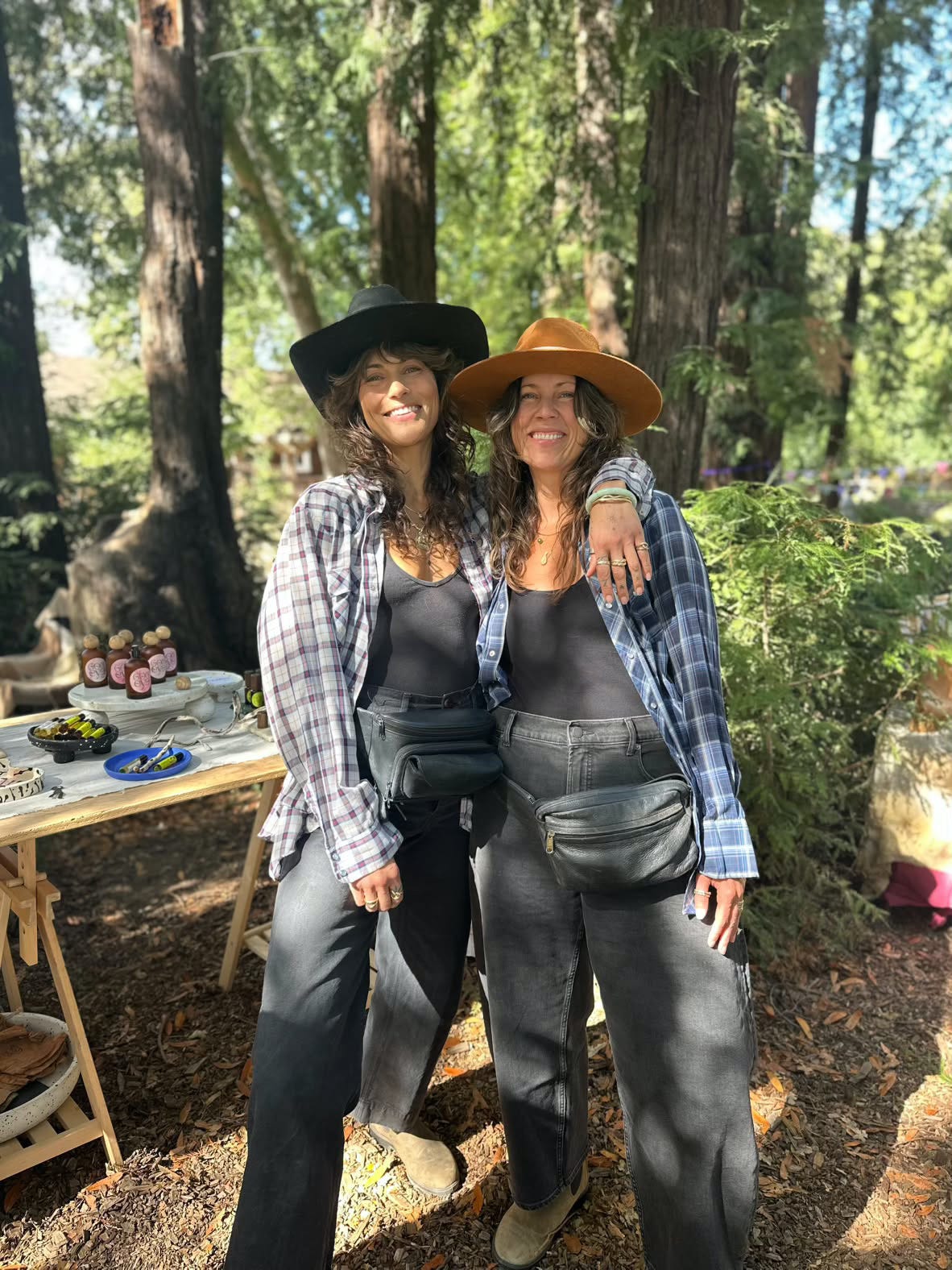
Be sure to subscribe here on Substack and follow — available on Apple Podcasts , Spotify , and wherever you get your podcasts. Parts & Charts is a reader-supported publication. To receive new posts and support my work, consider becoming a free or paid subscriber. ABOUT OUR GUESTS Danielle Mainas is a co-creator of Cacio e Pepe Tarot , a deck that reimagines the 78 cards through food, ritual, and the everyday magic of the table. Made with her creative sisters Megan Morris and Lindsey Newton, the deck has been carried by SFMOMA and featured in Eater and Air Mail. A Gemini sun with a Taurus moon and Leo rising, Danielle lives where curiosity meets comfort: one part endlessly asking questions, one part slow-simmered pleasure, and one part pulling up a chair for everyone. She believes a good meal and a good reading do the same thing. They bring us back to ourselves and to each other. She lives in Sebastopol, California, where the kitchen is her favorite altar. www.cacioepepetarot.com Instagram: Danielle Mainas Natalie Rose Silva In a time of deep grief, Natalie began weaving godseyes. She was a new mother and newly motherless, and as her entire world shifted, she was consumed with the undeniable urge to create, create, create. Each godseye was a portal back to Natalie’s childhood, a reminder of the bright, golden light that she’s carried with her since she was a little girl. Her inner light became her lantern in the darkness, illuminating her own way when no one else could do it for her. As she grew, Natalie became immensely skilled at shining that light onto those around her. She was — and is — a beacon of fierce, abundant love. Natalie’s hands twisted and turned the colorful threads, soaked with channeled oils and scents that imbued each strand with deeper meaning. Her scent inspiration came from the smoky, resinous notes of incense and smudges that came home with her from ceremony, lingering on her clothes and in her hair. These smells were portals, too — an elixir of wild botanicals, whispered prayers, and rock-n-roll devotion. Another godseye was complete. The portal had taken shape and the vision was clear: Godseye was a prayer to alchemize her pain into staggering beauty. https://godseyeoils.com/ https://www.instagram.com/godseyeoils/ Some ideas aren’t ready to happen yet. They just need somewhere to go. For Danielle Mainas and Natalie Rose Silva, that place is a spreadsheet called What We’re Dreaming . Danielle keeps it. Natalie says something brilliant, which is all of the time, and someone says yes, and it goes on the spreadsheet. Big Pants for Tall Queens. Prayer Pops. A moon clock that tells you when to prune, with a goose honking at the full moon. Nothing on the spreadsheet has to happen. It happens when it wants to. Their tarot deck started there. “We don’t know when. We don’t need to know how. We don’t care about how much it costs. It’s just let it flow and let it be open.”— Natalie This week, Danielle (creator of Cacio e Pepe Tarot, where your birth card might be a steak and your Venus might be a Vegas buffet) and Natalie (perfumer and potion-maker behind Godseye) join us to talk about the radical yes of sisterhood. That’s the kind of friendship where permission to cancel makes the yes more reliable, where a sister’s success reads as inspiration rather than threat, and where a 45-minute voice memo is a love letter. “The no’s make the yeses so much more safe.”— Natalie We hear how they met at the Witches Confluence in San Francisco, Danielle sweating behind her booth in what she calls the supermodel alley of witches. For weeks afterward she believed Natalie, Erica, and Emmet were biological sisters, triplets actually, despite a twelve-year age gap. Natalie talks about Sister School, the program she and her spirit sister Erica are building after more than twenty years of ceremony together. It’s a space for healing the sister wound, unlearning female competition, and becoming safe with one another again. “It’s so safe for me to see my sister doing something so incredible. And rather than turn on myself, I can just be like, I would like to have that with you right now.”— Natalie Chelsea names what’s at stake: as we get older and wiser, it’s soul friends only, and the coven matters more than ever. “I think I wrote in my morning pages this morning: soul friends only. SFO.”— Chelsea Then KP asks the question underneath the whole episode: If you were planted in a brand new city and knew no one but the barista, how would you call in your people? The answers include scent as a filtration system, weird backyard preschools, forest yoga, dream work at the CSA pickup, and a blindfolded scavenger hunt with no map, a magic vest, and a headlamp. “Be vulnerable and clap for people when they’re vulnerable. It is unbelievable that someone gets up and does anything vulnerable.”— Danielle KP shares the TikTok that brought twenty-two strangers to a Madison park, seated in a wheel of the year by birthday. She also tells about the Gertrude Stein tattoo that sparked a cafe conversation and went nowhere, and why that didn’t hurt the way it once would have. “I have my coven. You could have been part of it, but it’s okay that you aren’t.”— KP Chelsea and KP also tell their own origin story: a monthly Zoom tarot book club, Seventy-Eight Degrees of Wisdom one chapter at a time, and the two quietest people in the group trusting they’d get there. “I always find who I need to find. Or everyone finds me who needs to find me.”— Chelsea “I really did not understand how fabulous you are until I met you in person.”— KP, to Chelsea There’s astrology too. Leo and Aquarius risings sit in each other’s seventh houses, which is why Danielle and Natalie are wives. Natalie translates KP’s chart into scent: cypress and frankincense for Capricorn, jasmine and sandalwood for Libra, myrrh for a Cancer Moon. We close with a live card pull that reads like it was written for this exact podcast. “Get the tattoo. Claim the people you love. Be the love letter.”— Danielle Find your teacher. Clap for everyone. Soul friends only. Key Takeaways The spreadsheet works as a sacred holding space. Ideas don’t need a how, a when, or a budget to be honored, and they tell you when it’s time. A yes is only as trustworthy as the no’s around it. Healing the sister wound means turning the reflex of comparison into inspiration. To find your people in a new place, do the slightly weird thing that’s true to you, find a teacher, risk rejection, and be vulnerable first. Teacher, friend, sister: one relationship can hold many forms, and the in-between spaces are tender. Voice memo etiquette is a practice in releasing codependency. No one is on the hook, and no one is in trouble. Cards Pulled (Cacio e Pepe Tarot) Natalie: Stew (Queen of Cups), self-assuredness born from a slow burn of tenderness Chelsea: Dream Sandwich (Page of Pentacles), why are you here? You know, already, always have. Danielle: Potluck (Three of Cups), in your community you trust KP: Honey (The Hermit), a slowing that borders on solitude, where the alchemical upgrades come in Resources & Mentions Cacio e Pepe Tarot by Danielle Mainas https://www.cacioepepetarot.com/ Godseye by Natalie Rose Silva www.godseyeoils.com Sister School with Natalie and Erica: introductory weekend November 13–14, six-month program beginning 2027 Witches Confluence, San Francisco Rachel Pollack, Seventy-Eight Degrees of Wisdom Mary K. Greer’s tarot birth card work Forest Yoga About This Podcast Parts & Charts is co-hosted by astrologer KP Kaszubowski and licensed therapist Chelsea Owens, exploring the intersection of astrology and Internal Family Systems. For those applying to grad programs in counseling: * Chelsea Owens pulled together a deeeeeep dive into all the practical elements of this decision, for the price of a cute cafe lunch ($25) — follow this link: https://chelseawow.gumroad.com/l/bfbiau Chelsea’s Oracle deck, Outer Realms for Inner Archives : a collage deck shaped by exactly this work, made the way she makes images of her own parts. Pre-orders coming; this email sign-up form gets you deck news only, no spam. → subscribe here Meet your Moon. I f the Moon is the tender spot for everyone, this is the guided audio course for meeting yours as an inner figure — KP’s active-imagination approach, on your own time. ($42) → https://kpkaszu.gumroad.com/l/meetyourmoon Work with Chelsea. If you’re in California and you’ve been looking for a therapist who will actually go there with you — the deep stuff, the weird stuff, the stuff you’ve never quite found the words for — Chelsea Owens is your person. Licensed therapist, Leo moon, first house everything, art supplies on every surface. She brings clinical rigor and genuine delight to the work in equal measure, which turns out to be exactly what the hard stuff needs. 👉 www.chelseaowenstherapy.com Work with KP. Astrology readings (written, voice note, or live; in person if you’re in Wisconsin), Astro Parts sessions. Book Doula — a monthly retainer for people serious about making the book real. → Book Doula Waitlist: forms.gle/3LwpmAinnBN2Q4aY8 Schedule a 1:1 session → https://app.acuityscheduling.com/schedule.php?owner=22372975 Thanks for reading Parts & Charts! This post is public so feel free to share it. 🌟 Credits Music “Vape Juice Dave’s Bistro” composed by Scott Cary (Wild Western Avenue) for the feature film RINGOLEVIO (2020) directed by KP Kaszubowski — performed by Scott Cary, Max Wikoff, Else Albeck Gasparka, and Sarah Luther. Collage cover art by Chelsea Owens. Get full access to Parts & Charts at partsandcharts.substack.com/subscribe
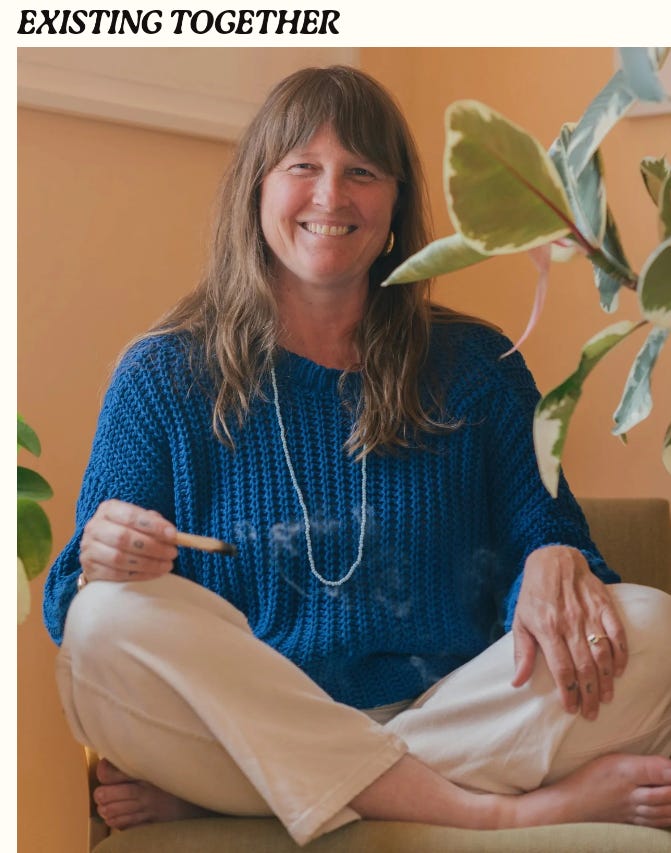
“What is difficult is the offering.” —Astrologer Sarah Fontaine joins KP and Chelsea for a conversation that was supposed to be about the air element and became, instead, about conception, ego death, tormentors, and what it takes to let a life change you. Quick note: parts of the video and audio are not fully operational but the episode as a whole is here, in tact Be sure to subscribe here on Substack and follow — available on Apple Podcasts , Spotify , and wherever you get your podcasts. Parts & Charts is a reader-supported publication. To receive new posts and support my work, consider becoming a free or paid subscriber. Sarah Fontaine is an astrologer working from the shores of the Pacific in San Francisco. She learned astrology as a teenager in 1990s Louisiana, where and when it was decidedly not in fashion, and has made it her work for the past nine years — a through-line she describes as a way of contacting the fabric of the universe, even though she doesn’t claim to understand why. Her readings open with a short guided meditation, move through the key themes of the birth chart and the current transits of the outer planets, and leave room for any question at all. There is no future prediction and, as she puts it on her site, no doom — the goal is the opposite of doom. She also reads for parents, caregivers, and couples, looking at the dynamics between charts rather than transits. Her spiritual ground is humility: each person is the singular expert on their own life. You don’t have to believe in astrology to get something from it; it’s a language, not a protocol. Her working life has included farming, teaching, raft guiding, abolition and prison-justice legal aid, office managing, long Buddhist retreats, and always the writing. She uses the Placidus house system. Her newsletter is called Psychic Hearth — hearth = heart + earth. www.existingtogether.com | sf@existingtogether.com A note before the episode KP opens with a confession: the recording fell apart. Chunks of audio are gone, most of the video is gone, and the seams are marked with what she’s calling a bounce — a few bars of the theme. Her theory is that the devices got overexcited. She also uses the occasion to say something to everyone who’s been asking how to start a podcast: she and Chelsea didn’t know what they were doing either, the setup is still unsophisticated, and the only thing that has kept it going for a year and a half is that it stayed fun. Book the guests you actually want to talk to. Please make a podcast. And please be patient with the blown out audio — this might not be the episode to listen to on full blast with AirPods in Episode Summary The plan was the air element. Sarah had written a series of blog posts on elemental practice that KP found illuminating, and the three of them had emailed about it. Then, before the recording started, they began talking about spirit babies — and that’s where the hour went. What follows is a conversation about the family as a system: how a chart can open spaciousness between people who live in the same house, and how quickly it can close possibility down if you let it decide who your child is. Sarah’s discipline is to not think she knows anything about her children because she has seen their charts. At its best, she says, astrology supports the celebration of how different everyone in a house actually is. Chelsea offers the IFS-adjacent framing of tormentors — the people, often our children, who torment and mentor simultaneously, showing us precisely where we still have work. Sarah hears it as another way of saying the thing she keeps returning to: what is difficult is the offering. She traces it back through conception, pregnancy, and postpartum — a stretch she describes without euphemism as the underworld, six weeks of nausea that never lifted, an able-bodied person suddenly needing help every day, ego death a thousand times over. She is not nostalgic about it. She is grateful for it, which is a different thing. From there: the cultural expectation that you emerge from all of this looking unchanged, and why KP has come to hear “bounce back” as a theft. The absence of ritual around the two-week wait. The paradox that accepting your own limits makes you a better parent, not a worse one, because your kid gets to see a person rather than a neutral surface. Chelsea asks the question she’s asking from the other side of the decision — how do you grieve the independence? — and Sarah answers it honestly, including the part where the fear came true, and then she lived through it, and then it was fine. The astrology sharpens in the back half. Sarah’s Aquarius Moon and Capricorn rising, and the rigidity underneath Aquarius’s apparent openness: the conviction that a feeling only counts if it can be justified intellectually. KP’s read on Aquarian refusal as a positive act rather than a reflex. Sarah’s most exact aspect, Saturn square Venus — the kind of placement an older style of astrology would have handed someone as a sentence, and which she experiences instead as the site of the most pain and the most richness, but only if she engages it as that. It closes on culture-making. Sarah is tired of the washing machine of critique — she names the pull of it, and that it’s an Instagram thing, and that she doesn’t want to stop there. Her ambitions have gotten smaller and more focused: the house, the four people in it, the crucible. She’s lighting candles with her kids before the school year because she doesn’t want to wait for the culture to catch up and hand her a form. And the humblest practices — drink some water, make yourself food, put your legs up the wall — turn out to be how you court the mystery. Key Takeaways * “What is difficult is the offering.” Sarah’s central frame, and the spine of the episode. Not that life should be hard, but that difficulty is built in, and the hard places are the ones that show you the next step. The caveat is essential: it only works if you engage it as that. Otherwise it’s just suffering you’re trying to get through, followed by avoiding the next one. * A chart can open a house or close it. Sarah’s practice with her own family is to hold placements as spaciousness — a tree is a tree, Aries is Aries — rather than as knowledge about who someone is. Used well, it makes room for how radically different four people in one house actually are. * Tormentors. Chelsea’s term for the people who torment and mentor at once. Children qualify most reliably, because they expose the exact places we haven’t finished learning. * “What is mine to do” changes every year. Sarah’s codependence practice — from twelve-step work — is a daily recalibration. Newborn care is total surrender; what’s needed at three is different from four is different from seven. Overstepping, her own default, robs everyone in the family of joy and of the feeling of capacity. * The bounce-back script is a missed teaching. The cultural ideal of coming through conception, pregnancy, and birth looking unchanged treats an ego death as an interruption. KP names the rage about it; Sarah names wanting to metabolize the rage rather than live in it. * There is no ceremony for the two-week wait. One of the most vulnerable, life-reorganizing stretches a person goes through, and we spend it alone on our phones. Sarah is building in-person work — food, humming, transits, a container — for exactly these states. Not a retreat you leave your life for; a form for householders. * Independence was a brief delusion. Sarah’s account of needing help every day, having been obliviously able-bodied her whole life, and coming out the other side unconvinced that independence is a real category. What exists is the ability to navigate the world in certain ways and mistake that for self-sufficiency. * Children are fifth house, and so is everything else you make. Sarah on being a conduit rather than an author: she was pregnant, and then there was a baby, and she didn’t do anything. She reads it as a teaching about the creative process generally — which reframes the fear of losing making-time into something more interesting. * Hard aspects as invitation, not verdict. Saturn square Venus is Sarah’s most exact aspect and would have been delivered as doom in an older idiom. Her experience: a lot of pain in relationships of all kinds, and also the richest material she has. The aspect keeps returning her to the subject until she learns it. * Uncomfortable placements get resourceful. KP’s framing of the Aquarius Moon — a planet in an uncomfortable condition often has to find more resources, and over time that becomes the strength. * Aquarian rigidity hides inside Aquarian openness. Sarah on the fixed edge of it: a conviction about how a thing should be, and a feeling that’s only permitted if it can be intellectually justified. Her kids keep breaking the conceptual boxes, including the ones about how to parent and where to go to school. * Rebellion is still the thing it rebels against. Sarah’s current question: the fighting reproduces a certain kind of suffering, and the critique is compelling and easy to stay inside. So what’s the thing that isn’t either pole? Mostly, right now, it’s making the culture directly — candles, a ceremony before school, the humility of not waiting. * Courting the mystery is unglamorous. Chelsea brings back advice from a channeling workshop; Sarah lands it on the most ordinary practices she gives people in readings. Drink some water. Make yourself food. Legs up the wall. The rituals say I’m here for it. Key Quotes “What is difficult is the offering. Everything else is too, but that one is the way towards more freedom.” — Sarah Fontaine “It’s so important in this dance to not think I know anything about them because I look at their chart.” — Sarah Fontaine, on her children “Your children are your tormentors — something that’s tormenting you, but also mentoring you.” — Chelsea Owens “You wouldn’t want to be the same after grad school as you were before. So why would conception and raising a human being be you taking a vacation and going back?” — KP Kaszubowski “My tendency is to overstep and do more than is needed. And that robs everybody in the family of joy and of the feeling of capacity.” — Sarah Fontaine “There’s no such thing as independence. There’s such a thing as being able to navigate the world in certain ways and kind of think that that’s happening.” — Sarah Fontaine “I was pregnant and then I had the baby, but I didn’t do anything... I was a conduit for that life. And I feel like that’s the creative process.” — Sarah Fontaine “Those places that feel hard, they push us or they guide us or they invite us to that place over and over to really learn about it. But only if I engage with it as that.” — Sarah Fontaine, on Saturn square Venus “Rebelling is just another side of following. They’re the same thing.” — Sarah Fontaine “I don’t want to wait until the culture catches up to have something to offer me... We make the culture. So let’s make it.” — Sarah Fontaine “I’ve lost the plot when I think that it’s a burden to go get food to cook for myself and my family.” — Sarah Fontaine “What if I naturally was someone who needed to say no less ?” — KP Kaszubowski Resources & Links * Sarah Fontaine / Existing Together — existingtogether.com . Astrology readings for individuals, parents and caregivers, and couples. Not on Instagram. * Psychic Hearth — Sarah’s newsletter, and a phrase she uses in this episode for the practice itself. Sign up at existingtogether.com/psychic-hearth . * Stephen Jenkinson, Die Wise: A Manifesto for Sanity and Soul — the book Sarah is currently obsessed with, on how a death-phobic culture leaves us untrained for dying. She reads it as equally true of birth. * Rupert Spira — non-dual teacher, source of the line Sarah quotes: we are verbs more than nouns. * Andrea Gibson, “Tincture” * “Chop wood, carry water.” — the Zen instruction that got KP through a long stretch of unemployment, once she stopped trying to out-apply it. About This Podcast Parts & Charts is co-hosted by astrologer KP Kaszubowski and licensed therapist Chelsea Owens, exploring the intersection of astrology and Internal Family Systems. For those applying to grad programs in counseling: * Chelsea Owens pulled together a deeeeeep dive into all the practical elements of this decision, for the price of a cute cafe lunch ($25) — follow this link: https://chelseawow.gumroad.com/l/bfbiau Chelsea’s Oracle deck, Outer Realms for Inner Archives : a collage deck shaped by exactly this work, made the way she makes images of her own parts. Pre-orders coming; this email sign-up form gets you deck news only, no spam. → subscribe here Meet your Moon. I f the Moon is the tender spot for everyone, this is the guided audio course for meeting yours as an inner figure — KP’s active-imagination approach, on your own time. ($42) → https://kpkaszu.gumroad.com/l/meetyourmoon Work with Chelsea. If you’re in California and you’ve been looking for a therapist who will actually go there with you — the deep stuff, the weird stuff, the stuff you’ve never quite found the words for — Chelsea Owens is your person. Licensed therapist, Leo moon, first house everything, art supplies on every surface. She brings clinical rigor and genuine delight to the work in equal measure, which turns out to be exactly what the hard stuff needs. 👉 www.chelseaowenstherapy.com Work with KP. Astrology readings (written, voice note, or live; in person if you’re in Wisconsin), Astro Parts sessions. Book Doula — a monthly retainer for people serious about making the book real. → Book Doula Waitlist: forms.gle/3LwpmAinnBN2Q4aY8 Schedule a 1:1 session → https://app.acuityscheduling.com/schedule.php?owner=22372975 Thanks for reading Parts & Charts! This post is public so feel free to share it. 🌟 Credits Music “Vape Juice Dave’s Bistro” composed by Scott Cary (Wild Western Avenue) for the feature film RINGOLEVIO (2020) directed by KP Kaszubowski — performed by Scott Cary, Max Wikoff, Else Albeck Gasparka, and Sarah Luther. Collage cover art by Chelsea Owens. Get full access to Parts & Charts at partsandcharts.substack.com/subscribe
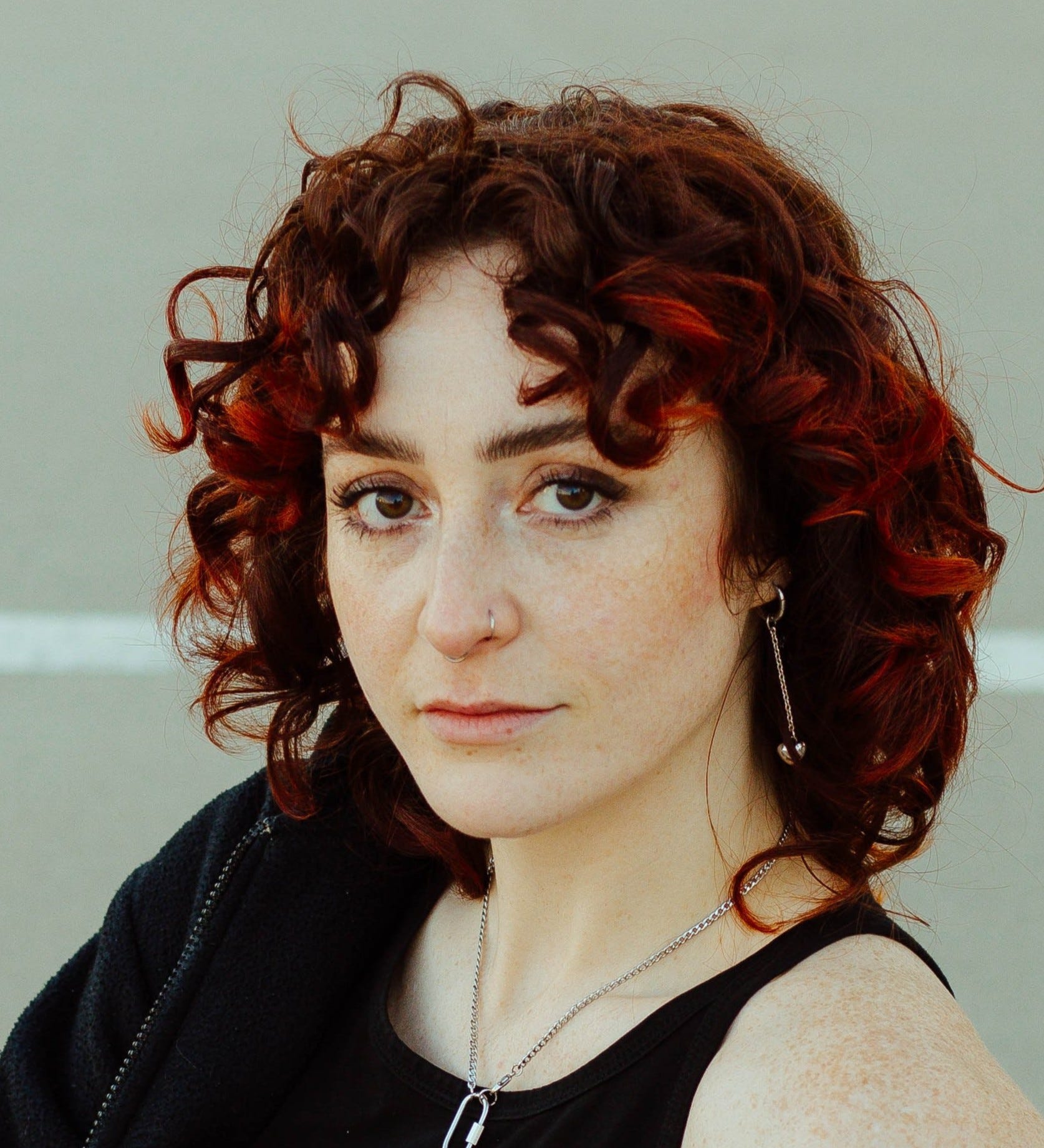
"Planets in cadent houses can be the most talented in the world and good at what they do, but it's like they're several blocks away down an alleyway, by the dumpster." —Astrologer Jo O'Neill (Jo Maker of Ways) joins KP and Chelsea to ask what astrology's "afflicted" placements and IFS's exiled parts actually have in common. Be sure to subscribe here on Substack and follow — available on Apple Podcasts , Spotify , and wherever you get your podcasts. Parts & Charts is a reader-supported publication. To receive new posts and support my work, consider becoming a free or paid subscriber. Jo O'Neill (she/they) is an astrologer, writer, and 12th house specialist who believes the Story in your chart is always the perfect Story for you to read. Through her signature combination of Hellenistic technique and storytelling, Waymaking , Jo’s goal is to highlight the nuance and multiplicity inside every person’s chart and reenchant their world in the process. www.jomakerofways.com | ig: Jo O'Neill Episode Summary An experimental three-way conversation: KP and Chelsea bring in astrologer Jo O’Neill (Jo Maker of Ways) to explore whether the astrological concepts of essential dignity (specifically planets in detriment and fall ) have anything to say to IFS’s concept of the exile . Jo walks through detriment/fall as “unconventional” rather than deficient resourcing, then the three trace parallels through angularity (visibility/volume in the chart), house rulership , and the idea of approaching a placement, like a part, with curiosity instead of assumption. The conversation moves through Jo’s narrative and oracular “way-making” method of speaking to planets as characters, Saturn’s recurring role as an over-functioning protector archetype, and how a person’s relationship to placements like Saturn can shift with time and age. Chelsea grounds the exchange throughout with the clinical IFS frame, defining exiles and protectors, and naming how convincingly a protective belief can pass as truth until the system feels safe enough to test it. KP closes by naming the throughline of the show so far: astrological literacy makes IFS work more specific, and IFS work makes astrological placements legible as lived experience rather than data points. Key Takeaways * Detriment and fall ≠ “bad.” Jo reframes these essential-dignity conditions as a planet being unconventionally resourced rather than poorly resourced, like being far from home and having to improvise with unfamiliar tools, which often produces creative skill sets a well-resourced planet wouldn’t need to develop. * Fall is generally the more difficult condition of the two , functionally, the inverse not just of being “at home” (domicile) but of being an honored guest (exaltation). Jo notes this varies by planet: Mercury tends to adapt easily even in detriment/fall; Mars tends to struggle more (e.g., anger that’s hard to access or that turns inward). * Angularity is about volume and visibility, not power. Planets in angular houses (1st, 4th, 7th, 10th) are easily seen/heard regardless of resourcing; planets in cadent or “dark” houses (12th, 8th, 6th, 3rd, 9th) can be just as capable but structurally harder to notice, which Jo connects directly to the IFS concept of the exile. * House rulership may matter more than placement. A planet ruling a “dark” house (especially the 12th) often takes on an editorial/gatekeeping role, deciding what gets shown to the world, which can map onto protector dynamics. * Saturn recurs as a protector archetype across the conversation; frequently the planet making unilateral decisions to guard other, more tender placements, often with an edge of harshness that softens once its underlying protective reasoning is understood. * The methodological point, stated plainly by KP near the end: data and technique only go so far. The value is in application (meditation, narrative work, active imagination, painting, dancing) actually meeting a placement rather than assigning meaning to it in advance. * Time changes the relationship. Jo pushes back on language like “evolved” or “unevolved” placements, but affirms that lived experience, especially through repeated Saturn transits/returns, visibly changes how someone relates to a difficult placement. * Jo’s “way-making” method : narrative/oracular work that meets planets as characters in an imaginal story (rather than applying meaning from outside), including asking a planet directly what its job is and what it would do with unstructured time. Key Quotes “It’s less that they’re ill-resourced or poorly resourced, and more that they’re unconventionally resourced.” — Jo O’Neill, on planets in detriment/fall “The most exily of all, I think... you are the — people don’t like you here. They don’t want you here.” — Jo O’Neill, on planets in fall “Angular houses... it’s like those planets are in the village square up on a platform with a microphone. Planets in cadent houses... they can be the most talented in the world and good at what they do, but it’s like they’re several blocks away down an alleyway, by the dumpster.” — Jo O’Neill, on angularity as visibility “We shouldn’t be assuming we know people that we don’t know and what they need until we talk to them. I treat the planets the same way.” — Jo O’Neill “At a point, the data is not gonna do anything for you... until you apply it.” — KP Kaszubowski “Our parts are pretty much — consciously or unconsciously — doing such a good job at what they’re doing, which is protecting us.” — Chelsea Owens Resources & Links * Jo O’Neill / Jo Maker of Ways — Instagram: @jomakerofways www.jomakerofways.com * Jo’s Substack Waymaking Chronicles — monthly live mini chart readings for paid subscribers * Upcoming: a Venus retrograde “way-making” cohort through Jo’s Substack About This Podcast Parts & Charts is co-hosted by astrologer KP Kaszubowski and licensed therapist Chelsea Owens, exploring the intersection of astrology and Internal Family Systems. For those applying to grad programs in counseling: * Chelsea Owens pulled together a deeeeeep dive into all the practical elements of this decision, for the price of a cute cafe lunch ($25) — follow this link: https://chelseawow.gumroad.com/l/bfbiau Chelsea’s Oracle deck, Outer Realms for Inner Archives : a collage deck shaped by exactly this work, made the way she makes images of her own parts. Pre-orders coming; this email sign-up form gets you deck news only, no spam. → subscribe here Meet your Moon. I f the Moon is the tender spot for everyone, this is the guided audio course for meeting yours as an inner figure — KP’s active-imagination approach, on your own time. ($42) → https://kpkaszu.gumroad.com/l/meetyourmoon Work with Chelsea. If you’re in California and you’ve been looking for a therapist who will actually go there with you — the deep stuff, the weird stuff, the stuff you’ve never quite found the words for — Chelsea Owens is your person. Licensed therapist, Leo moon, first house everything, art supplies on every surface. She brings clinical rigor and genuine delight to the work in equal measure, which turns out to be exactly what the hard stuff needs. 👉 www.chelseaowenstherapy.com Work with KP. Astrology readings (written, voice note, or live; in person if you’re in Wisconsin), Astro Parts sessions. Book Doula — a monthly retainer for people serious about making the book real. → Book Doula Waitlist: forms.gle/3LwpmAinnBN2Q4aY8 Schedule a 1:1 session → https://app.acuityscheduling.com/schedule.php?owner=22372975 Thanks for reading Parts & Charts! This post is public so feel free to share it. 🌟 Credits Music “Vape Juice Dave’s Bistro” composed by Scott Cary (Wild Western Avenue) for the feature film RINGOLEVIO (2020) directed by KP Kaszubowski — performed by Scott Cary, Max Wikoff, Else Albeck Gasparka, and Sarah Luther. Collage cover art by Chelsea Owens. Get full access to Parts & Charts at partsandcharts.substack.com/subscribe
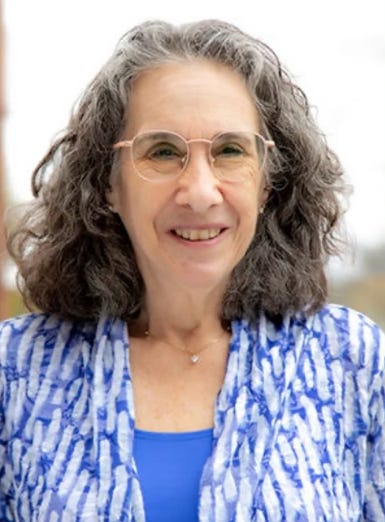
Be sure to subscribe here on Substack and follow — available on Apple Podcasts , Spotify , and wherever you get your podcasts. Parts & Charts is a reader-supported publication. To receive new posts and support my work, consider becoming a free or paid subscriber. What if the thing you call your personality is really just where your attention learned to hold first? Joan Ryan joins us to take the Enneagram apart — past the quiz, past the stereotype — and put it back together as something closer to a map of the unconscious. About Our Guest Joan Rosenberg Ryan, JD Joan Rosenberg Ryan, JD — Enneagram Master Teacher and IFS trained Practitioner, directly mentored and trained by Helen Palmer in Narrative Enneagram, Palmer/Daniels certified Enneagram Teacher since 1996, IFS trained practitioner (2011), published in the book that brought 30 leading IFS experts together: IFS Integrations , (PESI 2025) served as a Narrative Enneagram Expert for Dan Siegel in the first public workshop for “Patterns of Developmental Pathways” (Siegel et al) at Hollyhock 2024, and is a trauma-informed facilitator. Known for her compassionate clarity, emotional depth and ability to help people meet the parts of themselves they’ve long protected or exiled both inside and outside the Enneagram map. Joan carries the narratives of thousands of Enneagram interviews with her and shares them with her students. https://innershiftexperience.com/ https://www.joanrryan.com/ Episode Summary Joan Ryan joins Chelsea and KP for a deep dive into the narrative Enneagram — the nine-type system she’s taught for over three decades, first alongside Helen Palmer and David Daniels, and more recently in a synthesis with Internal Family Systems (IFS) developed with Tammy Sollenberger. Joan is clear from the outset that the Enneagram isn’t a behavioral checklist or an online quiz result: it’s a map of where a person’s attention habitually goes, organized into three triads — agency/autonomy (body types 8, 9, 1), bonding/connection (heart types 2, 3, 4), and certainty (head types 5, 6, 7). The conversation moves through how type patterns form early (Joan and her colleague Dan Siegel’s interpersonal neurobiology work point toward origins well before conscious memory), why self-typing from a test is unreliable, and how IFS protectors can actively obscure a person’s true type until they’re gently invited to relax. Joan and Chelsea also discuss connected points (formerly “integration/disintegration” lines), wings, and why stress and security don’t map neatly onto negative and positive behavior the way pop psychology suggests. The episode closes with a walkthrough of all nine types’ core focus of attention, and an invitation into Joan’s in-person Inner Shift Experience retreat. Key Takeaways * The Enneagram is not behavioral. Two people of the same type can look completely different on the outside; what’s shared is where attention goes first , not how it’s expressed. * Type quizzes capture a snapshot, not a structure. Self-report tests reflect the day you took them — mood, socialization, self-observation skill — not necessarily your core pattern. * Protectors can hide your actual type. Just as in IFS more broadly, a person’s real pattern may be obscured by protective parts, especially if identifying with a type feels threatening (e.g., resembling a difficult parent). * The three triads each have a core motivation: agency/autonomy (8, 9, 1), bonding/connection (2, 3, 4), and certainty (5, 6, 7) — with the middle number of each triad (3, 6, 9) representing the most “core” expression of that triad’s theme. * Avoidance doesn’t disappear — it gets subtler. Growth isn’t about eliminating a type’s core avoidance; it’s about developing enough awareness and tools that it stops running the show. * Connected points (not just wings) matter. Each type has a stronger, more deeply embedded connection to one other type, distinct from the more surface-level “wing” types on either side. * Type is theorized as very early — possibly prenatal — patterning, per Joan’s collaboration with Dan Siegel’s interpersonal neurobiology research, not something created later by specific traumatic events. * Typing is diagnostic support, not a verdict. Joan is emphatic that the goal is never to tell someone who they are, but to give them more accurate material to self-inquire with. Key Quotes Joan, describing what drew her to the Enneagram: “It’s a map that describes nine different patterns through which people look at or experience the world.” On the danger of typing from a test: Joan explains that a self-report test only captures a snapshot shaped by variables like self-observation skill and what’s going on in someone’s life that day — and that people can get “locked” into believing a result that short-circuits their ability to actually grow from the material. On the enduring nature of core patterns: Joan’s view is that an avoidance pattern never fully disappears — what changes with growth is a person’s capacity to recognize it and work with it before it overwhelms them. Resources & Links * Joan Ryan’s retreat: Inner Shift Experience — in-person Enneagram + IFS + embodiment retreats, co-led with Leslie Hirschberger and Lisa Everts. Next retreat: February, Cincinnati (application-based; not intended as an introductory/beginner offering). * Joan Ryan’s personal site: joanrryan.com * Published work: Joan’s Enneagram/IFS synthesis (developed with Tammy Sollenberger) appears as a chapter in All Together Us (ed. Jenna Riemersma, 2023) and its 2025 update, IFS Integrations * Referenced research: Dan Siegel’s interpersonal neurobiology work on the neurobiological basis of Enneagram-adjacent motivational groupings About This Podcast Parts & Charts is co-hosted by astrologer KP Kaszubowski and licensed therapist Chelsea Owens, exploring the intersection of astrology and Internal Family Systems. For those applying to grad programs in counseling: * Chelsea Owens pulled together a deeeeeep dive into all the practical elements of this decision, for the price of a cute cafe lunch ($25) — follow this link: https://chelseawow.gumroad.com/l/bfbiau Chelsea’s Oracle deck, Outer Realms for Inner Archives : a collage deck shaped by exactly this work, made the way she makes images of her own parts. Pre-orders coming; this email sign-up form gets you deck news only, nothing else. → subscribe here Meet your Moon. If the Moon is the tender spot for everyone, this is the guided audio course for meeting yours as an inner figure — KP’s active-imagination approach, on your own time. ($42) → https://kpkaszu.gumroad.com/l/meetyourmoon Work with Chelsea. If you’re in California and you’ve been looking for a therapist who will actually go there with you — the deep stuff, the weird stuff, the stuff you’ve never quite found the words for — Chelsea Owens is your person. Licensed therapist, Leo moon, first house everything, art supplies on every surface. She brings clinical rigor and genuine delight to the work in equal measure, which turns out to be exactly what the hard stuff needs. 👉 www.chelseaowenstherapy.com Work with KP. Astrology readings (written, voice note, or live; in person if you’re in Wisconsin), Astro Parts sessions. Book Doula — a monthly retainer for people serious about making the book real, three clients at a time, waitlist when full. → Book Doula Waitlist: forms.gle/3LwpmAinnBN2Q4aY8 Schedule a 1:1 session → https://app.acuityscheduling.com/schedule.php?owner=22372975 Thanks for reading Parts & Charts! This post is public so feel free to share it. 🌟 Credits Music “Vape Juice Dave’s Bistro” composed by Scott Cary (Wild Western Avenue) for the feature film RINGOLEVIO (2020) directed by KP Kaszubowski — performed by Scott Cary, Max Wikoff, Else Albeck Gasparka, and Sarah Luther. Collage cover art by Chelsea Owens. Get full access to Parts & Charts at partsandcharts.substack.com/subscribe
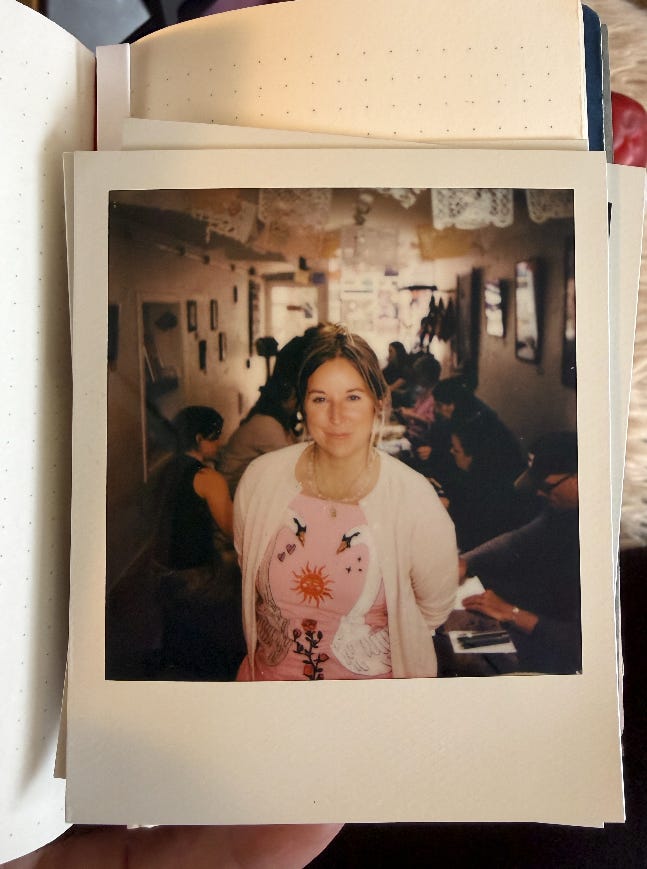
Be sure to subscribe here on Substack and follow — available on Apple Podcasts , Spotify , and wherever you get your podcasts. Parts & Charts is a reader-supported publication. To receive new posts and support my work, consider becoming a free or paid subscriber. An episode where KP Kaszubowski talks with IFS and art therapist Chelsea Owens about blending and unblending - and we do an activity around the “You”-Turn concept. Aaaaaand we joked about KP looking for part time work in the Madison area. While this is kind of true, she’s more open to clients who are elders or experts in their fields that want to grow their social media engagement. If that’s you — especially if you are a therapist, coach, writer, or artist — message her at kp@havecakecreative.com This episode is a primer, not a crossover — astrology gets a nod but stays in the background. Chelsea walks through two foundational Internal Family Systems concepts: blending , when a part takes over the system so fully it’s effectively doing the talking, and unblending , the process of getting enough space from a part to relate to it rather than be it. KP shares a personal account of an early unblending experience — encountering a very young, long-held part connected to their sister and grandmother — and the felt difference between feeling a part’s emotion directly versus sensing it with some distance. Chelsea then leads KP through a live U-turn exercise: a guided visualization for noticing which part shows up in a difficult relational dynamic and exploring what more choice might feel like in that moment. The conversation closes with a discussion of direct access (when a practitioner works with a blended part on a client’s behalf) and the practice of letting a part choose its own name, rather than assigning one to it. Key Takeaways * Blending is the norm, not the exception. Most people are blended with some part most of the time — parts have jobs to do, so of course they’re active. Blending becomes worth noticing when one part takes over the system, especially in charged or emotionally activated moments. * Unblending creates relational distance, not emotional distance. KP describes the shift from feeling a part’s sadness as their own to sensing it while remaining themselves — present with the part’s experience without being fully inside it. * The U-turn redirects attention inward. Rather than focusing on what someone else is doing, the U-turn asks: which part of me is responding right now, and how do I want to respond? Chelsea notes this is something within a person’s control even when another person’s behavior isn’t. * The guided exercise itself: picture a difficult relationship, place both people in a room, then “take the roof off” to observe from above — watching the interaction, noticing what you want to say, and imagining how the other person might respond. KP’s takeaway: the exercise didn’t produce a single “right” response, it produced more options . * Direct access is a practitioner tool, not a self-practice. When a client’s part is too blended for the client to access much Self-energy in the moment, the practitioner may work with the part directly — offering their own steadier presence until the part can start to trust the client’s own capacity to be with it. * Let a part name itself. Rather than assigning a label, ask the part what it wants to be called (or whether it wants a name at all) — naming from an agenda is itself worth noticing as a possible sign of another part at work. Key Quotes “We’re all pretty much blended with a part... in most of our daily lives.” — Chelsea “When a part is really blended... it’s kind of taking over.” — Chelsea “I had more options.” — KP, on the You-turn exercise “How do I want to respond? ...what parts are involved with that?” — Chelsea, on the You-turn “The therapist accesses the client’s part that’s blended directly, so they have a dialogue.” — Chelsea, on direct access About This Podcast Parts & Charts is co-hosted by astrologer KP Kaszubowski and licensed therapist Chelsea Owens, exploring the intersection of astrology and Internal Family Systems. For those applying to grad programs in counseling: * Chelsea Owens pulled together a deeeeeep dive into all the practical elements of this decision, for the price of a cute cafe lunch ($25) — follow this link: https://chelseawow.gumroad.com/l/bfbiau Chelsea’s Oracle deck, Outer Realms for Inner Archives : a collage deck shaped by exactly this work, made the way she makes images of her own parts. Pre-orders coming; this email sign-up form gets you deck news only, nothing else. → subscribe here Meet your Moon. If the Moon is the tender spot for everyone, this is the guided audio course for meeting yours as an inner figure — KP’s active-imagination approach, on your own time. ($42) → https://kpkaszu.gumroad.com/l/meetyourmoon Work with Chelsea. If you’re in California and you’ve been looking for a therapist who will actually go there with you — the deep stuff, the weird stuff, the stuff you’ve never quite found the words for — Chelsea Owens is your person. Licensed therapist, Leo moon, first house everything, art supplies on every surface. She brings clinical rigor and genuine delight to the work in equal measure, which turns out to be exactly what the hard stuff needs. 👉 www.chelseaowenstherapy.com Work with KP. Astrology readings (written, voice note, or live; in person if you’re in Wisconsin),astrology readings “mommy and me”, Astro Parts sessions. Book Doula — a monthly retainer for people serious about making the book real, three clients at a time, waitlist when full. → Book Doula Waitlist: forms.gle/3LwpmAinnBN2Q4aY8 Schedule a 1:1 session → https://app.acuityscheduling.com/schedule.php?owner=22372975 Thanks for reading Parts & Charts! This post is public so feel free to share it. 🌟 Credits Music “Vape Juice Dave’s Bistro” composed by Scott Cary (Wild Western Avenue) for the feature film RINGOLEVIO (2020) directed by KP Kaszubowski — performed by Scott Cary, Max Wikoff, Else Albeck Gasparka, and Sarah Luther. Collage cover art by Chelsea Owens. Get full access to Parts & Charts at partsandcharts.substack.com/subscribe
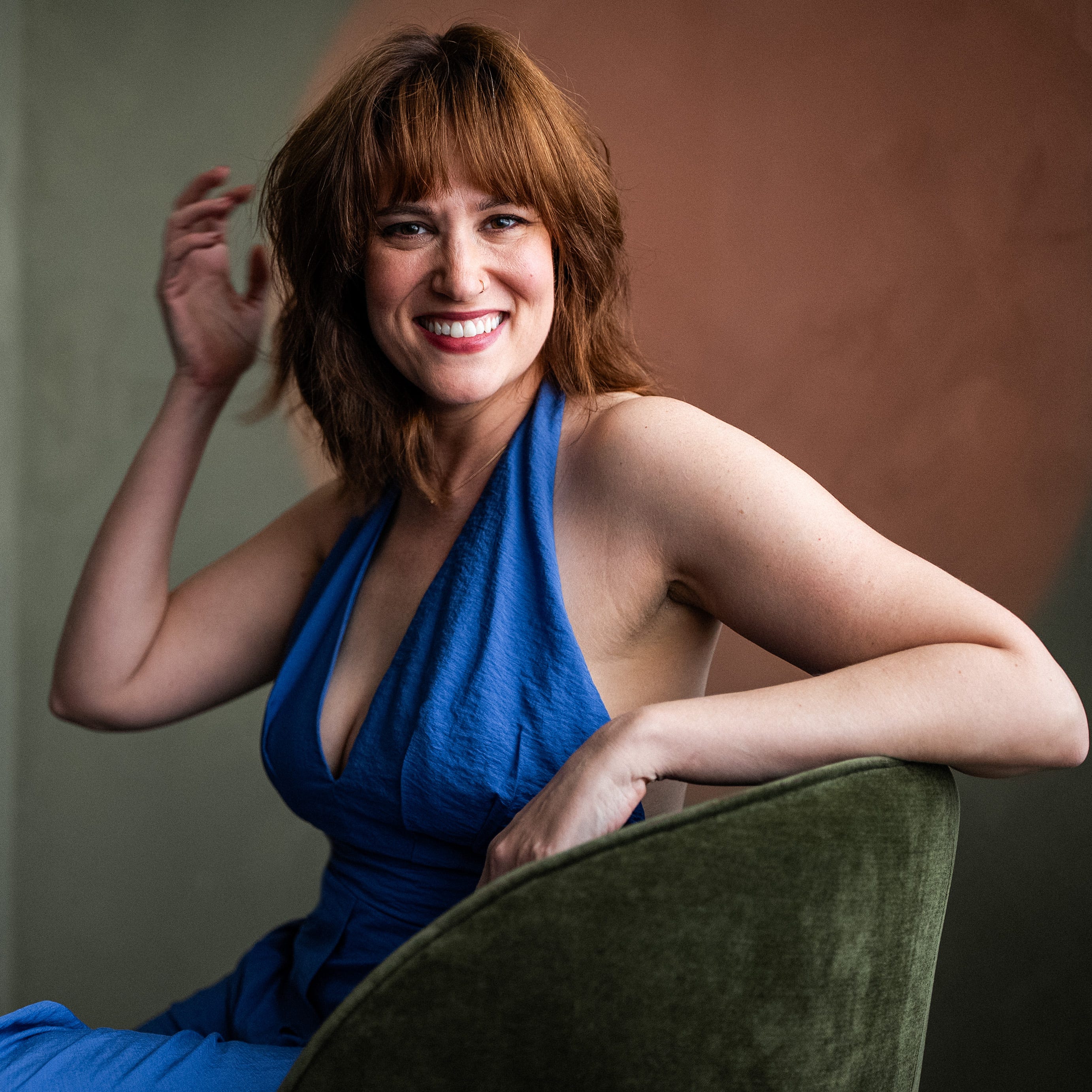
Be sure to subscribe here on Substack and follow — available on Apple Podcasts , Spotify , and wherever you get your podcasts. A conversation with actor, somatic teacher, and astrologer Paton Ashbrook on Pluto, generational cycles, and why the mistake is the art. Parts & Charts is a reader-supported publication. To receive new posts and support my work, consider becoming a free or paid subscriber. In This Episode KP and Chelsea are joined by actor, yoga teacher, and astrologer Paton Ashbrook (Juilliard-trained, Shameless alum, Gabor Maté-trained in compassionate inquiry) for a sprawling conversation that starts with her own astrology origin story — reading her chart at eight years old — and moves through somatics, acting as shadow practice, and a long, generative dig into Pluto in Scorpio as the signature of a generation. Paton talks about training bodies to feel safe enough to be seen, why perfectionism has no place in art, and what it means to let a monster be a baby again. A note before you listen: In the episode, Paton calls the Founding Fathers / Sons of Liberty "the last hero generation" in Strauss–Howe generational theory. She's since clarified — the Founders were a hero generation, same as her millennial parallel, but not the most recent one before millennials. That's actually the G.I. Generation (born roughly 1901–1927), many of whom carried Pluto in Gemini, activated during World War II when transiting Uranus was also in Gemini. We're leaving the on-air moment as it happened and flagging the correction here for anyone following the generational-astrology thread closely. About Paton Ashbrook: “I’m a filmmaker, somatic teaching artist & facilitator, and baby astrologer spreading my cosmic wings! I see the stars in everything: in processing trauma and healing generational cycles, in art as shadow work that transforms the Self and culture, and across our tumultuous political landscapes. My Patreon “StarBodied” combines all of these into a single community where I offer educational content, somatic and artistic practices, readings, classes, and workshops that help you embody the stars.” Patreon: Paton Ashbrook TikTok: @hollywoodinbk Instagram: @patonashbrook “Harvest” short film: harvestfilmproject.com Key Takeaways The chart doesn’t need to work to be useful. Paton’s stance on astrology: it doesn’t matter whether it’s “real” in a falsifiable sense — what matters is whether it helps you understand yourself and others better. The symbols are a discovery tool, not a verdict. Squares and oppositions build agency, not doom. Harsh aspects (the Saturnian opposition, the Martian square) get read as threats, but Paton reframes them as the pressure that moves a person to actually build, choose, and act. A chart with no hard aspects isn’t cursed — it’s just less activated. Benefics have a shadow too. Jupiter isn’t uncomplicated good luck — in Paton’s own chart (Jupiter in Gemini, 5th house, opposing Saturn) it shows up as too many creative directions at once, burnout from wanting to do everything. Ease can become its own kind of confusion. The averse houses (2, 6, 8, 12) run in the background. In ancient technique, these houses don’t see the ascendant and receive less of the chart’s life-force. Paton’s own cadent, “backstage” placements — Moon, Venus, Neptune, Mercury/Mars — map onto a life that’s often working out of view before it becomes visible. Acting is a rehearsal room for parts. Paton’s throughline: playing a villain, a griever, a monster requires locating empathy for material you’d otherwise reject in yourself. Somatic training (breath, movement, “warming up”) isn’t really about the voice or body — it’s about convincing the nervous system it’s safe enough to let more of you show up. The baby-monster exercise. From Paton’s training with Kai Cheng Tom: take whatever “monster” lives in you — a harpy, a screaming thing — and ask what it needed as an infant. What would quiet a baby harpy? The exercise moves shadow material out of judgment and into care. Pluto in Scorpio as a generational signature. Paton reads millennials’ Pluto-in-Scorpio placement (and its position in the 12th house of the U.S. Sibley chart) as a story about hidden labor, absorbed loss, and now — with transiting Pluto in Aquarius squaring it — a forced reckoning. Her read: the discomfort isn’t a sign something’s going wrong, it’s Pluto doing its actual job of excavation. No one is coming to save us. The Uranus-in-Gemini return (last seen at the American Revolution and the Civil War) is framed as a portal, not a prophecy — available, but only realized through the Martian/Saturnian follow-through of actually walking through it. Perfection isn’t the goal, integration is. Paton’s Virgo South Node history with perfectionism gets reframed through her Pisces North Node: leaning into mess, dropping over-preparation, trusting that flaws aren’t a departure from the art — they’re the art. [Share] Key Quotes “Whatever’s in the shadow that you keep there will end up running your life.” — Paton, on the core ethos of her work “The mistake’s actually a part of the art.” — Paton, on a lesson from her mother “That part of you loves you so much that it doesn’t want you to lose the chance. It will go to extreme measures to wake you up.” — Paton, quoting A.H. Almas “Not everybody’s meant for everybody else, so it’s all good.” — Paton, on friendship and Saturn in the 11th house “Acting classes for everybody... that is empathy, and that is what’s gonna save the world.” — Paton Resources & References Mentioned * Paton Ashbrook’s astrology + somatics work: [Patreon link — TBD, launching soon] * The Embody Lab — mind-body certification program; training with Kai Cheng Tom on somatic/shadow work * Gabor Maté’s Compassionate Inquiry training * Kepler College — astrology coursework * A.H. Almas — quote on conflict and the self, referenced in-episode * U.S. Sibley chart — referenced throughout the generational-Pluto discussion About This Podcast Parts & Charts is co-hosted by astrologer KP Kaszubowski and licensed therapist Chelsea Owens, exploring the intersection of astrology and Internal Family Systems. For those applying to grad programs in counseling: * Chelsea Owens pulled together a deeeeeep dive into all the practical elements of this decision, for the price of a cute cafe lunch ($25) — follow this link: https://chelseawow.gumroad.com/l/bfbiau Chelsea’s Oracle deck, Outer Realms for Inner Archives : a collage deck shaped by exactly this work, made the way she makes images of her own parts. Pre-orders coming; this email sign-up form gets you deck news only, nothing else. → subscribe here Meet your Moon. If the Moon is the tender spot for everyone, this is the guided audio course for meeting yours as an inner figure — KP’s active-imagination approach, on your own time. ($42) → https://kpkaszu.gumroad.com/l/meetyourmoon Work with Chelsea. If you’re in California and you’ve been looking for a therapist who will actually go there with you — the deep stuff, the weird stuff, the stuff you’ve never quite found the words for — Chelsea Owens is your person. Licensed therapist, Leo moon, first house everything, art supplies on every surface. She brings clinical rigor and genuine delight to the work in equal measure, which turns out to be exactly what the hard stuff needs. 👉 www.chelseaowenstherapy.com Work with KP. Astrology readings (written, voice note, or live; in person if you’re in Wisconsin),astrology readings “mommy and me”, Astro Parts sessions. Book Doula — a monthly retainer for people serious about making the book real, three clients at a time, waitlist when full. → Book Doula Waitlist: forms.gle/3LwpmAinnBN2Q4aY8 Schedule a 1:1 session → https://app.acuityscheduling.com/schedule.php?owner=22372975 Thanks for reading Parts & Charts! This post is public so feel free to share it. 🌟 Credits Music “Vape Juice Dave’s Bistro” composed by Scott Cary (Wild Western Avenue) for the feature film RINGOLEVIO (2020) directed by KP Kaszubowski — performed by Scott Cary, Max Wikoff, Else Albeck Gasparka, and Sarah Luther. Collage cover art by Chelsea Owens. Get full access to Parts & Charts at partsandcharts.substack.com/subscribe
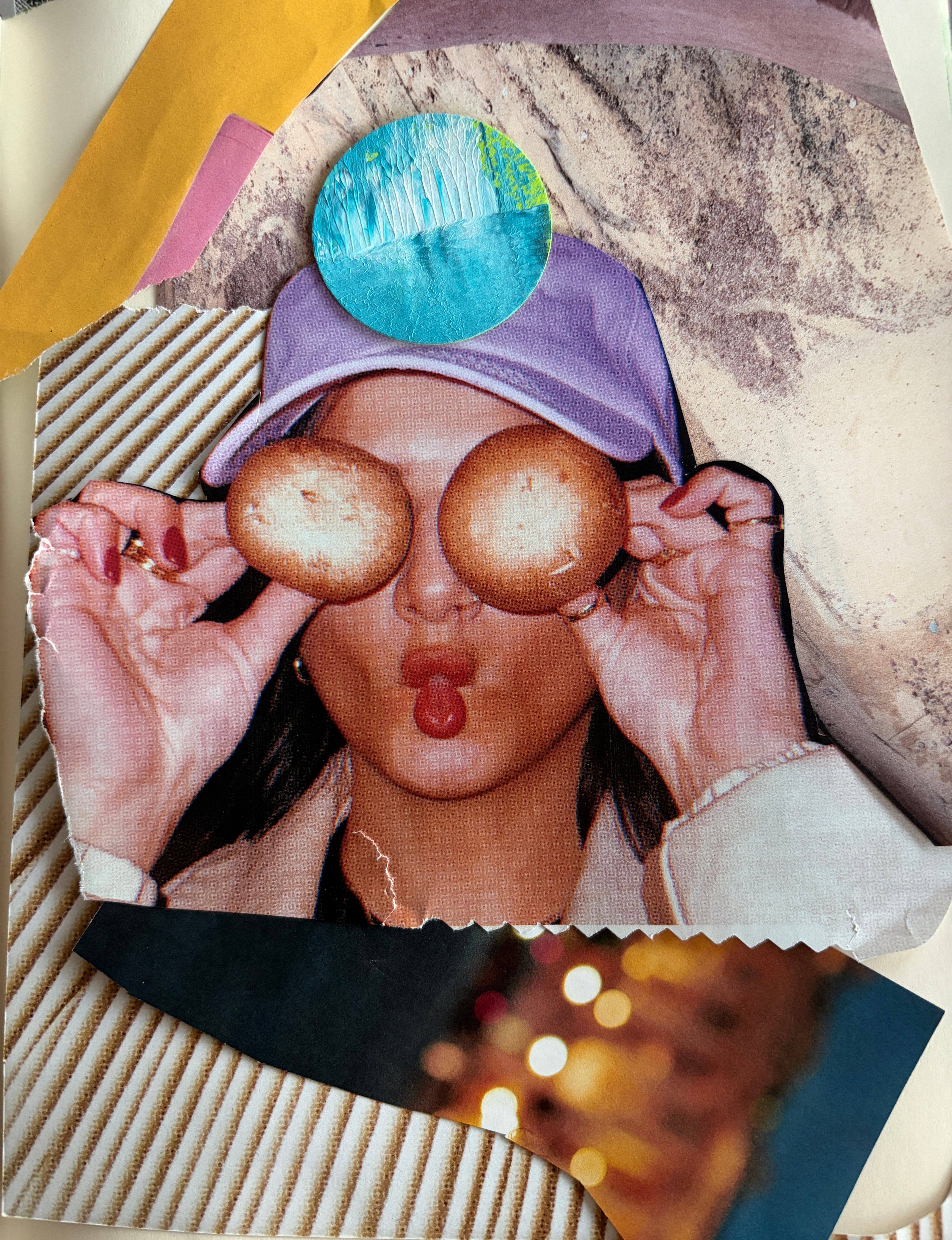
Be sure to subscribe here on Substack and follow — available on Apple Podcasts , Spotify , and wherever you get your podcasts. A summer check-in episode: revisiting the basics of parts work, astrology as a doorway into the psyche, and the difference between a part talking and a psychic download. In This Episode KP and Chelsea catch up on a rainy Midwest “summer” (guest-starring Otto the dog), then dig into a genuine refresher episode — going back to the fundamentals of parts for anyone new to the model, and for longtime listeners who want a deeper pass. Topics range from a forthcoming astrotherapy summit, to a slow read of Stephen Arroyo, to how psychic perception and parts work can get tangled for intuitive people, to KP’s ongoing practice of meeting the planets in her chart as inner figures. Parts & Charts is a reader-supported publication. To receive new posts and support my work, consider becoming a free or paid subscriber. Key Takeaways * The Virgo phase of learning gets skipped. Drawing on Stephen Arroyo, KP points out that Western education (and most astrology training) rushes from “building blocks” (Gemini) straight to “expert” (Sagittarius), skipping the long apprenticeship phase (Virgo) — the unglamorous stretch of practicing on real people before you’re any good. Arroyo argues astrology especially needs more of this middle phase, since it isn’t taught with the same rigor as empirical sciences. * A fall astrotherapy summit is in the works. KP and Chelsea are planning a free, accessible virtual gathering for people working at the intersection of astrology and therapy — modeled less on funnel-driven summits and more on a shared, decentralized structure where each presenter brings their own angle. * Parts, explained simply: Chelsea’s go-to entry point for beginners is polarization — noticing two opposing feelings about the same decision or situation. If you’ve ever felt torn, you’ve already met two parts. This isn’t pathology; it’s normal internal multiplicity. * Parts want to be heard — and that’s harder than it sounds. When one part dominates the airtime (out of fear something bad will happen if another part speaks), that suppressed part tends to get louder, not quieter. Chelsea’s family-therapy analogy: it’s like a parent answering for a child in session — the guide has to gently ask that part to “give us some space” so the quieter one can be heard directly. * Psychic perception and parts perception can blur for intuitive people. Chelsea raises a sharp question: for people who already work with clairs (psychic senses), is a vivid image a part communicating, or an unrelated psychic download? Her practical fix — just ask the part directly what it’s showing you and why. * Everyone perceives parts differently, and there’s no “correct” channel. KP experiences parts primarily as visual, character-based figures (often animals — a glamorous snake, warring dragons) plus somatic sensing of a part’s state. Chelsea experiences parts as human figures, shapes, or cloaked presences, and notes that people can also perceive parts auditorily, energetically, or as a felt sense outside the body. Neither is more “real” than the other. * Even trained guides need a guide. Chelsea, despite her training, says she still can’t lead herself through internal work — holding the analytical/tracking role and staying fully present with a part at the same time asks too much of one system. This normalizes needing outside support regardless of expertise level. * Astrology as a parts practice. KP has been “meeting” the planets in her own chart as individual inner figures (Moon, Sun, Venus, Vesta) with striking results — including a session with a judge-like “go-between” part that helped her make a major life decision (her move). Saturn, her chart ruler, is next — and she’s a little afraid of what she’ll learn. Key Quotes “We are multiples. We contain multitudes. And it’s not pathology.” — Chelsea, on what parts are “Parts just want to be heard... and it sounds really simple, but it can be really, really hard in practice.” — Chelsea “I don’t think it matters how experienced I am — even though I know it all, it doesn’t matter, because I still need somebody else to guide me.” — Chelsea, on why even trained therapists need a guide for their own work “It’s not overwhelming, it’s just — there’s so much movement, and you’re noticing a lot.” — KP, describing what it’s like to be guided through a session Fact-Check Note KP references “two gates” from Greek myth distinguishing true messages from ordinary dreams, describing them (uncertainly) as pearl and milk. The actual reference is likely the Gates of Horn and Ivory from Homer’s Odyssey (and later Virgil’s Aeneid ) — true dreams pass through the gate of horn, false or misleading ones through the gate of ivory. Though KP stands by her pearl and milk gates ;) Resources & References Mentioned * Book: Astrology, Psychology, and the Four Elements: An Energy Approach to Astrology and Its Use in the Counseling Arts by Stephen Arroyo * Film reference: Inside Out (and Inside Out 2 ) — Chelsea’s go-to for explaining IFS-style internal multiplicity to beginners or younger listeners * KP’s newsletter: Astro-Archetypes — weekly newsletter connecting current astrological transits to an archetype, paired with quotes and images, published as a short centering message for the week * KP’s Book Doula practice — ongoing companionship for people working inside long book projects; reach out to inquire about fit * Chelsea’s newsletter — monthly updates on her Oracle deck and channeled messages For those applying to grad programs in counseling: * Chelsea Owens pulled together a deeeeeep dive into all the practical elements of this decision, for the price of a cute cafe lunch ($25) — follow this link: https://chelseawow.gumroad.com/l/bfbiau Chelsea’s Oracle deck, Outer Realms for Inner Archives : a collage deck shaped by exactly this work, made the way she makes images of her own parts. Pre-orders coming; this email sign-up form gets you deck news only, nothing else. → subscribe here Meet your Moon. If the Moon is the tender spot for everyone, this is the guided audio course for meeting yours as an inner figure — KP’s active-imagination approach, on your own time. ($42) → https://kpkaszu.gumroad.com/l/meetyourmoon About This Podcast Parts & Charts is co-hosted by astrologer KP Kaszubowski and licensed therapist Chelsea Owens, exploring the intersection of astrology and Internal Family Systems. Work with Chelsea. If you’re in California and you’ve been looking for a therapist who will actually go there with you — the deep stuff, the weird stuff, the stuff you’ve never quite found the words for — Chelsea Owens is your person. Licensed therapist, Leo moon, first house everything, art supplies on every surface. She brings clinical rigor and genuine delight to the work in equal measure, which turns out to be exactly what the hard stuff needs. * 👉 www.chelseaowenstherapy.com Work with KP. Astrology readings (written, voice note, or live; in person if you’re in Wisconsin),astrology readings “mommy and me”, Astro Parts sessions. Book Doula — a monthly retainer for people serious about making the book real, three clients at a time, waitlist when full. * → Book Doula Waitlist: forms.gle/3LwpmAinnBN2Q4aY8 Schedule a 1:1 session → https://app.acuityscheduling.com/schedule.php?owner=22372975 Thanks for reading Parts & Charts! This post is public so feel free to share it. 🌟 Credits Music “Vape Juice Dave’s Bistro” composed by Scott Cary (Wild Western Avenue) for the feature film RINGOLEVIO (2020) directed by KP Kaszubowski — performed by Scott Cary, Max Wikoff, Else Albeck Gasparka, and Sarah Luther. Collage cover art by Chelsea Owens. Get full access to Parts & Charts at partsandcharts.substack.com/subscribe
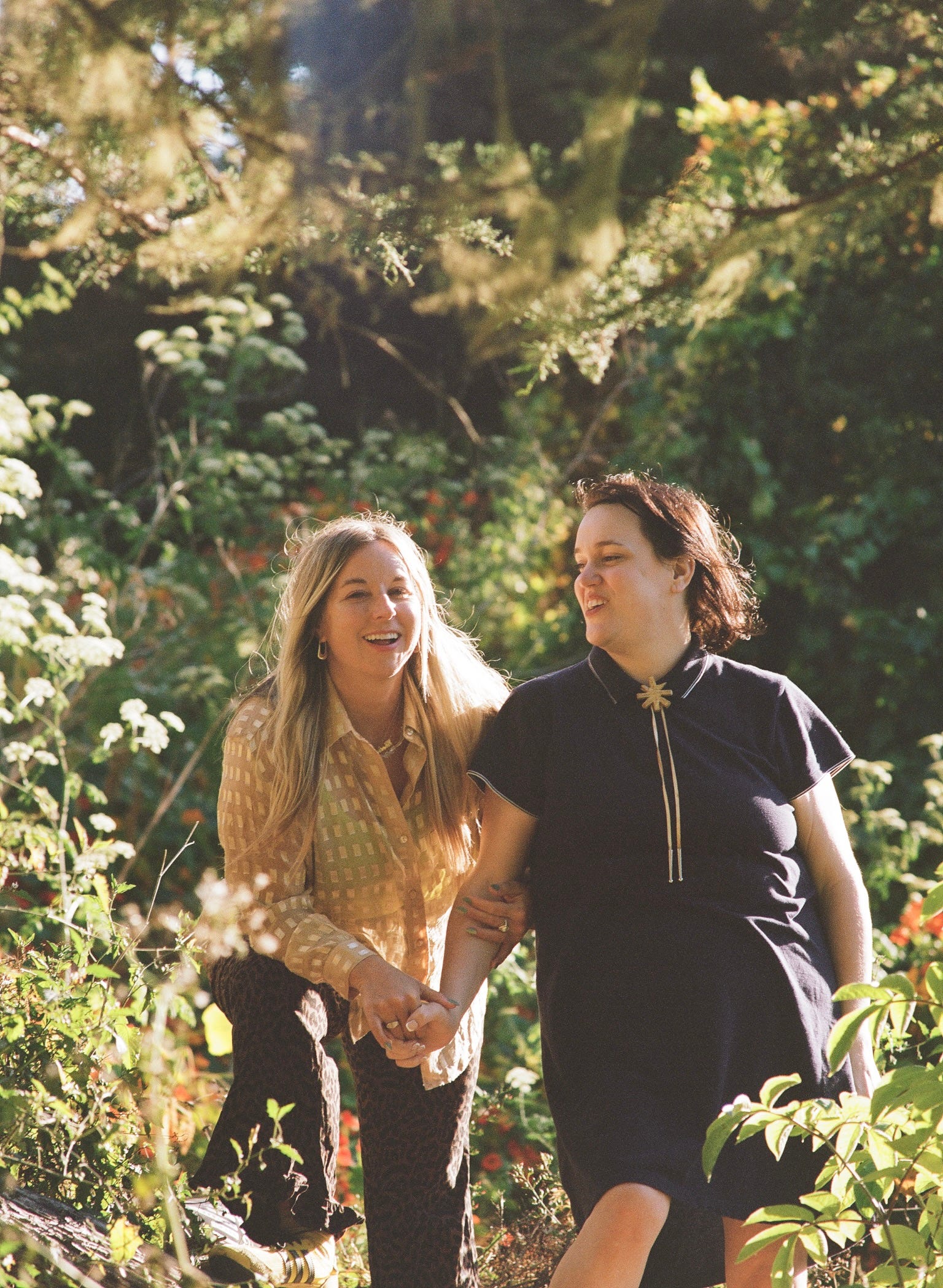
Parts & Charts is a reader-supported publication. To receive new posts and support my work, consider becoming a free or paid subscriber. Be sure to subscribe here on Substack and follow — available on Apple Podcasts , Spotify , and wherever you get your podcasts. Chelsea’s back from her birthday trip. Topic: weddings — the decision, the timing, and the chart. Should I marry this person? (the parts-work lens) * People rarely ask a therapist when — they ask whether , and don’t want the answer handed to them * The real work: finding which parts are actually in the room — pleasing family? old wound activated? or a genuine present-tense issue? * Goal: make the decision from Self, not from an activated part * Getting unburdened parts to relax → more spaciousness → clarity shows up on its own “If whatever needs to be healed gets healed, you’ll have more clarity about your answer.” — Chelsea “That’s probably a part, right? That’s putting that pressure on you.” — Chelsea, on the “gun to your head” feeling around big decisions Age, maturity, and the myth of “the right time” * KP married just past her Saturn return (28–29); husband a few months shy of his own * Chelsea: a part of her wants to warn people off marrying young — time alone is its own necessary experience, not a stage to rush past * Where they land: knowing yourself matters more than knowing your partner — solid self-knowledge is what makes any risk (financial, emotional) survivable “It is a financial agreement... your fate is bound to their parts and their addictions and their wounds and their joys.” — KP “If I know myself... I can handle any of that. I can handle the financial pitfall, I can handle cheating, I can handle whatever.” — Chelsea The seventh house / eighth house (marriage & “known enemies”) * 7th house = marriage/partnership; 8th house = combined resources, debt, intimacy/exposure * 7th house also nicknamed the house of known enemies — your spouse is often your most intimately known adversary, because of how close you let them in * How to read it: what’s placed there, what it aspects, where its ruling planet sits elsewhere in the chart * Live examples: Chelsea’s Aquarius 7th (explains her resistance to tradition), KP’s Leo vs. Chelsea’s Pisces 8th house (fierce boundaries vs. unconditional acceptance) * KP’s own 7th house (moon, Chiron, Jupiter) → dated moon/Jupiter-ruled people, twin bond read through Chiron; met her husband (career-house moon) at a film festival Sign-by-sign: what your 7th house might want from the wedding itself * Aquarius — far from home, small, genuinely themed * Leo — two distinct identities honored, not blended into ambiguity * Libra — beautiful, polished, chic * KP’s own wedding: 4-hour Sunday brunch, donut wall, 18-minute ceremony, over-the-page-limit vows (to audible gasps) Electional astrology 101 — choosing the date Caveat: any date is a good date if you love the person. For the deliberate: * Retrogrades — if a ruling planet is retrograde, consider waiting * Venus retrograde — ~40-day window, every 8 years; associated with doubt/dissatisfaction around connection (KP’s own marriage chart has this — doesn’t read it as a verdict) * Void-of-course moon — nothing begun here tends to persist; check a void-of-course calendar, shift the ceremony by an hour if needed * House placement of sun/moon/Venus — 7th house supports the marriage; 5th house (children) if that’s a shared goal * The moment of vows sets the marriage’s own rising sign / birth chart — KP reads her own: Sagittarius rising, sun in 11th (friendship/community), moon in 1st (shared identity), Saturn in 2nd (real, ongoing delay in material success — she’d shift the time , not the day, if doing it over) * 7-year mark = the marriage’s first Saturn square — a common reckoning point, tension or not * Ethics aside: neither host feels the same certainty applying this to timing a child’s birth as to a wedding date Housekeeping * KP is still taking retainer clients for book doula work; reach out if there’s a book you’ve been talking about finishing out loud for years. * Parts & Charts may be doing something in the LA area in mid-October — details to come, but if you’re in SoCal around the 10th, reach out. For those applying to grad programs in counseling: * Chelsea Owens pulled together a deeeeeep dive into all the practical elements of this decision, for the price of a cute cafe lunch ($25) — follow this link: https://chelseawow.gumroad.com/l/bfbiau Chelsea’s Oracle deck, Outer Realms for Inner Archives : a collage deck shaped by exactly this work, made the way she makes images of her own parts. Pre-orders coming; this email sign-up form gets you deck news only, nothing else. → subscribe here Meet your Moon. If the Moon is the tender spot for everyone, this is the guided audio course for meeting yours as an inner figure — KP’s active-imagination approach, on your own time. ($42) → https://kpkaszu.gumroad.com/l/meetyourmoon Work with Chelsea. If you’re in California and you’ve been looking for a therapist who will actually go there with you — the deep stuff, the weird stuff, the stuff you’ve never quite found the words for — Chelsea Owens is your person. Licensed therapist, Leo moon, first house everything, art supplies on every surface. She brings clinical rigor and genuine delight to the work in equal measure, which turns out to be exactly what the hard stuff needs. * 👉 www.chelseaowenstherapy.com Work with KP. Astrology readings (written, voice note, or live; in person if you’re in Wisconsin),astrology readings “mommy and me”, Astro Parts sessions. Book Doula — a monthly retainer for people serious about making the book real, three clients at a time, waitlist when full. * → Book Doula Waitlist: forms.gle/3LwpmAinnBN2Q4aY8 Schedule a 1:1 session → https://app.acuityscheduling.com/schedule.php?owner=22372975 Thanks for reading Parts & Charts! This post is public so feel free to share it. 🌟 Credits Music “Vape Juice Dave’s Bistro” composed by Scott Cary (Wild Western Avenue) for the feature film RINGOLEVIO (2020) directed by KP Kaszubowski — performed by Scott Cary, Max Wikoff, Else Albeck Gasparka, and Sarah Luther. Collage cover art by Chelsea Owens. Get full access to Parts & Charts at partsandcharts.substack.com/subscribe
You are listening to Parts & Charts: The IFS and Astrology Podcast. Be sure to subscribe here on Substack and follow — available on Apple Podcasts , Spotify , and wherever you get your podcasts. Parts & Charts is a reader-supported publication. To receive new posts and support my work, consider becoming a free or paid subscriber. Chelsea Owens ’s still off on her paradise vacation, so it’s another solo transmission from KP Kaszubowski — and this time she’s turning toward the question underneath all her years of practice: why has she given her life to this study? The answer she lands on isn’t the sun-sign entry point that hooked her as a kid, or even the pleasure of reverse-engineering Brad Pitt’s inner workings from the couch. It’s timing. It’s the discovery that every human life moves through the same set of ages and thresholds, whether or not we have language for them — and that astrology, at its best, is a way of knowing what season you’re standing in instead of fighting the fact that you’re in one at all. The premise: unfoldment Before she gets into the returns themselves, KP borrows a word from Joanna Macy’s Buddhist-rooted thinking: unfoldment . The idea that nothing changes in isolation — we’re all co-arising, co-changing, moving together in ways too tangled to trace a single cause back to a single effect. It’s the frame she wants underneath everything that follows: not a checklist of ages to hit on schedule, but a reminder that none of us are unfolding alone, and none of us are behind. She also draws a line here to Internal Family Systems — not her own clinical training, but a way of thinking she admires in how it treats a part that isn’t ready to speak yet. You don’t force it forward. You listen, and you let it arrive on its own timeline. She wonders out loud what Chelsea would make of the overlap. The early returns * The Mars return (every ~2 years, first hitting around age two) — the “terrible twos” as a Mars return: the moment a child starts practicing assertion, wanting, no. Every two years afterward, the same energetic rehearsal comes back around. * The first Jupiter return (~age 12) — the container starts expanding past the family and into society; kids start testing integrity, honesty, the rules that hold a group together. * Saturn’s early checkpoints — age 7 (first responsibility: tying shoes, keeping a cubby, walking the dog around the block), age 14 (the Saturn opposition, and the first real high-stakes decisions), age 21 (more independence, more consequence). * The Saturn return (~28) — what KP calls an authentication checkpoint: if your life isn’t lining up with what your soul actually wants, this is the transit that applies the pressure to get honest. * The first nodal return (~18–19) — another fate-adjacent threshold: the age of enlisting, marrying, making the choice that sets the next decade in motion. * The second nodal return (~36) — buying the house, starting the company, having the child — one of the “fated portals,” as she puts it, where big decisions cluster. Her guidance for anyone under 30: don’t worry about the nodes yet. Saturn is enough to lean into. 🍼 Want insight into how to care for your kiddo through an astrological lens? KP Kaszubowski offers Caregivers’ Readings now. Click the link here to schedule yours: https://bit.ly/astrocaregiversreading Midlife: the Uranus opposition and the Neptune square (~40–43) This is the stretch she calls the real midlife crisis — the Uranus opposition alongside a Neptune square, landing anywhere from 40 to 43 depending on the person. Handled well — with the Saturn and Jupiter work already done — she describes it less as chaos and more as a kind of aliveness: purpose arriving with real electricity, a pull toward mentorship, toward getting excellent at your craft, toward liberation from roles you’d mistaken for permanent (the caretaker who stops being someone’s sidekick, the employee who’s done being the gopher). The Neptune square is harder to describe — something closer to awe, or to losing the need for language around what can’t be explained. She’s careful to say the discomfort is real even when the outcome is good: being liberated from a structure you thought was load-bearing doesn’t feel gentle while it’s happening. The Chiron return (~50–51) KP flags her own uncertainty here — Chiron has only completed one full observed cycle since its discovery, so she holds this one loosely. Still, she points to what other astrologers have noticed: a healing checkpoint, a moment where enough has been lived and felt that a person is ready to guide others through it — the age, she suggests, to become a therapist, a chaplain, a pastor, if that calling has been waiting. It’s also, often, the year the body’s aging becomes impossible not to feel. The second Uranus threshold (~63) The Uranus square — a second chance, gentler than the opposition, for anyone who stayed inside a “self-chosen imprisonment” instead of taking the liberation on offer at 40. Not as intense, she says, but still a real push toward finally doing things your own way. Not rushing the process KP circles back to something her dad told her: life’s not a race. She admits she still fights this daily — the impulse to have twelve things solved before their season arrives, the fifth-grade version of herself so excited for sixth grade’s stock-market unit that she couldn’t fully live in fifth grade while she was in it. Her point isn’t anti-ambition; it’s timing. Twelve is for being twelve. Forty-five is for being forty-five. She offers her own recent 12th-house year as an example — a year of loss and non-design, of things simply happening rather than being built, arriving alongside hard transits to her sun, Mars, and Mercury. Instead of pushing through it the way she did in her twenties and most of her thirties, she leaned in: yin yoga instead of lifting, no long drives she wouldn’t have the energy to return from, permission to just be low-lift. She calls it one of the most physically difficult years of her life so far — and also proof that leaning into a hard season, instead of fighting its timing, is its own kind of relief. She closes, as ever, with the door open: tell her what season you’re in, whether it matches what she’s described or not — especially if you’re near a Chiron return and want to report back. Work with us / stay close: Subscribe to Parts & Charts on Substack — episodes and in-person workshops land there first. → partsandcharts.substack.com Chelsea’s Oracle deck, Outer Realms for Inner Archives — a collage deck shaped by exactly this work, made the way she makes images of her own parts. Pre-orders coming; this email sign-up form gets you deck news only, nothing else. → subscribe here Meet your Moon. KP’s guided audio course for meeting the Moon as an inner figure, on your own time. ($42) → https://kpkaszu.gumroad.com/l/meetyourmoon Work with Chelsea. Licensed therapist, Leo moon, first house everything, art supplies on every surface. → www.chelseaowenstherapy.com Work with KP. Astrology readings (written, voice note, or live; in person if you’re in Wisconsin), Astro Parts sessions, and Book Doula — a monthly retainer for people serious about making the book real, three clients at a time, waitlist when full. → Book Doula Waitlist: forms.gle/3LwpmAinnBN2Q4aY8 → Schedule a 1:1 session: https://app.acuityscheduling.com/schedule.php?owner=22372975 🌟 Credits Music “Vape Juice Dave’s Bistro” composed by Scott Cary (Wild Western Avenue) for the feature film RINGOLEVIO (2020) directed by KP Kaszubowski — performed by Scott Cary, Max Wikoff, Else Albeck Gasparka, and Sarah Luther. Get full access to Parts & Charts at partsandcharts.substack.com/subscribe
You are listening to Parts & Charts: The IFS and Astrology Podcast. Be sure to subscribe here on Substack and follow — available on Apple Podcasts , Spotify , and wherever you get your podcasts. Chelsea is on a pilgrimage this week — location undisclosed, whereabouts protected — so KP is flying solo, and what comes out is less an episode than a transmission from the middle of her own writing life. She teaches undergraduates how to write and think critically for a living, and she opens with a confession that doubles as a thesis: writing is hard for everyone. Not hard in the sense of unteachable, but hard the way anything worth doing with your whole self is hard. It asks for all of you. She wants to talk to the person who disagrees, who finds it easy — she isn’t sure that person exists. This episode is a chart-reader’s field guide to getting unstuck. It’s built around one question: what does your birth chart tell you about how to get into flow? A note on framing: this episode doesn’t lean on IFS language the way some Parts & Charts episodes do with Chelsea’s clinical lens in the room. This is KP working from her own lineage — Jungian, archetypal, rooted in active imagination rather than a parts-work model — and the astrology carries the weight instead. Quick cheat sheet: what to check in your chart for writing flow * Sun sign & house — where you have endless, bottomless interest; what a stuck scene or project can be reoriented toward * Mars sign & house — the kind of physical movement or exertion that opens up your capacity to sit and write * Mercury sign & house — your fixed mental filter; what comes naturally to say, and what you’ll have to work against on a project outside that filter * Venus sign & house — what you care about enough to become intimate with on the page; a clue toward subject matter * Moon sign — your emotional weather and self-care needs; ignore it and the writing stops being possible * Outer planet aspects to personal planets (Jupiter, Saturn, Uranus, Neptune, Pluto) — what makes your process electric, intense, or hard-won rather than flat * Third house sign & planets — a candidate for how you drop into flow (ritual, cognition, environment) * Fifth house sign & planets — a candidate for why the work stays pleasurable, and what’s missing when it doesn’t If you’re looking for a 1:1 Artist Audit - KP Kaszubowski offers this as a live virtual session now. Click the link here to schedule yours: https://shorturl.at/PQJbJ Topics, in order * Solo episode intro — Chelsea’s on pilgrimage, whereabouts undisclosed * Framing: writing is hard for everyone, even the naturally talented * Disclaimer for listeners not interested in birth-chart-and-writing content * Flow state via her dad — pastor, sermon-writer, former athlete * The premise: birth chart as energetic blueprint, working with or against your nature * Sun and Mars as the two “natural energy” planets * Sun sign and house — endless interest, illustrated with Virgo sun and Taurus sun in the ninth * Her own Libra sun in the tenth * Mars sign and house — kinetic/physical energy, illustrated with Mars in Capricorn in the second * Her own need to move her body before writing (Saturn in the first) * Air-sign Mars and the pull toward intellectualized movement * Mercury as a fixed filter for processing information * Fire-sign Mercury example * Anticipating a reader’s or student’s filter * Her own Mercury in Libra in the tenth, and the difficulty of writing violent scenes through it * Noticing kinship with poets who share her Mercury sign, plus an unexplained pull toward Mercury in Cancer writers * Mercury by house, with a sixth-house example * Venus as what you’re intimate enough with to write about * Her own Venus in Scorpio in the eleventh, and its link to her war-novel subject matter * Venus by house — first house and memoir, fourth house and memoir, eleventh house and collective/historical material * Her own failed attempt at a personal memoir * A brief note on the moon as empathy, emotional landscape, and self-care (future episode) * Outer planets (Jupiter, Saturn, Uranus, Neptune, Pluto) aspecting personal planets — complexity as aliveness * Example: Aries Mercury squared by Pluto in Cancer * Her own Mercury–Mars conjunction/opposition and what it taught her about sustaining flow * Third house as a possible key to how to get into flow, with sign-by-sign examples * Her own Pisces third house and meditation/chanting practice * Fifth house as a possible key to why the work stays pleasurable * Her own Taurus fifth house, ruled by Scorpio Venus * Closing invitation to reach out and trade notes * Sign-off and well wishes for Chelsea’s vacation The premise KP’s father is a pastor who writes a sermon fresh every week and used to play competitive basketball. He’s talked to her about flow state on the court — that feeling of moving with the game instead of against it. She’s never had that in her body. But she has it on the page, and in session with clients, when the energy just moves through her. Every person has an activity where this happens, she says. The work is finding yours. Her working theory of astrology: we’re each born with an energetic blueprint, and every moment after that is spent either working with it or against it, because the world teaches us to do things a certain way regardless of our nature. The goal isn’t obedience to the chart — it’s knowing your nature well enough to choose when to lean into it and when to stretch past it. Sun and Mars: where your energy is endless The sun tells you where your consciousness naturally focuses — a Virgo sun leans toward detail, adaptation, making things work better. A sun in Taurus in the ninth house might mean bottomless appetite for philosophy, travel, other people’s belief systems, alongside a Taurean hunger for the body and sensual pleasure. KP’s own Libra sun in the tenth gives her, she says, endless energy for people, cooperation, and effort in the external world — so when a scene stalls, she asks herself how to make it about relationship, about people working toward something together. Mars is more physical — the kinetic charge rather than the consciousness. Mars in Capricorn in the second house might mean losing interest in a project is a cue to move the body, or to write toward the material world: finance, long-term stakes, the historical consequences of a character’s choices. Her rule of thumb: you can’t sit down and write until you’ve moved. She has Saturn in the first house and sits still by nature, which meant her twenties were a fight to finish the novels she wanted to write — until she learned that some form of physical exertion has to come before the page opens up for her. If your Mars is in an air sign, she suggests the movement itself might want to be intellectual — she does walk-and-talks, and studies the muscular systems she’s exercising, because movement has to be a little bit of a study before her attention will stay in it. Mercury: the filter you can’t take off Mercury is fixed at birth and doesn’t change with the world around you — it’s the lens all incoming information passes through. A fire-sign Mercury reaches for what’s inspiring before what’s practical. KP has Mercury in Libra in the tenth, which means her filter wants fairness, grace, connection, intimacy — and she’s currently trying to write war scenes full of violence and betrayal. What comes out, she admits, keeps turning into Jane Austen: the interpersonal instead of the blood. She’s training herself toward something more Martian in the writing, and finds it genuinely difficult — the filter doesn’t switch off because the project demands something else of it. Knowing your own filter, she says, is also how you get better at anticipating someone else’s — a reader’s, a student’s, a child’s. You’ll never actually know what’s happening inside another mind, but the act of imagining their filter is what makes writing (or teaching, or parenting) sharper and more useful. She’s also noticed she’s drawn to poets with Mercury in Libra — kinship she didn’t know the astrological name for until later — and, more surprisingly, to writers with Mercury in Cancer, which she suspects has something to do with her own moon in Cancer reaching toward that emotional register. Her suggestion: if you know your Mercury sign, go find writers who share it. Reading their filter might teach you something about your own. Venus: what you’ll stay curious about long enough to write If Mercury is how you make sense of things, Venus is what you care about enough to become intimate with — not expertise in a credentialed sense, but the kind of closeness that lets you write about something honestly. KP’s Venus in Scorpio in the eleventh gives her, unsurprisingly, an endless fascination with war, spiritual deception, and the politics of institutions — the exact terrain of the novel she’s writing, even though her Libra filter makes the writing of it hard. The eleventh house adds the collective angle: revolutions, movements, the history of people organizing around scarcity. She offers a few house-based hunches, held loosely: Venus in the first house might pull toward memoir, toward the self as subject. Fourth-house placements — contemplation, origin, memory — show up again and again in the charts of memoirists she’s studied. Her own attempt at a 200-page lyrical memoir never landed, and she thinks it’s because her chart’s weight sits in the houses of other people and groups, not the personal ones. If your fifth or eleventh house is loaded, maybe the book you’re meant to write looks more like The Sisterhood of the Traveling Pants than a memoir. Often, she says, you already know your subject — you’ve been drawn to it since you were small — and Venus just explains why. The moon gets a passing nod as its own future episode: our capacity for empathy, our internal weather, and — not incidentally — how we’re supposed to be taking care of ourselves. Skip that upkeep and the writing stops being possible at all. When the outer planets get involved Jupiter, Saturn, Uranus, Neptune, and Pluto complicate everything above when they aspect your personal planets — and if you take writing seriously as a practice, she suspects you probably have some of these aspects active, because that’s what makes a person’s process electric instead of flat. An Aries Mercury squared by Pluto in Cancer, for instance, might mean information gets processed with real intensity — explosive, bodily, hard to look away from. No aspect, and the filter stays quieter. KP’s own Mercury and Mars are exactly one degree apart, facing off — and she credits understanding that placement with finally learning how to sustain flow state long enough to write something long-form, after years of only being able to sprint a single page as a poet. Two houses worth watching: the third and the fifth Still a hypothesis she’s testing across a year of artist interviews, but: the third house — cognition, environment, absorption, the house of ritual — may hold clues to how you get into flow. An Aries third house might want you to hit something and get sweaty first. A Virgo third house might want outlines, index cards, the physical act of handwriting. Her own third house is in Pisces — watery, boundary-less — which tracks with what’s actually working for her: meditation and chanting until she drops into a rhythmic pulse where she can feel herself channeling a character’s voice and memory. The fifth house — creativity, play, pleasure, the house astrologers have pointed to for centuries — may be less about how and more about why bother . Her fifth house is in Taurus, ruled by her Scorpio Venus, and when a project stalls, it’s almost always because the pleasure went first. Getting back to beauty, to the body, to something that feels good to make, is how she finds her way back in. Closing KP ends where she always seems to land: this is the conversation she’d rather be having in person, with you, about what’s actually working in your own writing life. She means the invitation literally — DMs open, Substack open, and a standing offer to trade notes on flow state, birth charts, and whatever strange, difficult project you’re currently a little afraid of. And: send good energy to Chelsea, off in an undisclosed paradise. She’ll be back in a week. Maybe two. Parts & Charts is co-hosted by KP Kaszubowski, Hellenistic astrologer and Chelsea Owens, licensed IFS therapist. Work with us / stay close: Subscribe to Parts & Charts on Substack — episodes and in-person workshops land there first. → partsandcharts.substack.com Meet your Moon. KP’s guided audio course for meeting the Moon as an inner figure, on your own time. ($42) → https://kpkaszu.gumroad.com/l/meetyourmoon Work with Chelsea. Licensed therapist, Leo moon, first house everything, art supplies on every surface. → www.chelseaowenstherapy.com Work with KP. Astrology readings (written, voice note, or live; in person if you’re in Wisconsin), Astro Parts sessions, and Book Doula — a monthly retainer for people serious about making the book real, three clients at a time, waitlist when full. → Book Doula Waitlist: forms.gle/3LwpmAinnBN2Q4aY8 → Schedule a 1:1 session: https://app.acuityscheduling.com/schedule.php?owner=22372975 🌟 Credits Music “Vape Juice Dave’s Bistro” composed by Scott Cary (Wild Western Avenue) for the feature film RINGOLEVIO (2020) directed by KP Kaszubowski — performed by Scott Cary, Max Wikoff, Else Albeck Gasparka, and Sarah Luther. Get full access to Parts & Charts at partsandcharts.substack.com/subscribe
You are listening to Parts & Charts: The IFS and Astrology Podcast. Be sure to subscribe here on Substack and follow — available on Apple Podcasts , Spotify , and wherever you get your podcasts. Parts & Charts is a reader-supported publication. To receive new posts and support my work, consider becoming a free or paid subscriber. Dressing for Your Venus: Style as Subject Matter, Protection, and Play KP and Chelsea just spent a week together in San Francisco — an in-person workshop, one impulsive shared tattoo (a Gertrude Stein line, worn now by three people who all met through cards), and by the time they sat down to record, a listener request had been waiting: how do you actually dress for your Venus sign? Neither of them wanted to give the version of this answer that’s already everywhere — Venus in Aries, wear red. So the episode becomes something closer to a working session between two frameworks than a style guide. They lay it out early: Venus doesn’t just point to a color, it points to a subject matter — the material a placement is drawn to make sense of in the world, whether that shows up in a wardrobe or an entire body of work. Chelsea’s Gemini Venus wants variety and synthesis, the instinct to hold two unrelated things until a third thing appears between them — a design impulse she recognizes in the crocheted pants she makes, because nothing in a store has ever quite matched the flash in her head. KP’s Scorpio Venus wants texture and secrecy, a piece of jewelry with history already built into it, the specific comfort of something that costs a little to look at directly. From there they map rising, moon, and Venus against yin and yang, and the pattern holds uncomfortably well. Chelsea’s placements land entirely yang — Leo rising, Leo moon, Gemini Venus. KP’s land entirely yin — Capricorn rising, Cancer moon, Scorpio Venus. It explains, retroactively, why Chelsea’s attempt to dress KP in bright pink during the visit met an immediate, full-body no. The conversation turns, as it tends to on this show, from placement to protection. KP names the gap between the version of a dress that looks perfect online and the one that arrives and grates against her actual skin — an aspirational self reaching for something the felt self isn’t ready to wear. Chelsea meets this with her clinical lens directly: this is parts territory. A protective part reaching for volume, or for invisibility, isn’t always distinguishable from self-expression in the moment — the same “weird” outfit can be armor or announcement, and the only way to know which is to ask the part what it’s actually defending. They trade their own evidence. Chelsea’s clown-phase jumpsuits, loud on purpose, later softened into something more specific and less defended. KP’s reading glasses, worn in public whether she needs them or not, functioning less as vision correction than as a small buffer between herself and being fully seen. Both read as the same instinct wearing different fabric: cover enough to stay inside yourself while still choosing to be looked at. They close, unresolved on purpose, with a shared assignment — go watch Bella Freud’s Fashion Neurosis if you haven’t — and a question for the audience: what are you wearing for your Venus? KP answers first, on air: a thrifted white t-shirt, secondhand lapis lazuli earrings, and a ring bought at the Taj Mahal now doing the job her wedding ring used to do. Scorpio Venus, unmistakably. What we get into: * Venus as subject matter — how a placement points to a material, a texture, a subject you keep returning to, not just a color * Rising, moon, and Venus mapped against yin and yang, and what it means when all three land in the same register * The gap between the aspirational self (the dress that looks right online) and the felt self (the one that has to actually wear it) * Protective parts versus self-expression — how the same “weird” outfit can be armor or announcement, and how to tell the difference * Style as identity history: Chelsea’s clown-phase jumpsuits, KP’s reading glasses as a buffer against being fully seen * Bella Freud’s Fashion Neurosis , and an open invitation to the audience: what are you wearing for your Venus? Parts & Charts is co-hosted by KP Kaszubowski, Hellenistic astrologer and Chelsea Owens, licensed IFS therapist. Work with us / stay close: Subscribe to Parts & Charts on Substack — episodes and in-person workshops land there first. → partsandcharts.substack.com Meet your Moon. KP’s guided audio course for meeting the Moon as an inner figure, on your own time. ($42) → https://kpkaszu.gumroad.com/l/meetyourmoon Work with Chelsea. Licensed therapist, Leo moon, first house everything, art supplies on every surface. → www.chelseaowenstherapy.com Work with KP. Astrology readings (written, voice note, or live; in person if you’re in Wisconsin), Astro Parts sessions, and Book Doula — a monthly retainer for people serious about making the book real, three clients at a time, waitlist when full. → Book Doula Waitlist: forms.gle/3LwpmAinnBN2Q4aY8 → Schedule a 1:1 session: https://app.acuityscheduling.com/schedule.php?owner=22372975 🌟 Credits Music “Vape Juice Dave’s Bistro” composed by Scott Cary (Wild Western Avenue) for the feature film RINGOLEVIO (2020) directed by KP Kaszubowski — performed by Scott Cary, Max Wikoff, Else Albeck Gasparka, and Sarah Luther. Thanks for reading Parts & Charts! This post is public so feel free to share it. Get full access to Parts & Charts at partsandcharts.substack.com/subscribe
Be sure to subscribe here on Substack and follow — available on Apple Podcasts , Spotify , and wherever you get your podcasts. About Our Guest Felicia Keller Boyle is an LMFT, business coach for private pay therapists, and host of her own podcast, The Bad Therapist Show. Before successfully growing her own six figure practice and launching her multi-six figure coaching business, Felicia spent years working in community mental health and agencies where she experienced the immense pressure therapists feel to put everyone first. After much soul-searching, she decided to see if it was possible to do great work and be paid well. Spoiler: It is. For the past seven years she's been helping ambitious therapists do the same and leave good therapist conditioning behind. Felicia calls her podcast The Bad Therapist Show, and she means it as a badge, not a confession. She’s still licensed. Still renewing. Still a good clinician. But somewhere around 2021 she split off from the room where you’re not supposed to coach, not supposed to tell anyone what to do, not supposed to want what you want out loud — and built a business teaching other therapists to do the same. This week she joins KP and Chelsea to talk about what happens when the part of you trained to disappear into your client’s process has to go build a business in public instead. You are listening to Parts & Charts: The IFS and Astrology Podcast. Be sure to subscribe here on Substack and follow — available on Apple Podcasts, Spotify, and wherever you get your podcasts. Parts & Charts is a reader-supported publication. To receive new posts and support my work, consider becoming a free or paid subscriber. Therapists are trained to disappear. Whatever they think, whatever they want, whatever they’d say if it were their session — it stays out of the room, redirected back to the client, again and again, until redirecting becomes a reflex that doesn’t turn off at five o’clock. Felicia names this directly: she loves rules, she’s a rule-follower by nature, and the rule she took most seriously in clinical practice was that therapy is process-led, not opinion-led. You don’t tell people what to do. But there was a part of her that wanted to teach, wanted to lead, wanted to stand in front of a group and just say the thing — and therapy had no room for that part. Coaching did. Liberated Business, her program for therapists building and scaling private practice, is what happens when that part finally gets a job description. This is parts activation in its most literal form, business-flavored: not exiles and protectors in clinical language, since Felicia isn’t IFS-trained even though she’s currently a client in it herself, but the same architecture underneath. A part that follows rules so well it built an entire professional identity on self-erasure. Another part that’s been waiting since childhood — the puppeteer behind the church curtain, the kid leading a group that never asked for a leader — for permission to be looked at. The business isn’t just a business. It’s the place where the part that performs finally gets to stop apologizing for wanting an audience. KP pulls the chart and finds exactly this tension built into the architecture: Felicia’s sun and chart ruler both sitting in the most private house there is, while Jupiter — expansive, lucky, loud — sits in the most public one, in Pisces. A person whose core identity is structurally guarded, who has nonetheless been performing since she was small. And then Mars in Capricorn in the eighth house, the house of real intimacy and shared resources, which reframes the whole conversation: Felicia isn’t bad at vulnerability, she’s built vulnerability into a craft. Professional vulnerability. Vulnerability with a fee attached and a clear beginning and end, brick by Capricorn brick. That’s not a workaround. That’s the actual shape of the gift — the eighth house doing what the eighth house does, slowly, on purpose, for other people’s benefit before her own. The “bad therapist” framing earns its keep here, too, because it isn’t really about being bad at therapy — Felicia is emphatic that she’s good at her job, good enough that she’s almost offended when someone implies otherwise. It’s about being a good rule-breaker, which is its own discipline. She talks about skipping high school constantly her senior year — not to do anything illicit, but to go study for harder classes than the ones she was assigned to attend. Same instinct, different decade: know the rule, understand why it exists, and break it anyway when you’ve got a clearer reason than the rule does. That’s the same engine that let her leave a stable clinical identity to build something the rulebook didn’t have a category for yet. Running underneath all of it is the 2023–2025 stretch — grief after her brother’s death, a business slump that lined up almost exactly with an astrological progression her astrologer later named and dated, and two and a half years of fighting weather that was telling her to rest. Felicia didn’t rest. She launched a podcast and invested in SEO instead, the opposite of what her astrologer would have advised in real time. It worked out — her business calls this period the rocket ship now — but the episode doesn’t let that read as proof the fight was right. It’s proof that sometimes the bruising and the outcome arrive together, and the chart’s job isn’t to spare you one or the other. It’s to eventually explain both. What we get into: What happens to the part of a therapist trained to disappear when she has to build a business in public “Bad therapist” as identity, not confession — rule-following, rule-breaking, and the difference between the two Sun and chart ruler buried in the most private house, next to a Jupiter that wants an audience Mars in Capricorn in the eighth house: vulnerability as a craft, not a deficit Why therapists specifically struggle with visibility and marketing, and what coaching gave Felicia that clinical work couldn’t The 2023–2025 progression: grief, business malaise, an astrologer’s blunt forecast, and the two and a half years spent fighting it anyway “Choose your hard” — Felicia’s operating philosophy for entrepreneurship, no spiritual bypass attached Find Felicia: The Bad Therapist Show — abadtherapist.coach — Liberated Business, one-on-one coaching, and the Magic Sheet (her private-practice fee calculator) Links below> Website Magic Sheets Private Practice Fee Calculator Liberated Business The Bad Therapist Show Instagram Parts & Charts is co-hosted by KP Kaszubowski, Hellenistic astrologer and APM educator, and Chelsea Owens, licensed IFS therapist. Work with us / stay close: Subscribe to Parts & Charts on Substack — episodes and in-person workshops land there first. → partsandcharts.substack.com Meet your Moon. KP’s guided audio course for meeting the Moon as an inner figure, on your own time. ($42) → https://kpkaszu.gumroad.com/l/meetyourmoon Work with Chelsea. Licensed therapist, Leo moon, first house everything, art supplies on every surface. → www.chelseaowenstherapy.com Work with KP. Astrology readings (written, voice note, or live; in person if you’re in Wisconsin), Astro Parts sessions, and Book Doula — a monthly retainer for people serious about making the book real, three clients at a time, waitlist when full. → Book Doula Waitlist: forms.gle/3LwpmAinnBN2Q4aY8 → Schedule a 1:1 session: https://app.acuityscheduling.com/schedule.php?owner=22372975 🌟 Credits Music “Vape Juice Dave’s Bistro” composed by Scott Cary (Wild Western Avenue) for the feature film RINGOLEVIO (2020) directed by KP Kaszubowski — performed by Scott Cary, Max Wikoff, Else Albeck Gasparka, and Sarah Luther. Thanks for reading Parts & Charts! This post is public so feel free to share it. Get full access to Parts & Charts at partsandcharts.substack.com/subscribe

Every other part in your system has a job — protectors protect, managers manage, firefighters put out the fire. Exiles are the ones with no job at all. They just hold the feeling. This week KP asks Chelsea, the resident IFS therapist, to teach the foundations of exiles: who they are, why your protectors guard them so fiercely, and why grief — the step most of us skip — is how you actually reach them. You are listening to Parts & Charts: The IFS and Astrology Podcast. Be sure to subscribe here on Substack and follow — available on Apple Podcasts , Spotify , and wherever you get your podcasts. Parts & Charts is a reader-supported publication. To receive new posts and support my work, consider becoming a free or paid subscriber. There’s a part of you balled up in the corner of the room with a blanket over its head. It’s young. It’s holding something heavy — shame, a rejection, an attachment that ruptured or never formed — and it has been holding it for a long time. In IFS, that’s an exile, and the rest of your system has organized itself around keeping you from ever feeling what it feels. Chelsea Owens , a licensed therapist trained in the model, walks KP Kaszubowski through the foundations: how exiles differ from the protectors and firefighters running the show, why you can’t march straight up to a tender part (picture a stranger knocking and asking to speak to your four-year-old — of course the gatekeepers say no), and what the textbook arc actually looks like, from getting the protectors’ permission, to witnessing, to grief, to unburdening a belief like I’m unlovable and letting the part take on something new. The throughline is grief — the piece Chelsea says we’re never really taught to do, the one protectors are most afraid of, the one that, when you stay with it instead of running, turns out to feel less like drowning and more like room being made. KP keeps catching the resonance with creative process: you can’t rush a revision to its tender center any more than you can rush a part to its. (She also clocks, mid-episode, that the novel she thought was about the medieval period is actually about her grandmother. The work knows before you do.) And then the chart. KP’s distinction to sit with: a birth chart is a snapshot, but the moving sky — transits — is where this kind of process actually shows itself, which is why “you have an exile doing X” is exactly the wrong way to read a placement. Where to begin instead: Chiron for the named wound, and the Moon, the tender spot every one of us shares. A note on staying in our lanes: Chelsea teaches the IFS model here; KP translates it toward the chart. What we get into: * What an exile is, and why it’s the one part with no job — it only holds the feeling * Protectors as gatekeepers, and why reaching a tender part is slow on purpose * The energetic “tell” that you’ve met an exile rather than a protector * The arc from permission to witnessing to unburdening — and the new qualities a part can take on afterward * Why grief is the step we skip, what our protectors fear about it, and why staying with it makes more room than it takes * Where exiles come from: the classroom humiliation, the un-sent birthday invitation, the friend who stopped without a reason * Reading this in the chart without flattening anyone: Chiron, the Moon, and transits as the place process lives Work with us / stay close: * Sun & Moon Workshop — in person, San Francisco. Solstice, June 21, at Birdhouse Gallery on Judah St. in the Sunset. Three hours of astro grounding, meditation, and art making — we meet the Sun and the Moon as inner figures and build something in response to them. Priced to cover the venue and supplies so the room can be full. → sign up * Subscribe to Parts & Charts on Substack — episodes, in-person workshops, and the part-two we keep threatening (where the wounds actually live in the chart) land there first. → partsandcharts.substack.com * We’re curious. We want to map exiles and wounding onto real placements — Chiron, the Moon, and beyond. Tell us in the comments where you find this energy in yourself, and what house it lives in. → * Chelsea’s Oracle deck, Outer Realms for Inner Archives — a collage deck shaped by exactly this work, made the way she makes images of her own parts. Pre-orders coming; this email sign-up form gets you deck news only, nothing else. → subscribe here * Meet your Moon. If the Moon is the tender spot for everyone, this is the guided audio course for meeting yours as an inner figure — KP’s active-imagination approach, on your own time. ($42) → https://kpkaszu.gumroad.com/l/meetyourmoon * Work with Chelsea. If you’re in California and you’ve been looking for a therapist who will actually go there with you — the deep stuff, the weird stuff, the stuff you’ve never quite found the words for — Chelsea Owens is your person. Licensed therapist, Leo moon, first house everything, art supplies on every surface. She brings clinical rigor and genuine delight to the work in equal measure, which turns out to be exactly what the hard stuff needs. 👉 www.chelseaowenstherapy.com * Work with KP. Astrology readings (written, voice note, or live; in person if you’re in Wisconsin), Astro Parts sessions, and Book Doula — a monthly retainer for people serious about making the book real, three clients at a time, waitlist when full. → Book Doula Waitlist: forms.gle/3LwpmAinnBN2Q4aY8 Schedule a 1:1 session → https://app.acuityscheduling.com/schedule.php?owner=22372975 🌟 Credits Music “Vape Juice Dave’s Bistro” composed by Scott Cary (Wild Western Avenue) for the feature film RINGOLEVIO (2020) directed by KP Kaszubowski — performed by Scott Cary, Max Wikoff, Else Albeck Gasparka, and Sarah Luther. Collage cover art by Chelsea Owens. Get full access to Parts & Charts at partsandcharts.substack.com/subscribe

On June 9, Venus caught up to Jupiter at 25° Cancer — the last time the two "benefics" will meet like this for about twelve years. Chelsea and KP sit with what happens when two planets who both say yes end up in the same room, why a no isn't always a wall, and how to actually receive a soft sky instead of trying to optimize it. What is a benefic??? The benefics are the two planets the old astrologers called the ones who say yes — Venus and Jupiter. This week they conjoined at 25° Cancer, where Jupiter is exalted and Venus is more than comfortable. The Astrology Podcast’s Chris Brennan and Leisa Schaim called this one an extended warm hug, and given the spring we’ve had and the July that’s coming, we’ll take it. But a yes isn’t automatically a gift. Two yeses together is how you end up overspending, overcommitting, saying let’s figure it out until you’re in trouble. And the malefics — Mars, Saturn, the ones who say no — aren’t villains. A no is a boundary. A no is discernment. This episode is about getting friendly with both. What we get into: * Benefic as “one who says yes,” malefic as “one who says no” — and why neither is good or bad on its own * Venus applying to Jupiter, and how we get to take Venus’s role as we move into his energy * Venus as a baseline state (Chelsea) vs. Venus as something you choose (KP, Venus in Scorpio) * Jupiter’s verb: to cohere * Charts with no “hard” aspects, difficulty levels, and why an easy chart isn’t an easy life * A seven-year piece of homework about Saturn’s eventual move into Cancer And the actual assignment, which is barely an assignment: don’t accelerate anything. Don’t launch on the warm-hug day because an astrologer told you to. Have the chocolate croissant and don’t do your homework while you eat it. Call the person. You are in a body for a finite number of moments and you only get to touch someone’s skin so many times — this is a week to remember that, before July asks something harder of all of us. Parts & Charts is co-hosted by KP Kaszubowski, Hellenistic astrologer and APM educator, and Chelsea Owens, licensed IFS therapist. Work with us / stay close: * Sun & Moon Workshop — in person, San Francisco. Solstice, June 21, at Birdhouse Gallery on Judah St. in the Sunset. Three hours of astro grounding, meditation, and art making — we meet the Sun and the Moon as inner figures and build something in response to them. Priced to cover the venue and supplies so the room can be full. → sign up * How was your June 9? Leave a comment on the episode post and tell us what showed up the afternoon of the conjunction. We want the real reports. → * Chelsea’s Oracle deck, Outer Realms for Inner Archives — a collage deck, pre-orders coming. Drop your name on the interest form for deck news only (no spam, we promise). → Subscribe here Work with Chelsea If you’re in California and you’ve been looking for a therapist who will actually go there with you — the deep stuff, the weird stuff, the stuff you’ve never quite found the words for — Chelsea Owens is your person. Licensed therapist, Leo moon, first house everything, art supplies on every surface. She brings clinical rigor and genuine delight to the work in equal measure, which turns out to be exactly what the hard stuff needs. 👉 www.chelseaowenstherapy.com Work with KP * If this episode sparked something — a placement you want to understand, a pattern you keep circling, a chart you’re ready to sit with — KP offers 75-minute astrology readings on a sliding scale. * KP is also now open to take on a few clients looking for a book doula. If you have a project in the works and you need support getting your book out in the world send her a message for more info. * Book an Astro Parts Work session: acuity link Book Doula waitlist: forms.gle/3LwpmAinnBN2Q4aY8 Astrology for Makers ↗ kpkaszubowski.substack.com 👉 https://app.acuityscheduling.com/schedule.php?owner=22372975 Go deeper into making contact with your personal moon as a part of you with the short audio course Meet Your Moon made by KP Kaszubowski — https://kpkaszu.gumroad.com/l/meetyourmoon Thanks for reading Parts & Charts! This post is public so feel free to share it. 🌟 Credits Music “Vape Juice Dave’s Bistro” composed by Scott Cary (Wild Western Avenue) for the feature film RINGOLEVIO (2020) directed by KP Kaszubowski — performed by Scott Cary, Max Wikoff, Else Albeck Gasparka, and Sarah Luther. Collage cover art by Chelsea Owens. Get full access to Parts & Charts at partsandcharts.substack.com/subscribe

Be sure to subscribe here on Substack and follow — available on Apple Podcasts , Spotify , and wherever you get your podcasts. What is the 6th, secret, Love Language, you ask? Well, listen to our conversation with long-time guest of the pod The Lilith Therapist—Lisa Broggi, therapist, astrologer, 12th House guide in which we go deep with the moon as a secret love language! About Our Guest Lisa Broggi — therapist, astrologer, and The Lilith Therapist — is back on Parts & Charts, and we went deep on the moon. Not just the sign, but the whole picture: house placement, aspects, conditions, and what it actually means to honor what your moon needs in relationships, in self-care, and in the recurring patterns you might not even recognize yet. Lisa has a clinical eye for the moon as a tool in therapeutic work — she calls it a “therapy gold mine” — and this conversation showed exactly why. We talked about how the moon reveals your core emotional needs, what happens when those needs go unmet, and how the protective patterns that formed early in life show up in your closest relationships. KP brought the Hellenistic framework (dignities, rulerships, why Scorpio moon gets a bad rap it doesn’t fully deserve) and Chelsea brought the relational and somatic grounding. Lisa brought everything she knows about actually working with this in a room with clients. We also did a rapid-fire pass through all twelve moon signs — what each one needs, how it moves, and where it can tip into shadow. It was a lot. In the best way. Topics Covered * The moon as a map of core emotional needs — and why it might matter more than Venus in relationships * House placement as the arena where your moon needs to be fed * Moon sign synastry: what compatibility actually looks like, and why tension isn’t disqualifying * The shadow side of every moon — not as a verdict, but as a starting point for the work * Saturn, Pluto, and Jupiter aspecting the moon: what gets restricted, intensified, or amplified * A full pass through all twelve moon signs: needs, self-care, and what gets in the way * How your moon’s ruling planet points toward what kind of movement, creativity, or expression supports your emotional health Rapid-Fire Moon Sign Notes Aries — needs movement and autonomy; one step at a time; Mars-ruled instinct over strategy Taurus — sensory comfort, downtime, stability; exalted moon; shadow is rigidity, not rest Gemini — Mercury-ruled; needs someone (or something) to bounce off of; language as emotional processing Cancer — narrative and story as emotional access; the body as a way to close the loop; deeply feeling, needs to feel safe doing so Leo — expression, appreciation, being seen; generosity as self-care; the sun as literal nourishment Virgo — Mercury-ruled in an earth body; grounding the mind in highly personal, non-prescribable ways Libra — relational processing; justice and fairness as emotional stakes; watch for conflict avoidance as the default Scorpio — trust is the core need, full stop; emotional safety before depth is possible; not a bad placement — a rigorous one Sagittarius — expansiveness, adventure, growth; fire sign that moves at its own tempo; needs room Capricorn — perspective, projects, purposeful solitude; slower movement (yoga, weightlifting, rowing); loves something to build Aquarius — lone wolf and community animal at once; individuality within belonging; genuinely cares, reads as aloof Pisces — sensitivity that requires real tending; energy hygiene, healthy escapisms; body as barometer Homework from Lisa Think of a past relationship that didn’t work — a hard one. If you can, find their chart. Look at their moon sign. See what you can learn about what needs were in the room that never got acknowledged. You don’t have to be kind to the relationship to be honest about what it was teaching you. About Lisa Broggi, The Lilith Therapist Lisa is a licensed therapist, astrologer, and the creator of the Feed Your Moon workshop. She works with clients through a lens that integrates astrology and depth psychology — with a particular focus on the moon as a gateway to understanding your emotional world, your relational patterns, and your oldest coping mechanisms. She takes coaching and therapy clients, offers astrology readings, and now teaches workshops. 🌕 Feed Your Moon Workshop — June 14th Lisa’s upcoming live webinar goes deep on all things moon: core needs, emotional processing styles, self-care by placement, and the shadow material that shows up especially in relationships. A recording will be available for those who can’t attend live. 👉 https://theliliththerapist.podia.com/feed-your-moon Mentioned in This Episode * Marshall Rosenberg, Nonviolent Communication (the “beautiful need” framework) * Married at First Sight (Chelsea’s cultural reference for moon-based matchmaking) * Arts & Parts & Charts in-person workshop , San Francisco — June 21st, the beginning of Cancer season, with Cancer sun Chelsea Owens and Cancer moon KP Kaszubowski | Register here: https://tinyurl.com/partsandcharts Parts & Charts is a reader-supported publication. To receive new posts and support my work, consider becoming a free or paid subscriber. Parts & Charts is co-hosted by KP Kaszubowski, Hellenistic astrologer and APM educator, and Chelsea Owens, licensed IFS therapist. Work with Chelsea If you’re in California and you’ve been looking for a therapist who will actually go there with you — the deep stuff, the weird stuff, the stuff you’ve never quite found the words for — Chelsea Owens is your person. Licensed therapist, Leo moon, first house everything, art supplies on every surface. She brings clinical rigor and genuine delight to the work in equal measure, which turns out to be exactly what the hard stuff needs. 👉 www.chelseaowenstherapy.com Work with KP If this episode sparked something — a placement you want to understand, a pattern you keep circling, a chart you’re ready to sit with — KP offers 75-minute astrology readings on a sliding scale. 👉 https://app.acuityscheduling.com/schedule.php?owner=22372975 Go deeper into making contact with your personal moon as a part of you with the short audio course Meet Your Moon made by KP Kaszubowski — https://kpkaszu.gumroad.com/l/meetyourmoon Get full access to Parts & Charts at partsandcharts.substack.com/subscribe

Chelsea is at Esalen. Possibly naked, likely howling at the blue moon in Sagittarius. And I am here, with my snoring old-man-dog in the background, talking to my webcam. Holding up a paper doll I made of my Venus like it’s show and tell in peak 2020 COVID. ANYWAY HERE IS THE WORKSHOP ANNOUNCEMENT: Arts, Parts & Charts. → San Francisco. In the Sunset @ Birdhouse Gallery 2548 Judah (31st & Judah). → Sunday, June 21st, 1 - 4pm. The longest day of the year, which feels appropriate because this workshop will contain multitudes. → Three hours. You will go inward and meet your planets (da sun and da moon) as actual living figures you can talk to. Then you will make them out of arts and crafts supplies. There may be glue guns???? Is this serious soul work? Yes!!!! Is it also going to be chaotic and delightful and possibly transformative in ways you didn’t budget for emotionally? Maybe!!!!!!!! Chelsea will be back from Esalen by then. Presumably clothed. Link to register → (I love this little arrow, don’t you? →) Arts & Parts & Charts: The Sun and The Moon - Creative Workshop Use this code for 20% because we are so grateful for you allowing us into your inboxes week after week PARTS + shoot KP a question if you have one: A Long Shot: Chelsea and I want to host 1 or 2 more workshops in the SF area while I’m in town visiting June 17 - 21. If you know of a place that would be open to this, let us know! Get full access to Parts & Charts at partsandcharts.substack.com/subscribe

You’re listening to our conversation with Chef Carla Contreras — chef, food stylist, content strategist, and the person who has perhaps the most fully developed personal practice around tracking the moon that we have ever talked to. Be sure to subscribe here on Substack and follow — available on Apple Podcasts , Spotify , and wherever you get your podcasts. Carla has been tracking the moon since the beginning of 2020. Not casually. Daily. She knows when the moon enters a sign because her body tells her before the app does. She schedules her podcasts, her travel, her client calls, and her recordings around it. I booked this podcast because of his Aries moon, she tells us, twenty minutes in. There are no coincidences here. What she has built, over five years, is not a system she’s selling. It’s a relationship — with the moon, with her own birth chart, with her body — that has gotten specific enough to be useful and supple enough to be a practice rather than a rule. This episode is what that looks like up close. About our guest Carla Contreras is a trained chef, a food stylist of thirteen years, a podcast host, and the founder of Nourishing Creativity. She has built thirteen profitable Substack publications. She is a projector in Human Design (4/6 profile), Aries sun, Pisces stellium, Scorpio moon — and three years into mentorship with her Incan teacher Puma, from Chinchero, Peru. The Incan philosophy at the center of her work is Ayni — reciprocity. Nothing goes one way. Energy moves between you and the world, and within that exchange there’s room for extra abundance and generosity, including toward yourself. Nourishing Creativity (Substack): nourishingcreativity.substack.com Instagram: @chefcarlacontreras On the moon as a personal map Carla’s practice did not begin as a system. It began as noticing. She started paying attention in early 2020. When the moon was in her sun sign — Aries — she noticed: go time, let’s party, let’s come to coworking, let’s go to New York City. When the moon was in Pisces — where her stellium lives — she noticed: let’s create, let’s dream, let’s make the podcasts. When the moon was in Gemini, her rising sign, the energy was so distinct that her friends started texting to ask is it a Gemini moon today? They could feel it through the phone. What emerged, gradually, was a working knowledge of which lunar days she could schedule on and which she shouldn’t. Leo days — where her Black Moon Lilith lives — she protects. I do not schedule a podcast. I do not schedule anything important if I can avoid it. Taurus days — where her Chiron sits — she rests. The donkey is so freaking smart. The donkey is like, okay, I’ve climbed up this mountain and we need to take a break. The map is hers. It would not work for anyone else exactly. That’s the point. On the void-of-course moon, and the practice of honoring transitions The moon goes void roughly every two-and-a-half days, between leaving one sign and entering the next. Some void periods are twenty minutes. Some are most of a day. In KP’s framing, it’s the moon making no significant aspect to any other planet — not in communication, not translating, not doing the relay work she usually does. Carla loves the void moon. In the past, I have really not honored transitions. The moon being void is honoring a transition. For KP, the void moon is email day. Wrapping up things. I’m not going to start anything. For three Aries / Libra / Cancer suns in a room — all initiating signs, all want-to-start-things energy — the void moon is the cosmos giving permission to drift. 🌙 Want to try tracking the moon for yourself? KP Kaszubowski made a free companion page with the full how-to, plus a Notion template you can duplicate to log your daily state. Get it here → https://kpkaszu.notion.site/The-Moon-As-Attention-3609fb7abf1480178952eecaeb6352a7?pvs=74 On not asking whether it’s good or bad Carla names this as the thing she has had to learn slowly, and that she most wants to hand to other people: there’s not good or bad with this. Earlier in her practice, she would text her astrology friends a meme of herself in distress when she saw a Taurus moon on the calendar. She does not do that anymore. The shift was subtle and took years. This is a gift, and I get to rest. This is not labeled, quote unquote, good or bad. KP names what’s underneath the temptation: anticipatory anxiety. The fear of the hard day before the hard day arrives. The way knowing what’s coming can make you tense up before there’s anything to tense against, which then shapes how the day actually unfolds. If you ease in, if you let what happens happen, the experience is the experience. It’s not good or bad — because you’re not putting that anticipatory energy on top of it. Carla agrees, with a small refinement: she would not call those days bad. She would call them challenging. And challenging days need rest. I know today is a Leo moon. I’m going to go to bed at 8 p.m. with my kids and skip Netflix. That’s not surrender. That’s strategy. On the body, the cycle, and the practice of being pulled by the waves Chelsea asks how the menstrual cycle interacts with the moon — whether tracking one disrupts or syncs with the other. Carla, deep in perimenopause, gives the answer that surprised her too: when womb healers and pelvic floor practitioners ask her what part of your cycle are you in , she increasingly answers it’s an Aries moon. She’s not bypassing the body. She’s noticing that for her — Pisces stellium, deep waters — the astrological moon and the physical body are running on the same frequency. I’m pulled, like with the waves. This is also a generous frame for anyone whose cycle has changed, paused, or never matched the calendar. Hysterectomies, perimenopause, hormonal shifts, lifelong irregularity — the moon is still there. I’m tuning into the planet, which just happens to tune into my energy as a human. On the strategist’s invitation Toward the end, KP asks Carla — projector, content strategist, builder of thirteen profitable Substacks — how she’d advise someone who wants to start. Carla’s answer: Start with your sun sign, rising sign, and moon sign. Note where they are. Then watch what happens when the transiting moon passes through each of them. Write it down. I had lots of energy. Oh my goodness, Gemini moon, lots of energy. The pattern emerges from a month or two of notes. Get an app to make it easy. Carla uses Dara (99 cents, no affiliation) for moon position, and Align 27 for an additional layer — its color-coded green / yellow / red days have helped her name when a hard day is happening without needing to assign cause. When I’m having a really hard time, I’m like, oh — is it a red day? Is it a red day? Do I get to sit and journal and have cacao and be with myself before I start my work day? Maybe. The practice is not prediction. The practice is discernment. What is your relationship with an Aries moon? What is your relationship with a Gemini moon? What is your relationship when the moon is void of course? Build that relationship. Trust it. Then — and this is the move Carla keeps coming back to — disconnect from the predictive astrology when you need to. Get rid of the apps. Get rid of reading anything. I get to have my own relationship with my birth chart and the astrological weather. Also in this episode * Carla’s debilitated Scorpio moon, and why she is one of the most in-tune Scorpio moons we know * Why the cards we pulled before recording were uncannily specific — chocolate bar, pizza, dumpling, three of pentacles, nine of cups, the chariot * Ayni — the Incan concept of reciprocity Carla is being mentored in * Cacao as Carla’s daily ground, and the scientific footnote about its possible runner’s-high chemistry * The caballo-and-burro metaphor — the horse and the donkey, the running and the resting * Why some signs are harder than others to live through, and what your Chiron and Black Moon Lilith might have to do with it * KP’s quiet mission to make people with debilitated placements visible as good examples * Whether NASA could please send Carla to the moon Go deeper into making contact with your personal moon with the short audio course Meet Your Moon made by KP Kaszubowski — https://kpkaszu.gumroad.com/l/meetyourmoon Quotes “I’m tuning into the planet, which just happens to tune into my energy as a human.” — Carla Contreras “I would not have, three years ago, talked about honoring transitions. Or pausing in any way, shape, or form. I’d be like, that’s annoying, I don’t like Taurus, I’m an Aries, let’s get moving. “ — Carla Contreras “What is your relationship with an Aries moon? What is your relationship with a Gemini moon? What is your relationship when the moon is void of course?” — Carla Contreras “There’s not good or bad with this. This is a gift, and I get to rest.” — Carla Contreras “I’m leaning into how can I self-source this.” — Carla Contreras “Astrology is not an ‘exact’ science. It’s a contemplative science.” — KP Kaszubowski “If you ease in, if you let what happens happen, the experience is the experience. It’s not good or bad — you’re just not putting anticipatory energy on top of it.” — KP Kaszubowski “I am so jazzed up about the moon just from hearing all of your experiences. I’m sold on using the moon to help me.” — Chelsea Owens Work With Carla Check out her resource on Ceremonial Grade Cacao as a Coffee Replacement here: https://www.carlacontreras.com/blog-recipes/coffee-replacement-make-ceremonial-grade-cacao-at-home Nourishing Creativity (Substack): nourishingcreativity.substack.com — Carla’s home for the podcast, essays, and offerings on creative and spiritual practice Instagram: @chefcarla The Moon Guide: Carla has created a special discount code for our community to download her Moon Guide. Use the 1-month free link here to gain access to her community: https://chefcarla.substack.com/0a238c45 Mentioned in this episode: * The Dara app — moon position tracking * Align 27 — energetic day tracking * Puma — Carla’s Incan teacher in Chinchero, Peru * The Cacio e Pepe tarot deck — Chelsea’s new favorite Work With Us KP Kaszubowski — Hellenistic astrologer · Astro Parts Work · poet KP has opened up Astro Parts Work sessions and is currently reviewing her Book Doula waitlist — taking on 1–2 more clients this year for people ready to finish that book for real this time. Book an Astro Parts Work session: acuity link Book Doula waitlist: forms.gle/3LwpmAinnBN2Q4aY8 Astrology for Makers ↗ kpkaszubowski.substack.com Chelsea Owens — Licensed therapist · Certified IFS Level 3 Chelsea works with individuals using Internal Family Systems therapy — the same framework she brings to Parts & Charts. Now accepting new clients. Book an IFS session: chelseaowenstherapy.com Chelsea’s Substack ↗ chelseaowens.substack.com Credits Music “Vape Juice Dave’s Bistro” composed by Scott Cary (Wild Western Avenue) for the feature film RINGOLEVIO (2020) directed by KP Kaszubowski — performed by Scott Cary, Max Wikoff, Else Albeck Gasparka, and Sarah Luther. Get full access to Parts & Charts at partsandcharts.substack.com/subscribe

You’re listening to a just-us episode of Parts & Charts, where Chelsea Owens unpacks parts activation and KP Kaszubowski shares about tracking transits. Be sure to subscribe here on Substack and follow — available on Apple Podcasts, Spotify, and wherever else you get your podcasts. There's a kind of baseline self you move through your day as, and then something happens, and you're not at baseline anymore. You're activated. Chelsea names this in IFS terms — a part is being activated. KP names it as a transit — a planet has moved over a planet in your birth chart, and something in you has noticed. What parts activation looks like A sudden shift in mood. A reaction that feels bigger than the situation. A familiar pattern surfacing again. Physical sensations — a stomach ache that isn’t about what you ate, a chest tightness, a throat that can’t get words out. Strong urges to act with fight-or-flight intensity. Or what IFS calls blending — when a part gets so close to you that you can’t see it as separate. It’s needing something. There’s nothing wrong with that. It just happens. What a transit is The moment you were born, we took a snapshot of the sky. That’s your birth chart. The planets didn’t stop moving. When a transiting planet makes contact with one of your birth-chart planets at an exact degree, that’s a transit. It’s almost never silent. 🌙 Want to try tracking the moon for yourself? KP Kaszubowski made a free companion page with the full how-to, plus a Notion template you can duplicate to log your daily state. Get it here → The big idea A transit doesn’t make something happen. It brings attention to what’s already there. Two people with the exact same transit live through it as two different days. Which is also why sometimes a major transit passes through and nothing happens. Maybe I already worked through that. Maybe 10 years ago it would’ve been a different story. The transit doesn’t bring the wound. It brings the light. How long does an activation last? Chelsea’s medicine woman told her every strong emotion lasts about 90 seconds. Maybe true, maybe not. Either way, transits are not emotions. Some transits are minutes. Some are days. Some are nine to ten months — which is how long Saturn has been opposing KP’s Sun, Moon, and Mercury. A quick field guide to the planets Moon (fastest) — feels like attention. Goes over a placement every day or two. The easiest planet to start tracking. Mercury, Venus, Mars (inner planets) — short cycles, daily-life weather. Best place to begin if you want to learn. Jupiter — one year per sign. Expansion as a theme. Generally pleasant company. Saturn — 28 years per cycle. Slows you down. Not punishing you (Chelsea wants this on the record). But hard. You don’t go to Saturn for ease. Uranus — 86 years per cycle. Disrupts. Brings things to the surface. The genius planet, the table-overturner. Neptune, Pluto — once-in-a-lifetime transits. Neptune softens edges and sometimes dissolves them; an overdose is what the hell is happening? Pluto goes deeper than this paragraph will. On parts that think they’re you A digression that turned out not to be one. Most parts genuinely believe they are self. I am you. I am Chelsea. Especially the parts whose job has been close to you for a long time — the achiever, the manager, the one who’s hard on you so no one else has to be. Their work has fused with the shape of who you became. You can’t tell them they’re not you. That’s hurtful. They really truly believe it. You spend time with them. You validate it. You let them slowly find out. Preparing for a transit you can see coming When you know a hard transit is landing on a hard day — a Mars contact on the day of a difficult meeting, a Saturn check-in on the day you’re giving a talk: KP’s move: Treat it like you’re about to run a marathon. Breathe that morning. Meditate. Get your carbs, your protein, your fat. You can’t predict the intensity, but you can take care of yourself ahead of time. Chelsea’s move: Ask the part what it needs in order to feel you with it. I’ve got you. I’m showing up for you. What else would help us prepare? This is the whole methodology in one move. The transit names the weather. The parts work names what’s living inside you that the weather is going to land on. Neither one alone is the full picture. Also in this episode * Parts that get activated are often guarding something more vulnerable underneath — protectors lit up because an exile is close to surfacing * Why the moon is the best place to start tracking transits — daily, observable, low-stakes * Why Jupiter is the second-best — one year in each sign, expansion as a theme, generally pleasant company * Inside Out as an unexpectedly accurate model of internal systems of parts, activation and blending inside the system * The KP-and-Chelsea hypothesis: inner planets for daily activation, outer planets for the year-long deep work * I assume someone listening is like, this is way too much. The Saturn-return apology to anyone whose head is spinning. * The two-and-a-half-year horoscope nobody will write for Capricorn risings * Veiling, baseball shirts, and Chelsea’s California collar (watch the video to see what we’re talking about! 😉) Quotes “When a part’s really blended, it’s really, really close. You don’t really have a lot of separation or perspective on what that part is. It’s just so close and it’s really needing something.” — Chelsea Owens “Most parts so truly believe they are self. They really truly believe — oh no, I am you. I am Chelsea.” — Chelsea Owens “For 10 months, Saturn has been applying a really difficult opposition. What it’s looked like to me is chronic fatigue, inability to push through. I knew it was going to happen. The way it has showed up in my life was not predictable.” — KP Kaszubowski “I can place myself into people’s situations often. Sometimes I would be very clear, like, yeah, this feels like an activation. But then there are some TV shows I’m watching that I can tell — I’m not activated. I’m just feeling what’s happening.” — KP Kaszubowski “Saturn isn’t punishing us. Period. You heard it here first on the pod. We’re reclaiming it.” — Chelsea Owens “You don’t go to Mars to look for information about ease. Maybe pleasure, but not ease.” — KP Kaszubowski “The moon, I would say, feels like attention. When the moon’s going over your natal Mars, it’s bringing attention to that Martian energy inside of you.” — KP Kaszubowski “What if there isn’t somebody you need to get rid of? What if everything’s fine and I’m actually kind of healthy and happy right now?” — Chelsea Owens, on the doom horoscope “Treat it like you’re about to run a marathon. Breathe that morning. Get your carbs, your protein, your fat. You can’t predict the intensity, but you can take care of yourself ahead of time.” — KP Kaszubowski Want to start tracking transits? KP recommends starting with the moon (daily, fast, observable) or Jupiter (one year per sign, generally expansive). Next week’s episode: Chef Carla Contreras on tracking the moon for vitality, business, and creativity. Work With Us KP Kaszubowski — Hellenistic astrologer · Astro Parts Work · poet As well as her Astrological Interpretation Readings, KP has opened up Astro Parts Work sessions and is currently reviewing her Book Doula waitlist — taking on 1–2 more clients this year for people ready to finish that book for real this time. Book an Astro Parts Work session: https://bit.ly/3PlwLKQ Book Doula waitlist: forms.gle/3LwpmAinnBN2Q4aY8 Astrology for Makers ↗ kpkaszubowski.substack.com Chelsea Owens — Licensed therapist · Certified IFS Level 3 Chelsea works with individuals using Internal Family Systems therapy — the same framework she brings to Parts & Charts. Now accepting new clients. Book an IFS session: chelseaowenstherapy.com Chelsea’s Venus in Gemini Substack ↗ chelseaowens.substack.com Thanks for reading Parts & Charts! This post is public so feel free to share it. Do you also want to go inward and meet your Moon figure? Here’s the link to get your own Meet Your Moon audio course made by KP Kaszubowski : https://kpkaszu.gumroad.com/l/meetyourmoon Credits Music “Vape Juice Dave’s Bistro” composed by Scott Cary (Wild Western Avenue) for the feature film RINGOLEVIO (2020) directed by KP Kaszubowski — performed by Scott Cary, Max Wikoff, Else Albeck Gasparka, and Sarah Luther. All collage art is made by Chelsea Owens. Liked what you watched / read? Here are some of the greatest hits: Get full access to Parts & Charts at partsandcharts.substack.com/subscribe

Be sure to subscribe here on Substack (partsandcharts.substack.com) — available on Apple Podcasts , Spotify , or wherever you get your podcasts. Subscribe so you don’t miss an episode. And go over to Maeg Keane ’s Substack to read more ⤵️ Astrology and herbalism, Maeg tells us, more or less co-arose. Working with plants — people have been doing that since prehistory. Paying attention to the stars and noticing patterns and seeing what it might mean about weather or agriculture or politics or eventually even individual people’s lives — that is also extremely, extremely old. The earliest written records of plant-star-planet combinations go back to around 400 BCE, though Maeg is sure it’s older. That’s just the record we have. Most people who were practicing medicine were practicing it with plants, like most of the global contemporary world does right now, and they were doing so alongside watching stellar omens. So when Maeg got interested in both, what relief! I didn’t have to be a Mercurian Gemini person and like take two disparate things and put them together. They were already together. The framework, drawn from a Neoplatonic cosmology and other traditions less canonized by white Western philosophy, is this: everything in the heavens cascades down into the earth. All of us are built out of things from the heavens. It’s a ladder of connection and affinity and relationship. The same way any of us are made up of our birth chart — Maeg is full of Mercury and Venus and Mars and different inflections — so are the plants. So are stones. So is the garbage on my street. So is a book. To different mixtures. Which means if you’re trying to get to know one of the planets really well, you can go to a being or a thing that is very of that planet and ask it what it can tell you about the thing it’s mostly made out of. About our guest Maeg Keane is a writer, astrologer, and herbalist who runs Third Sister . In Maeg’s own words: I consort with the spirits of the stars and of the green world. Astrology and herbalism are two of the ways I listen to the sparkling fishnet of timespace that holds us, and of which we are a part. Maeg specializes in the 5th house — a part of the birth chart that gathers stories about desire, pleasure, joy, and the part of us that wants to make things — and in the fixed stars , sort of getting the whole sky back versus just the ecliptic. Website: third-sister.com Book a reading: third-sister-dio.as.me Substack — The Gleaming Feast: maegkeane.substack.com Instagram: @maeg.thirdsister Bluesky: @maegkeane.bsky.social On the fifth house The fifth house’s oldest association is actually with children. Not your childhood — literally the kids you’ll have. But it became about generativeness in general, the erotic in general. Not just children but the force of life that creates all kinds of things in your life besides other humans. It’s Venus’s favorite house, no matter where she is in the chart or what sign coincides with that particular part of the chart. She loves it there. Joy. Pleasure. Playfulness. The creative. The place that makes you want to unfurl and make and reach out in some way to the world. I have so much life in me, it has to come out somehow. What Maeg saw in client after client who hadn’t even come for a fifth house reading, was the surprising vulnerability of this place. It has all the best, I think, the best words that life has to offer. And yet people would say yeah, it is really, really hard when I can’t get to that place. And it’s really hard to be in that place. Maeg cannot tell you the number of clients sat with who can’t make art — they can , but they’re not — because they’re still hearing their parents say don’t waste those art supplies, they’re really expensive. People who went to art school and it just killed their creative flow and process completely. People who’ve taken a long break, maybe even because of a fifth house reason, like pregnancy and early parenthood, who are coming back asking who am I now? What — am I going to write the same book I was writing before I had this kid? I have no idea. People who do creative work for a living, which is supposed to be the dream, but it totally changes their relationship to that work because of the money stuff and the visibility stuff and the reputation stuff and the pressure. Maeg’s own fifth-house ruler is Saturn in Capricorn. Having Saturn as the guy who stewards your joy is a weird fit. That’s part of why this reading exists. There’s a version of: I give a reading because I’m masterful in this part of my life, like — good luck. And then there’s a version that’s like: I give a reading about this because I am in here with you. And that’s very much my approach. It’s a very Mercury, like, I’m alongside you, man. I get it. A note for anyone with an empty fifth house: you’re fine, Maeg promises. Having an empty fifth house does not mean you are empty of joy or play or creation. The ruler of the fifth is really where it’s at. Everybody has one of those. On remediation, more or less — and on a blackberry plant When KP Kaszubowski asks about remediation, Maeg gently declines the word. I don’t explicitly offer what I think of as professional remediation, because I think of that as a really rigorous process that is studied for a long time and is most robust in the Jyotish tradition. But there’s plenty you can do that venerates the planets, which they really like. And you also can just get to know your planets better, which I do think is magic. I think that it actually makes an impact in your life to get to know the planet itself, just like as an inherent being. You can do devotional work — light a candle on the day of the planet, because all the planets have days of the week. Leave out offerings. You basically treat them like you — lowercase-g gods. Because they kind of are. Hang out. Read hymns. Find poems that you think speak to them. It can feel really awkward and goofy. I feel awkward and goofy when I do it. But it’s also worth it. Or — alongside that — plants are really good ambassadors of the planets. If you really want to get to know Jupiter, hang out with sage, a Jupiter plant. What can sage teach me about Jupiter? If Jupiter is lending his attributes to this plant, what can I learn about this plant’s stories? Its ecology, biology, how it collaborates with the human body? What is it like to grow it? Or do lemon balm. Sit under an oak tree. Have a feast: Jupiter loves fatty foods and an overladen table. Maeg got to know Saturn through blackberry. Eating blackberries on Saturdays. Sitting with a blackberry plant for a while at a berry farm. Doing a lot of research about the folklore and different uses, especially through Maeg’s own ancestral lines — Irish stories about blackberry. That taught me a lot about that planet. That isn’t just like me reading Vettius Valens, which is also great, but it’s not the only way. KP catches what’s structurally Saturnian about blackberry mid-conversation: it’s a sweet fruit, and it’s also a boundary plant. It’ll give you a little sting. It’ll hurt a little bit if you try to pass through it. You can’t go fast. You have to take the berries gently. You can’t just throw a hand in and grab. It’s a plant that tiny animals hide in. And in herbalism, one of its primary uses is for diarrhea — it tightens lax tissue. One of the things Saturn’s really good at is reforming loose structure in the body so that there’s a way to not sort of accidentally spill out and empty out. On the wood betony moment The first time Maeg ever communed with a plant deliberately — and it was sort of semi-deliberate — Maeg was supposed to be doing what’s very common in herb schools, a plant of the week or a plant of the month, where you pick a plant and you do everything you can possibly do with it. It’s your buddy. Maeg sat down with a tea of wood betony and sipped it. Got the flavors, of course, and then also like sensations and images. And I was like, whoa. That was very new. I was very like — I’m going to be a scientific herbalist. I don’t get any of this woo stuff, you know? Like it was — and the plants were like, jokes on you. That didn’t last very long. On the plants Maeg keeps near Strawberry. A whole summer of being completely insourceled by it. I wrote like a 37-page — Maeg could call it a zine, but no, people who make zines should get credit for what they do with zines. It’s a PDF. Strawberry just like took me everywhere. Othello. Strawberry farming. Stories from folklore. Queer theory. It just took me on such a beautiful ride and it kept just showing up at these like really precious and beautiful moments just like saying hello. Plants really like it when you like plants. And planets really like it when you give them attention. They will give you gifts for paying attention, for giving them visibility, in the spotlight, I’ve learned. Ivy. A Saturn plant, with really strong ties to Dionysus and Ariadne. Maeg has not yet written the ivy monograph. Some plants Maeg has tried not to learn about, because I’m trying — like, it’s almost like one way for me to honor them is to learn all about them, everything that I possibly can. And some of them it’s like, I’ll be more present with you if I don’t do the academic deep-dive that I’m prone to doing. (KP, separately, is in a strange standoff with the fixed star associated with ivy — having looked it up roughly three hundred times and being, somehow, not yet permitted to remember its name.) Beach rose. Lining the coast where Maeg’s grandparents lived. Their thorns are like so sharp and many — like you can’t even touch the stalk. There’s no space. It’s all thorn. But it’s a five-petal, bright pink, with a burst of yellow in the middle. I love them so much. They’re not only there, but that’s where I know them from. On the seventh-house mirror Maeg ran a reading once called So You Think You Hate That Sign. Almost no one took her up on it. People love to hate other signs but they don’t actually want to talk about why that might be wrong. The pitch wasn’t great. But the idea was: whatever sign you feel the most uncomfortable with, for whatever reason — that’s still in your chart. Let’s re-complexify it. Chelsea names what’s underneath this in IFS terms: the U-turn. The You-Turn. When someone’s coming in — maybe you’re complaining about your partner, my gosh they didn’t do X, Y, and Z — we encourage that person to do a U-turn so you’re just looking back at yourself. How are you showing up? What’s this response or this reaction? What parts of you are having that reaction and response? And what’s underneath that? Probably some younger part of you that had some thing happen, that felt this way with your parents. When we get activated about other people, it’s always something about, you know, yourself. Maeg picks it up: based on what you just said, it’s reminding me of the mess of the seventh house. This idea that the seventh is a place of the other. It’s the place of the other who’s beloved. It’s the place of the other who’s, like, abject and difficult or, like, triggering you for some reason or accusing you, but just by existing. The enemy in some way, which is also like often a projection of some kind. And it’s a complementary opposite of the first house — you. You can’t really disentangle them. The IFS U-turn and the seventh-house mirror, doing the same work in different vocabularies. The chart was already saying it. KP and Chelsea both have significant placements in the seventh. Both work one-on-one. It’s great to hold space for someone and also understand that you are receiving projections. You are also projecting. It’s full of dynamism, whether you’re aware of it in the moment or not. On Chelsea, Tulsi, and a dream of Hawthorn When Chelsea did her herbalism certification, what surprised her most weren’t the plants themselves but the tissue states — how my internal tissues and what different plants, how they’re helping. I’m so dry inside and I had no idea that there’s different things I can do to kind of balance that out. And the energetics. I knew it maybe intuitively, of course plants are alive and they have energy, but the variety and range of energetics that they can bring. I was just like — my god, this is like, we’re really blending the magic with science here. That summer, Chelsea fell into a relationship with Tulsi. Took infusions every day, every day, every day, felt amazing. This is like, this is my plant. I really have a strong connection to Tulsi now. But during the same stretch, a different plant came to her in a dream. She didn’t remember the context, just that Hawthorn arrived clearly and loudly and said work with me. Chelsea had not worked with Hawthorn at all, didn’t even know what it was. So she started. And learned like, it’s really great for the heart. And it’s just like a love. I think I needed that like love balm at the time. It was kind of a rough time relationship-wise. So I think that’s why Hawthorne came to me to help. This is what Maeg keeps describing without quite saying directly: that the relationship runs both ways. You don’t only choose the plants. The plants come. Hawthorn, Maeg notes, is tricky to pin to a single planet. Some traditions call it Mars for the thorns; some Venus for the flowers and the heart-medicine. It does have that heartache-protective quality while still being soft and supportive. It doesn’t keep things out. It’s just like — you can’t just grab at me. A Mars-and-Venus plant. A heart that won’t be grabbed at. Chelsea ends the section already redesigning her own relationship to plants in real time: I’m inspired to do that now. Kitchen witchery — taking or to deepen the devotion of the plant and planet by having like a physical application to it. Whether it’s a food you’re creating using herbs, or making your own deodorant, or a tincture, or even just like room spray. However you can to incorporate or deepen the relationship to the herb and the planet. On Alphecca, briefly (because Maeg could go for thirty minutes) Alphecca is the alpha star in Corona Borealis — the crown of Ariadne, Dionysus’s wife. I really even — I mean, she’s famous for being Dionysus’s wife. She’s so much more than that. I love her so much. Currently projected to around 12° Scorpio. It’s dance, mazes, flowers, perfume, parades — like not like a town parade, like a procession of people dancing, like Maenads. There’s a charm and an ability to move through social spaces that Alphecca confers on people. Sometimes associated with friendship. With being able to make friends. Talismanic magic is really interesting, Maeg says, because the way that, if you make a talisman about a fixed star, it’s supposed to give you certain virtues or like nice things people want — but what people thought was valuable and virtuous and nice depends so much on the time period and the culture. One of the things people said the Alphecca talisman would give you was chastity, which is not my experience of her at all. She is a lust bucket and I love her for it. And she likes cake and treats. She’s a queen. But she does know how to show up a certain way, which might be some of that chastity as in belonging to oneself. Etiquette and decorum and knowing how to handle yourself. And also: she can totally party. She is married to the god of wine and ecstasy. And he picked her out when she was heartbroken and just showed up and was like — how about something different? KP loves Ariadne for being one of the only female lowercase-g gods who is treated well in marriage and treats herself well too. Maeg agrees. Mistress of the labyrinth. So much of her mysteries have to do with going into spirit realms and coming out safely. Because she has the thread that pulls you back. For anyone who wants more: Marcus Manilius has one of the most beautiful passages about Alphecca. It’s so good. When you’re ready, read it to yourself. Also in this episode * Why Maeg sometimes refuses to research a plant on purpose * Taste as a primary mode of communing with plants — probably Taurus stuff, maybe * I assume that the plants are as complicated as we are and we have all the planets in us * If we’re trying to build everything based on just replicating with what the ancients did, I think we’re going to be missing what the ancients were doing. They were inventing in real time too. Quotes “I didn’t have to be a Mercurian Gemini person and like take two disparate things and put them together. They were already together.” — Maeg Keane “All of us are built out of things from the heavens. It’s just like this ladder of connection and affinity and relationship. So are the plants, so are stones, so is the garbage on my street, so is a book — to different mixtures.” — Maeg Keane "When we get activated about other people, it's always something about yourself. It's something you don't love about yourself, or you're still trying to heal." — Chelsea Owens, on the IFS U-turn “If you really want to get to know Jupiter, you can go to a being or a thing that is very of that planet and be like — what can you tell me about the thing you’re mostly made out of?” — Maeg Keane “I was very like — I’m going to be a scientific herbalist. I don’t get any of this woo stuff. And the plants were like, jokes on you. So that didn’t last very long.” — Maeg Keane "We're really blending the magic with science here, and it's so beautiful." — Chelsea Owens, on tissue states and energetics in her herbalism certification “Plants really like it when you like plants. And planets really like it when you give them attention. They will give you gifts for paying attention.” — Maeg Keane “If you’re resonating with whatever you’re working with, then that’s the relationship. I want to have relationships. It’s more interesting.” — KP Kaszubowski “She is a lust bucket and I love her for it. And she likes cake and treats. She’s a queen.” — Maeg Keane, on Alphecca Work With Maeg Book a reading: third-sister-dio.as.me Strawberry zine (and other guidebooks, classes, workshops): third-sister.com/store Maeg’s writing — The Gleaming Feast: maegkeane.substack.com Mentioned in this episode: * Sarah Corbett of Rowan & Sage — rowanandsage.com * Diana Rose Harper (co-taught Celeste Natura, no longer running) * Vettius Valens — Anthologies * Marcus Manilius — Astronomica (the passage on Alphecca is in Book 5) Work With Us KP Kaszubowski — Hellenistic astrologer · Astro Parts Work · poet KP has opened up Astro Parts Work sessions ( https://app.acuityscheduling.com/schedule.php?owner=22372975&appointmentType=89789886 ) and is currently reviewing her Book Doula waitlist right now, taking on 1 - 2 more clients this year for people ready to finish that book for real this time. Waitlist link: https://forms.gle/3LwpmAinnBN2Q4aY8 Astrology for Makers ↗ kpkaszubowski.substack.com Chelsea Owens — Licensed therapist · Certified IFS Level 3 Chelsea works with individuals using Internal Family Systems therapy — the same framework she brings to Parts & Charts. Now accepting new clients. Book an IFS session: chelseaowenstherapy.com Chelsea’s Substack ↗ chelseaowens.substack.com Credits Music “Vape Juice Dave’s Bistro” composed by Scott Cary (Wild Western Avenue) for the feature film RINGOLEVIO (2020) directed by KP Kaszubowski — performed by Scott Cary, Max Wikoff, Else Albeck Gasparka, and Sarah Luther. Collage art used in this episode by Chelsea Owens Get full access to Parts & Charts at partsandcharts.substack.com/subscribe

You’re listening to PART ONE of our Astro 201 Episode about The Moon with Shadow Work Coach Ashley Abubakar . Be sure to subscribe here on Substack and follow — available on Apple Podcasts , Spotify , and wherever you get your podcasts. Subscribe so you don’t miss an episode. The night the Titanic hit the iceberg, the moon was new. KP looked it up on a hunch — she’d been watching the movie with Marty, who was doing his filmmaker thing, narrating what the shot got wrong — and something in her thought, what if there just wasn’t any light? And there wasn’t. A new moon means the moon is on the other side of us, dark side toward Earth, the night sky returned to its older, harder version of itself. They were going too fast. The watch was understaffed. Plenty of things went wrong. But also: nobody could see. This is a small story and the episode is full of them, because the moon is not, finally, a metaphor. It’s a body. It pulls at the tides, it lights the road, it disappears for three days a month and the disappearance has consequences. Sailors used to know not to leave port on it. KP’s dad used to call the slim crescent God’s fingernail — like God was up there grooming, like the cosmos had a body too. That’s the register the episode keeps returning to. The moon as something you can actually look at. The moon as a fact before it’s a feeling. Three women, three moons, one room. Ashley with her Sagittarius moon at the bottom of her chart, in the fourth house, the most private room in the building. Chelsea with her Leo moon in the first, the body itself, the front door. KP with her Cancer moon in the seventh, the house of the other, where the moon — which is at home in Cancer — gets to do its full job in relation to whoever’s across the table. None of them got to choose. Each of them, asked to describe how they meet their own moon, gave an answer that sounded nothing like the others. About our guest Ashley Abubakar is a shadow work coach and the founder of Moonshadow , a shadow work community structured around the rhythm of the lunar cycle. KP and Chelsea both met Ashley through the Tarot Book Club; the three of them call themselves the coven. Find Ashley and Moonshadow on Substack: joinmoonshadow.substack.com Ashley always looked at the moon to find her way back to herself. Growing up in a household that was sometimes loud and sometimes — as she puts it — stoically quiet, she needed a compass home, and the moon was the one thing she could count on to be there. Now she runs Moonshadow, a shadow work community structured around the lunar cycle. A Sagittarius moon at the bottom of the chart will do that — make a woman who loves to be alone build a community of people who love to be alone, then call them in twice a month at the new and full. The episode names the rare quiet of this: a mutual reception in her chart between Jupiter in Cancer and the moon in Sagittarius, two planets sitting in each other’s signs, doing for each other what neither could do alone. Like Matt and Ben, Chelsea offers. The most supportive partnership. The ride or die. Chelsea has the Leo moon in the first, which means the body is the front of the house, and the body has not always been an easy place to live. She talks, gently, about the 90s, about Kate Moss, about the long project of un-learning what a body is supposed to look like. Her moon is in tense conversation with Pluto across the chart — the planet of what cannot be said, the power dynamics that move through a culture without anyone naming them — and there’s a sentence in the episode that lands with surprising weight: that’s why this stuff is harder for me to language. She tried to meet her moon in a guided meditation the night before recording and got a blank. The thinking mind kept rushing in to fill the silence. The moon, pre-verbal, didn’t take the bait. KP’s Cancer moon is unaspected — in conversation with no other planet in her chart — which sounds like a deficit and isn’t. It means the moon does her job without negotiation. The moon is changeable by nature: a different face every night, the only celestial body whose appearance to us is its actual mood. A Cancer moon, KP says, has a consistency to her changing. She’s good at letting new information move through her body and out again, the way the tide does, the way grief does, the way any honest emotion does when it isn’t being held back at the door. This is also why she sits in a room of people and starts editing a podcast in her head before the recording is over. What the three of them keep circling is the same observation, said in different vocabularies. The moon is how the body knows what it knows before the mind has caught up. A fire moon needs to move. An air moon needs to talk. An earth moon needs the idea made into something you can hold — Play-Doh, dinner, a folded shirt. A water moon lets the tide come in and trusts that it will also go out. None of these are personality types. They’re descriptions of how a particular body returns to itself. All energies of us must be expressed, Ashley said in another conversation. The moon is the one that won’t let you skip the step. Near the end, Ashley describes meeting her moon in a guided meditation. The moon arrived dressed like Stevie Nicks, in a corner office on the top floor of a building in some city, an authority Ashley hasn’t quite reached yet but knows is hers. She’s the shadow I’m aspiring to be, Ashley says. Sometimes I have this ability to connect with her, and I’m always like, how do I get there? Of course the Sagittarius moon’s inner authority lives at the top of a tall building. Of course the path to her requires the elevator, the ascent, the willingness to keep going up. Of course Stevie Nicks. The chart had been saying it the whole time; Ashley just got to meet the woman saying it. There’s more to say about the Cancer moon, which the episode runs out of time for, which is honestly fitting. The Cancer moon is the original to be continued. She’ll come back next week. She always does ;) After listening to this ep, do you also want to go inward and meet your Moon figure? Here’s the link to get your own Meet Your Moon audio course made by KP Kaszubowski : https://kpkaszu.gumroad.com/l/meetyourmoon Check back next week to hear more about Ashley, Chelsea, and KP’s Moon meeting experiences 😎 Also in this episode * Why the moon was historically a masculine entity — and what shifted with Carl Jung and Robert Graves * The case for sailing on a full moon, illustrated by a hunch about the Titanic * Mutual reception, explained via Matt and Ben * Why a moon in the fourth house is built for shadow work — and why a Sagittarius fourth-house moon builds a community of people who love to be alone * What it means when your moon goes blank in meditation, and why that’s information * The 28-day moon cycle and the 28-year Saturn cycle, side by side — and what KP finds awe-inspiring about the symmetry * Air moons need conversation; earth moons need things made material; water moons let the tide carry them; fire moons need to move * A quick parenting note for Sagittarius moons raising a Virgo moon child Quotes “I have always looked to the moon for a type of peace and quiet and serenity and almost like a compass back home.” — Ashley Abubakar “Sometimes I’ll just be outside during the day and through the very corner of my eye, something will catch and I’ll be like — what’s that? And I’ll always be able to find the moon.” — Chelsea Owens “What if the moon was new and that’s why they didn’t see the iceberg? And I looked it up. It was a new moon.” — KP Kaszubowski “She’s always the shadow that I’m aspiring to be. Sometimes I have this ability to connect with her, and I’m always like, how do I get there?” — Ashley Abubakar, on meeting her moon “It really is a profession that I’ve decided to take has helped me communicate my feelings a lot more. But as a child, I was very quiet and very private.” — Ashley Abubakar “Pluto in conversation with the moon — that’s the planet of what cannot be said. The power dynamics moving through a culture that we can all feel even when we don’t have discrete evidence.” — KP Kaszubowski Work With Us Hellenistic astrologer · Astro Parts Work · poet KP offers Hellenistic chart readings that treat the birth chart as a map of the psyche’s inner figures — not a verdict, a conversation starter. She’s also currently accepting a small number of practice clients for her Astro Parts Method sessions: guided meetings with your planets as parts, using active imagination. Interest form open now. Book a chart reading www.kpkaszu.com Astrology for Makers ↗ Chelsea Owens Licensed therapist · Certified IFS Level 3 Chelsea works with individuals using Internal Family Systems therapy — the same framework she brings to Parts & Charts. Her sessions are warm, rigorous, and grounded in genuine clinical training. Now accepting new clients. Book an IFS session https://chelseaowenstherapy.com/ Chelsea’s Substack ↗ Credits: Music “Vape Juice Dave’s Bistro” composed by Scott Cary ( Wild Western Avenue ) for the feature film RINGOLEVIO (2020) directed by KP Kaszubowski - performed by Scott Cary, Max Wikoff , Else Albeck Gasparka, and Sarah Luther Get full access to Parts & Charts at partsandcharts.substack.com/subscribe