About this episode
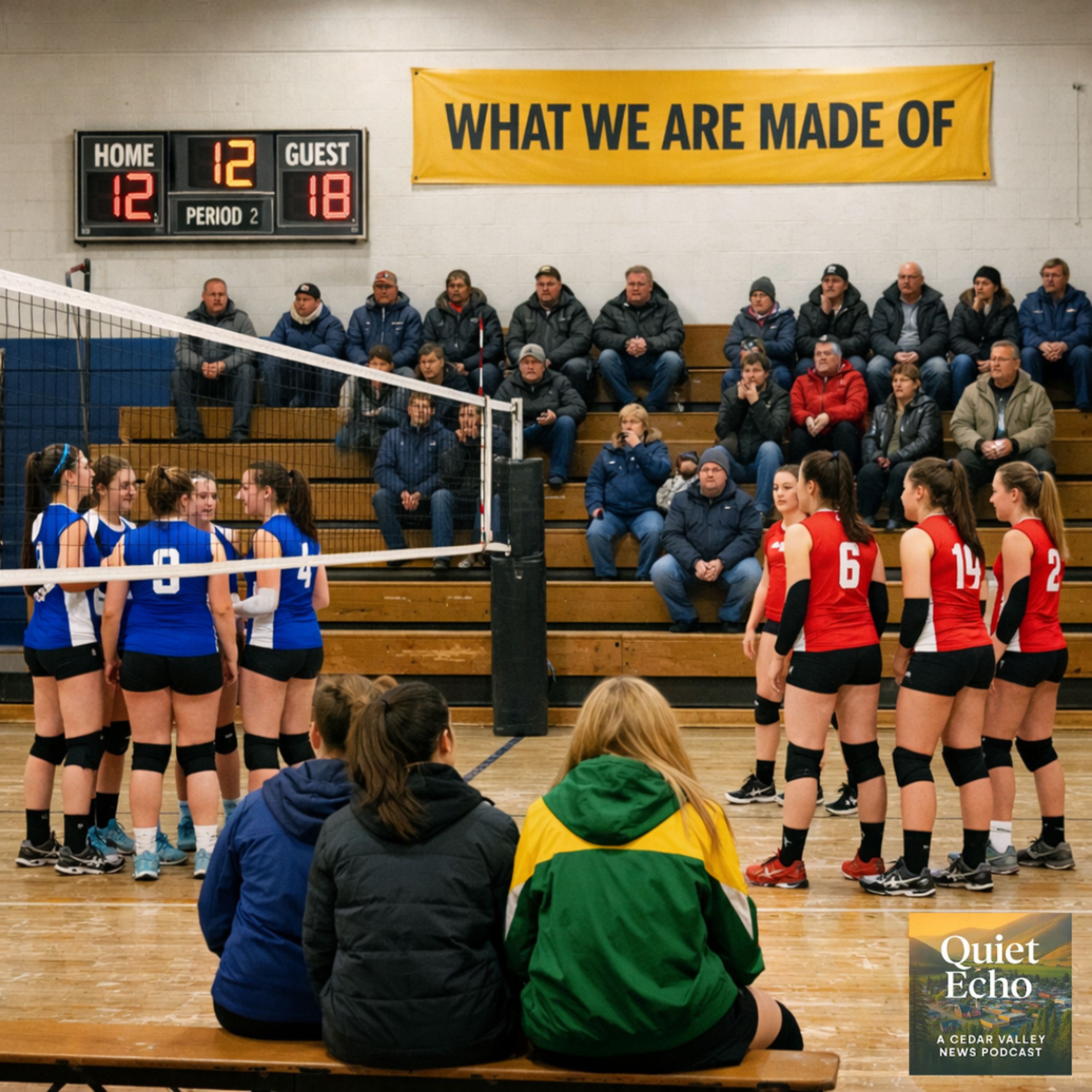
Greetings. This is Aisha Khalid. Quiet Echo. Saturday edition. I’ll be your host for this episode. I want to tell you about something happening right now. Not last month. Not last year. Right now, as I sit here talking to you, nearly two thousand young athletes from eight regions of the circumpolar North are competing in Whitehorse, Yukon. The Arctic Winter Games. They started on March eighth and close tomorrow. The closing ceremonies are less than twenty-four hours away. Most of you have never heard of these Games. I had not either until George brought them up at dinner last week. He had read about them somewhere and could not stop talking about the sports the one-foot high kick, the knuckle hop, the arm pull. Traditional Indigenous competitions alongside hockey and volleyball and alpine skiing. Twenty sports in a city of twenty-eight thousand people, where the temperature has not climbed above freezing all week. The athletes are teenagers. They come from places most Americans could not find on a map Inuvik, Iqaluit, Whale Cove, Nome. Eight regions Alaska, Yukon, Northwest Territories, Nunavut, Northern Alberta, Northern Quebec, Greenland, and the Sápmi region of Scandinavia. They travel thousands of miles. Some by plane. Some by boat and then plane. A girl from a village of three hundred people in Nunavut stands on the same gymnasium floor as an athlete from Anchorage. A boy from northern Norway competes alongside a teenager from Greenland. They do not speak the same language. They compete anyway. The medal is an ulu a traditional Inuit cutting tool. Not gold or silver or bronze in the Olympic sense. An ulu. The object itself carries meaning. It says this is ours. We built this. The symbols belong to us. The Games were founded in nineteen seventy. Alaska was there from the beginning. Governor Walter Hickel helped create them alongside leaders from the Yukon and Northwest Territories. Northern athletes had realized they could not compete on equal terms at national events. Their communities were too small. Their distances too vast. So instead of asking the world to make room for them, they built something of their own. In twenty twenty, the Games were set to return to Whitehorse for the fiftieth anniversary. A copper cauldron was designed for the occasion four shields shaped like children, eyes slowly opening, facing north. It was meant to be lit in front of thousands. COVID cancelled the Games days before opening. The cauldron sat unlit for six years. Last Sunday it was finally lit. Fireworks over the Yukon River. Two thousand athletes marching into Shipyards Park. A flame six years in the waiting. Here is what I keep thinking about. The teenagers who were fourteen in twenty twenty are twenty now. They aged out. Their Games never happened. They trained. They qualified. They packed their bags. And the world shut down. No medal. No ceremony. No moment under the lights with their team around them. Some of those young people are in Whitehorse right now not as athletes, but as coaches. They handed the dream forward because the dream was bigger than their turn. I am a doctor. I see what happens when young people do not have something to belong to. The loneliness I wrote about last week it does not begin at seventy. It begins at fifteen. A teenager without a team, without a purpose, without a reason to train and travel and stand next to someone from the other side of the world and trade a jacket is a teenager at risk of drifting. The Arctic Winter Games do not solve every problem in the North. But they give young people from the smallest communities in the world a reason to show up. And showing up is where everything starts. George and I have ten-year-old twins. Maryam runs faster than most of the boys in her class. Trevor can throw a ball with an accuracy I cannot explain genetically, because neither George nor I could hit the side of a barn. In a few years, they will be old enough to try out for something to represent something t
Comments
Rate this episode
Episode Details
- Show Type
- full
- Audio Format
- audio/mpeg