
The Crim's Class Podcast
By Ernest Crim III
The Crim’s Class Podcast is the classroom you never got in school. Hosted by author and Emmy-nominated educator Ernest Crim III, each episode teaches overlooked Black history and hidden narratives to empower, educate, and inspire action toward more equitable systems.
When did “I’m bad at math” become something we accepted about ourselves, and passed down to our children? On this episode of Crim’s Class Podcast, Ernest Crim III sits down with math educator, author, and All This Math founder Akil Parker to explore the relationship between mathematics, Black history, and Black empowerment. We discuss how parents can support their children’s learning, why algebra and geometry matter beyond the classroom, and how the way we talk about math can shape whether children approach it with confidence or fear. Akil also introduces Histematics, his framework for teaching mathematics through Black history and Black history through mathematics. What changes when we stop treating math as something only certain people can do—and start treating it as a tool our communities can use? A conversation for parents, educators, and anyone who has ever said, “I’m just not a math person.”
As political instability, racial violence, and growing uncertainty leave more Black Americans asking whether it is time to leave the United States, Canada is often imagined as the most logical destination. It has universal healthcare, stronger social services, and a long-standing reputation as the place where enslaved Black people once found freedom. But is Canada truly a racial safe haven? In this episode of Crim’s Class Podcast, I speak with artist, historian, content creator, and author LTtheMonk about his new book, *Learn Something Knew: Black Canadian History You Weren’t Taught in School*. We discuss what Canada may offer Black Americans, but we also confront the history that its “good guy” image frequently conceals. From the Ku Klux Klan terrorizing an interracial couple in Ontario to Confederate flags in Montreal, attacks on Black communities, the genocide of Indigenous peoples, and the quieter forms of racism that remain difficult to name, LT explains why crossing a national border does not mean crossing beyond anti-Blackness. We also explore the radical legacy of Josiah Henson, the formerly enslaved abolitionist often reduced to the supposed inspiration for “Uncle Tom,” despite helping more than 100 people escape slavery and building a Black settlement in Canada. Canada should not be painted with one broad stroke. Neither should the United States. This conversation is not about declaring one country entirely good and the other entirely evil. It is about understanding the full history before deciding where freedom can be found.
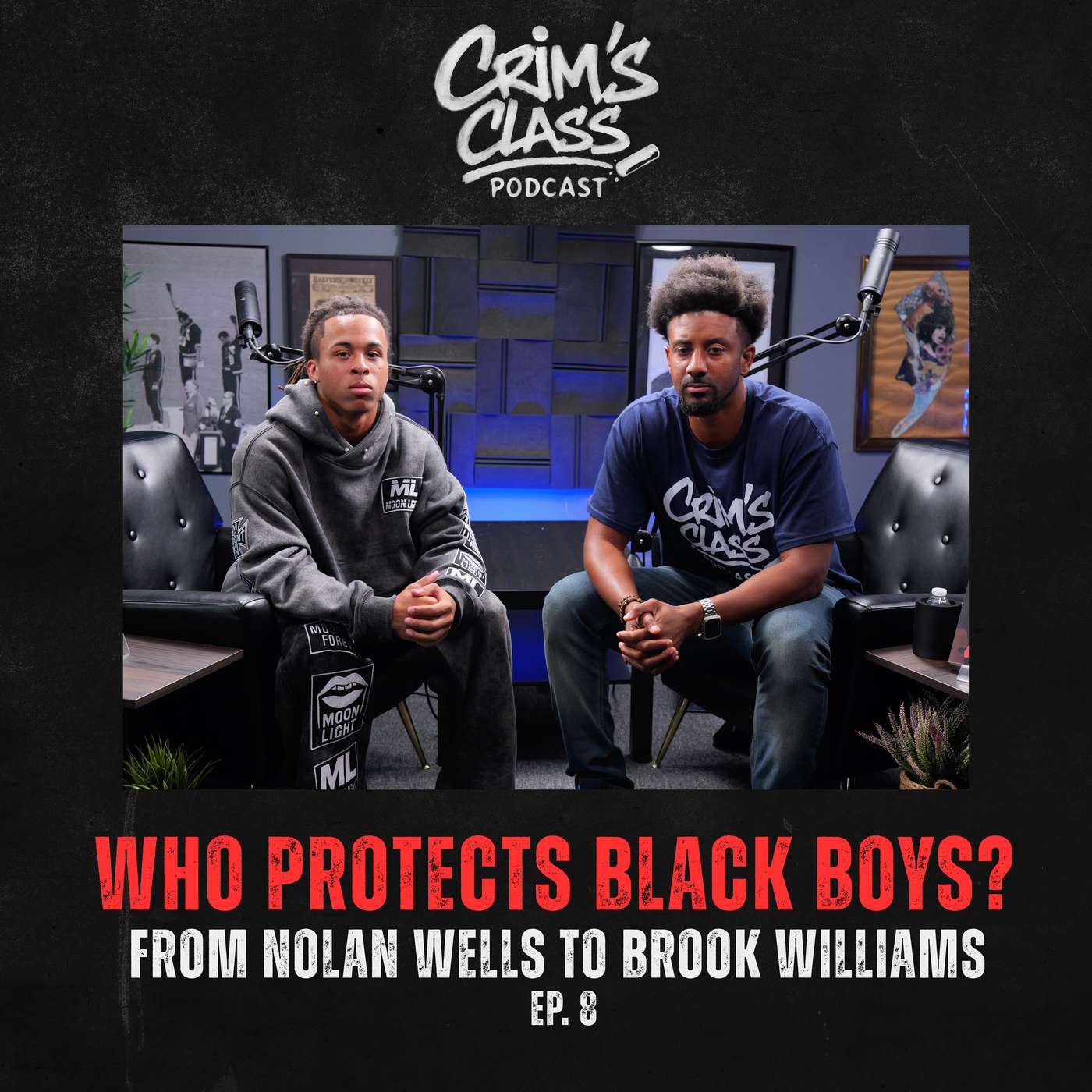
What does it mean to protect Black boys in a society where their safety, dignity, belonging, and even their humanity can still be called into question? From the unanswered questions surrounding the death of Nolan Wells to the experience of Brook Williams , this episode examines a painful reality facing Black families: the continued need to prepare our children not only to pursue opportunity, but to recognize racism, advocate for themselves, seek community, and protect their well-being when the institutions around them fall short. What happens when the place that promised you brotherhood becomes the place where you experience racism? In this episode of Crim’s Class Podcast , Ernest Crim III sits down with Brook Williams, a former Aurora University football player who alleges that he endured racist bullying from teammates, including being called the N-word, being told, “I thought your people slept in trees,” and being referred to as George Floyd. Brook shares the emotional and psychological toll of the experience, why he sought therapy, how he advocated for himself, and what comes next as he begins a new chapter at Morehouse College , studying applied physics and engineering with aspirations of becoming an engineer. The conversation raises larger questions: In educational spaces, what systems are actually in place to address the unique experiences of Black American students? What does justice look like, both internally within institutions and externally within our communities? And what role must our families and communities play in protecting, affirming, and helping our children heal? Most importantly, this episode is also about belonging, advocacy, healing, community, and refusing to allow racism or racial trauma to determine the trajectory of a young Black person’s life. Lifework: Affirm yourself. Study the stories of Black people who survived similar battles. Find your community. And never be afraid to advocate for your humanity.
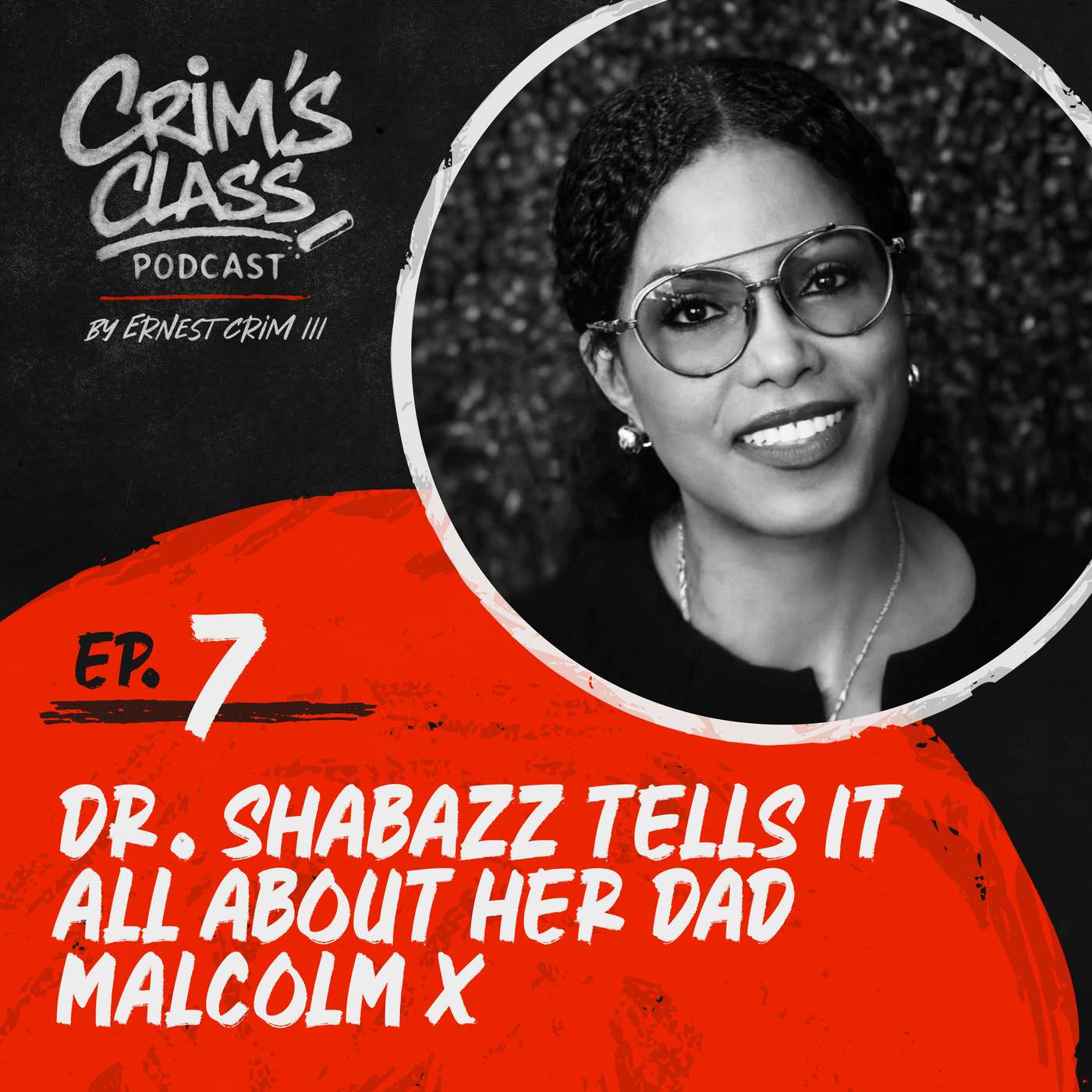
What was Malcolm X like as a father? And what can his final years teach us about navigating today’s world? In this deeply personal conversation, Dr. Ilyasah Shabazz shares rarely told stories about growing up with Malcolm X and Dr. Betty Shabazz, reflects on her father’s spiritual transformation following his pilgrimage to Mecca, and discusses the timeless lessons in her new book, Malcolm in the Desert . Together, we explore Malcolm’s legacy through the eyes of his daughter, examining how curiosity, understanding, and compassion can help us build bridges during one of the most divided moments in our history. Plus, stay until the end as my two oldest daughters have the opportunity to ask Dr. Shabazz questions of their own in a conversation our family will never forget. “Ignorance of each other is what has made unity impossible in the past… We need more light about each other.” — Malcolm X (1964) Class is in session.
What happens when the teacher becomes the student? In this episode of Crim's Class Podcast , I sit down with my former student, Griselda Chavez , who has grown into a leading environmental justice advocate. Over the past several months, she's taught me more about air pollution, warehouse expansion, truck traffic, and data centers than I learned in years of school. And truthfully, it has completely changed the way I see the world. Joined by my brother and co-host, Marcus Cage , we explore why environmental justice isn't just a local issue; it's a public health issue that affects all of us, regardless of race, neighborhood, or political beliefs. From my childhood growing up just miles from Altgeld Gardens to the fight happening today in Joliet over one of the nation's largest proposed data center developments, we unpack how pollution, policy, and power intersect. Griselda shares her journey from student to community leader, explains why truck traffic and massive data centers deserve our attention, recounts the moment Joliet police removed her from the podium while she exercised her First Amendment rights at a city council meeting, and outlines what everyday people can do to fight for cleaner air and healthier communities. Inspired by the legacy of Hazel M. Johnson, who is regarded as the Mother of Environmental Justice, this conversation is ultimately about protecting future generations. By the end of this episode, you'll better understand: Why environmental injustice affects every community (not just Joliet, IL). How data centers, warehouses, and truck traffic impact public health. Why residents across the country are organizing around these issues. Practical ways you can take action in your own community. Sometimes the greatest lesson a teacher can receive comes from a former student. Class is in session.
In this special Father's Day edition of the Crim's Class Podcast, the teachers become the students and the students become the teachers. For the first installment of "Ask Daddy Anything, Ask Daughters Anything," my daughters, Chloe and Caylee, take over the show and interview me about everything from what I was like as a kid to whether I got into fights growing up. Their questions lead to a surprising story about the time I lost control of my anger and hit a bus driver after he took my toy car, opening the door to an honest conversation about emotional regulation, self-control, and healthy ways to handle frustration, anxiety, nervousness, and anger. Together, we discuss why it is important for both children and adults to have positive outlets for their emotions, whether through exercise, writing, music, art, sports, stress-relief tools, or simply talking things through with people they trust. By the end of this episode, listeners will gain a deeper understanding of how meaningful conversations between parents and children can build confidence, strengthen relationships, encourage critical thinking, and help young people navigate a world increasingly shaped by social media and constant digital noise. Happy Father's Day, and welcome to class.
In this powerful and heartbreaking episode, we sit down with Nicole and Dale Sims to discuss what their Black child allegedly endured after starting school in Minooka in 2023. According to the family, their child was called racial slurs, accused of theft without evidence, bullied, physically targeted, and repeatedly dehumanized by classmates, while they say the school district failed to respond with urgency or accountability. At one point, the family says they were told an incident had been “resolved” because the children “high-fived it out.” But this conversation is about more than one family. It’s about a growing crisis happening in schools across America. As hate crimes continue rising nationally, more Black families are reaching out with stories of racism, trauma, neglect, and systems that seem unprepared or unwilling to protect children when these incidents happen. As someone who survived a viral hate crime myself and has spent years speaking with families navigating these experiences, I created this episode to expose the emotional and psychological toll these incidents take, while also asking the deeper question: What does real accountability, healing, and protection for children actually look like? This episode is difficult, emotional, and necessary. It is also accompanied by a FREE downloadable resource titled “What To Immediately Do If Your Child Is Targeted by Racism or Hate” built around the framework of the 3 E’s: Express. Educate. Empower. The guide is available at the below link and was created to help families support children emotionally, affirm their identity, and navigate moments of racial trauma with care and intention. If you are a parent, educator, student, or someone who cares about justice and the safety of children, this is a conversation you need to hear. Download the free guide here: https://linktr.ee/mrcrim3

Episode 3 of the Crim's Class Podcast is rooted in a hard truth. We demand accountability from a system that was never built to deliver us freedom, while sometimes avoiding accountability to ourselves and our community. As Malcolm X once said (paraphrased), a chicken cannot produce a duck egg, no matter how badly we want it to, and neither can this political, economic, and social system suddenly produce liberation for Black people. Expecting it to do so without transformation is a mistake. With this episode, I connect current moments like celebrity accountability, the racist viral Cinnabon video, capitalism rewarding harm, patriarchy being protected, and who gets fundraising sympathy versus who gets forgotten to a deeper historical framework. From the Black Panther Party’s rules, responsibilities, and survival programs to how accountability culture actually worked for the people, not for profit or clout. I talk about Diddy, power, masculinity, and how this all traces back decades This episode is a call to get organized. To study real organizations, understand roles, act as an organ in a body, and stop mistaking reaction for revolution. The Panthers did not just critique the system. They built alternatives. If we are serious about change, that is the work, for the culture.

“A day of thanksgiving kept in all the churches for our victories against the Pequots.” — John Winthrop In this powerful second episode, we breathe, check in, and then peel back one of America’s most enduring myths: Thanksgiving. Far from the grade-school story of friendship and feasting, the 1621 harvest gathering was a political alliance born out of crisis, a survival strategy for both the English colonizers and the Wampanoag Nation after the Great Dying (1616–1619) had already wiped out up to 90% of Indigenous peoples along the coast. We revisit what the feast actually looked like, who was present, and why no one at the time even called it “Thanksgiving.” From there, we confront the truth: The first day officially called “Thanksgiving” was declared in 1637 to celebrate the massacre of over 500 Pequot women, children, and elders at Mystic. Through excerpts from Edward Winslow, King James I, and modern historians, we explore how colonial violence replaced diplomacy, and how massacres became framed as divine blessings. We then dive into how the myth of Thanksgiving was built two centuries later. Writer Alexander Young’s 1841 footnote invented the idea of the “First Thanksgiving” to give the United States a wholesome origin story during an era of rising division, immigration, and slavery. As New England elites felt their cultural influence fading, they reached back and rebranded a harvest feast as a spiritual, peaceful, moral beginning for the nation. Today, that myth still functions as a form of national amnesia. In this episode, we ask: What myths are being created right now? What stories are being rewritten today to justify tomorrow’s atrocities? And what does it look like to build new social structures grounded in truth? Join us as we replace nostalgia with honesty and trace how Thanksgiving became less about gratitude, and more about making genocide look like destiny.

Welcome to my new show, The Crim's Class Podcast. For my first episode, we dive into what you can expect and some of the most thought-provoking quotes from our recent ancestor, Assata Shakur.